
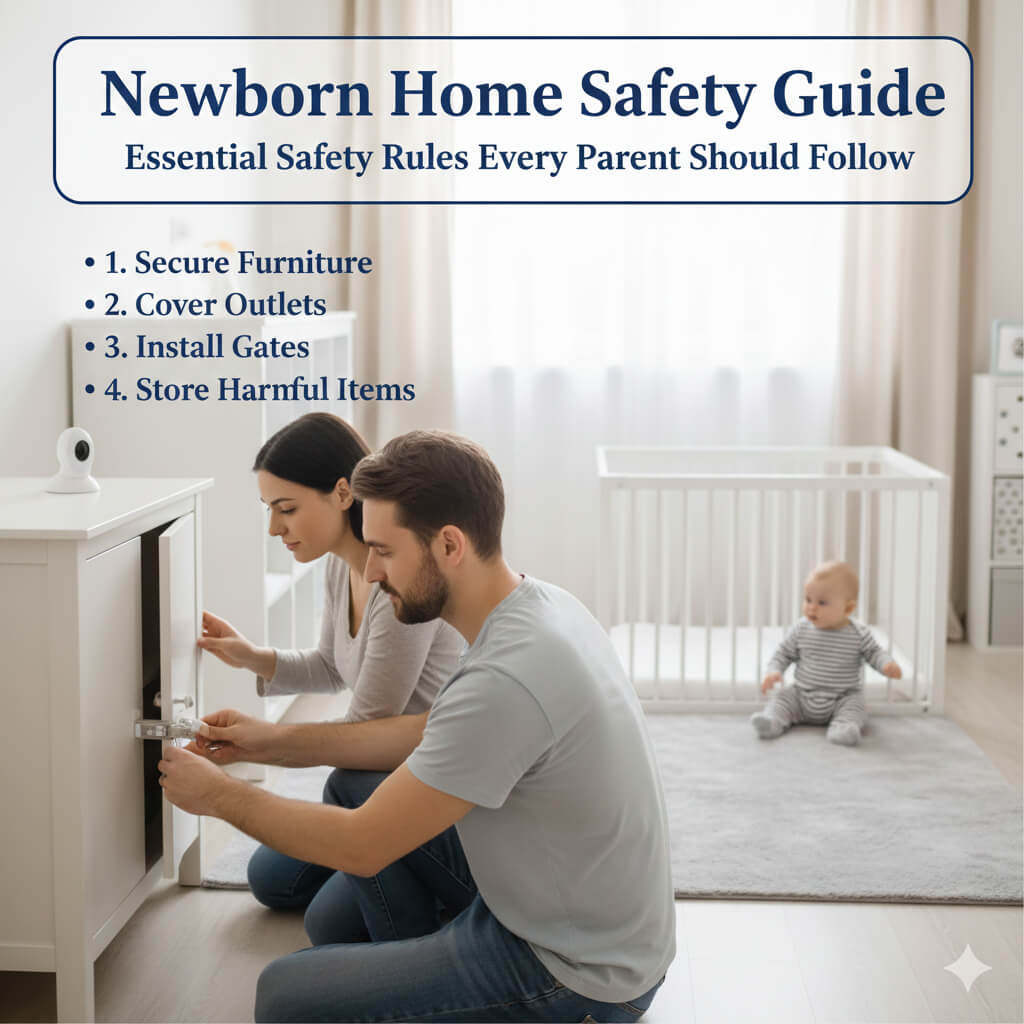
Bringing a newborn home is one of life’s most exciting milestones. Yet it can also feel overwhelming. Babies are delicate, curious, and entirely dependent on caregivers for protection. Creating a safe home environment is essential to prevent accidents and keep your little one healthy and secure.
This Newborn Home Safety Guide provides practical tips and essential rules that every parent should follow to protect their baby at home. From safe sleep practices and nursery setup to handling emergencies and daily routines, these guidelines will help you create a peace-of-mind safe environment for your newborn.
Why Newborn Home Safety Matters
Newborns are especially vulnerable because they:
- Have weak neck muscles and limited mobility
- Explore the world primarily through touch and mouth
- Are at higher risk of accidental injuries, suffocation, or falls
- Cannot communicate pain or discomfort effectively
Following safety rules helps prevent injuries, supports healthy development, and reduces stress for parents.
Safe Sleep Guidelines
1. Always Place Baby on Their Back
- Reduces the risk of Sudden Infant Death Syndrome (SIDS)
- Use for naps and nighttime sleep
2. Use a Firm, Flat Sleep Surface
- Avoid soft mattresses, couches, or pillows
- Use a safety-approved crib or bassinet
3. Keep the Sleep Area Clutter-Free
- No blankets, pillows, stuffed animals, or bumper pads
- Use a sleep sack instead of loose blankets
4. Room Sharing
- Keep the crib in the parents’ bedroom for at least 6 months
- Avoid bed-sharing, as it increases suffocation risk
5. Maintain Comfortable Room Temperature
- Keep room at 68–72°F (20–22°C)
- Dress baby in light sleepwear to avoid overheating
Nursery Safety Essentials
1. Crib and Bassinet Safety
- Ensure slats are no wider than 2 3/8 inches
- Tight-fitting mattress with no gaps
- Regularly check for loose screws or broken parts
2. Baby Monitors
- Place monitors out of reach
- Avoid cords near crib
- Ensure reliable signal to alert you promptly
3. Electrical Outlets
- Use outlet covers
- Keep cords secured and out of reach
- Avoid placing furniture where babies could pull cords
4. Windows and Doors
- Install window guards or stops
- Keep cords from blinds or curtains out of reach
- Use childproof door locks for restricted areas
Diapering and Bathing Safety
1. Diapering Station
- Always keep one hand on your baby
- Stock all supplies within reach
- Use a safety strap if available
2. Bathing Safety
- Never leave baby unattended
- Use a non-slip mat
- Test water temperature (98–100°F / 37–38°C)
- Keep essentials nearby to avoid leaving the baby alone
Feeding Safety Tips
1. Bottle Feeding
- Hold baby in a semi-upright position
- Avoid propping bottles
- Check nipple flow to prevent choking
2. Breastfeeding
- Ensure baby’s airway is clear
- Keep supportive pillows to maintain comfortable position
- Burp baby frequently to prevent gas and spit-up
Handling & Carrying Safety
- Always support head and neck
- Avoid rough play
- Use baby carriers and slings safely, following manufacturer instructions
- Never carry baby while multitasking with hot liquids or sharp objects
Baby-Proofing the Home
Even if your newborn doesn’t crawl yet, preparation matters:
1. Furniture Safety
- Secure heavy furniture to walls
- Avoid sharp corners or edges
- Keep small objects out of reach
2. Stairs and Gates
- Install safety gates at staircases
- Ensure gates are secure and meet safety standards
3. Choking Hazards
- Keep small toys, coins, or loose parts away
- Check all household items for potential hazards
4. Cleaning & Chemicals
- Store cleaning products, detergents, and medications in locked cabinets
- Avoid toxic fumes near baby
Fire and Electrical Safety
- Install smoke and carbon monoxide detectors
- Keep matches and lighters out of reach
- Avoid extension cords near baby’s area
- Have a fire extinguisher nearby in the kitchen
Temperature & Air Safety
- Maintain room temperature 68–72°F (20–22°C)
- Use a humidifier in dry climates
- Keep baby away from direct heat sources or vents
- Avoid smoking indoors
Pet Safety
- Always supervise interactions
- Keep pets away from sleeping area
- Wash hands before handling baby after touching pets
Car Seat Safety at Home & Travel
- Always use rear-facing car seat in back seat
- Install properly following manufacturer instructions
- Never leave baby unattended in car seat outside the car for long periods
- Avoid placing car seat on elevated surfaces at home
Emergency Preparedness
1. First Aid Essentials
- Keep a stocked baby first aid kit
- Learn infant CPR and choking response
- Know pediatric emergency numbers
2. Emergency Contacts
- Pediatrician’s phone number
- Poison control hotline
- Nearby emergency services
3. Medical Supplies
- Thermometer
- Nasal aspirator
- Baby-safe medications (per doctor guidance)
Daily Routine Safety Tips
- Supervise tummy time
- Avoid leaving baby on elevated surfaces unattended
- Ensure feeding times are safe and calm
- Observe baby’s cues and avoid overstimulation
Common Newborn Hazards to Watch For
- Falls – Cribs, changing tables, couches
- Suffocation – Blankets, pillows, soft bedding
- Choking – Small toys, food, household objects
- Burns – Hot liquids, heaters, sunlight
- Poisoning – Cleaning products, medications, plants
Being aware of these risks helps prevent accidents.
Tips for Multi-Level Safety
- Inspect home regularly for new hazards
- Reassess safety when baby begins rolling, crawling, or standing
- Keep visitors informed about safety rules
- Use consistent safety practices with all caregivers
Emotional Safety & Bonding
Physical safety is essential, but emotional safety matters too:
- Respond promptly to cries
- Provide comfort through touch and voice
- Maintain consistent routines
- Encourage safe exploration and curiosity
When to Seek Professional Help
Contact pediatricians or safety professionals if:
- Baby shows signs of injury or illness
- You’re unsure about home safety measures
- You need guidance on car seat installation or babyproofing
Early support prevents accidents and ensures peace of mind.
Final Thoughts
Creating a safe home for your newborn is about preparation, awareness, and vigilance. By following these rules, parents can:
- Reduce the risk of accidents
- Support healthy growth and development
- Feel confident and relaxed at home
Newborns rely entirely on caregivers for safety. With careful planning, attention to hazards, and consistent routines, you can provide a secure environment that allows your baby to thrive—while giving you peace of mind as a parent.
Safety is an ongoing process. As your baby grows, continue updating your home, routines, and emergency plans to ensure a safe and nurturing environment for every stage of early life.
Continue Reading Newborn Home Safety Guide: Essential Safety Rules Every Parent Should Follow