
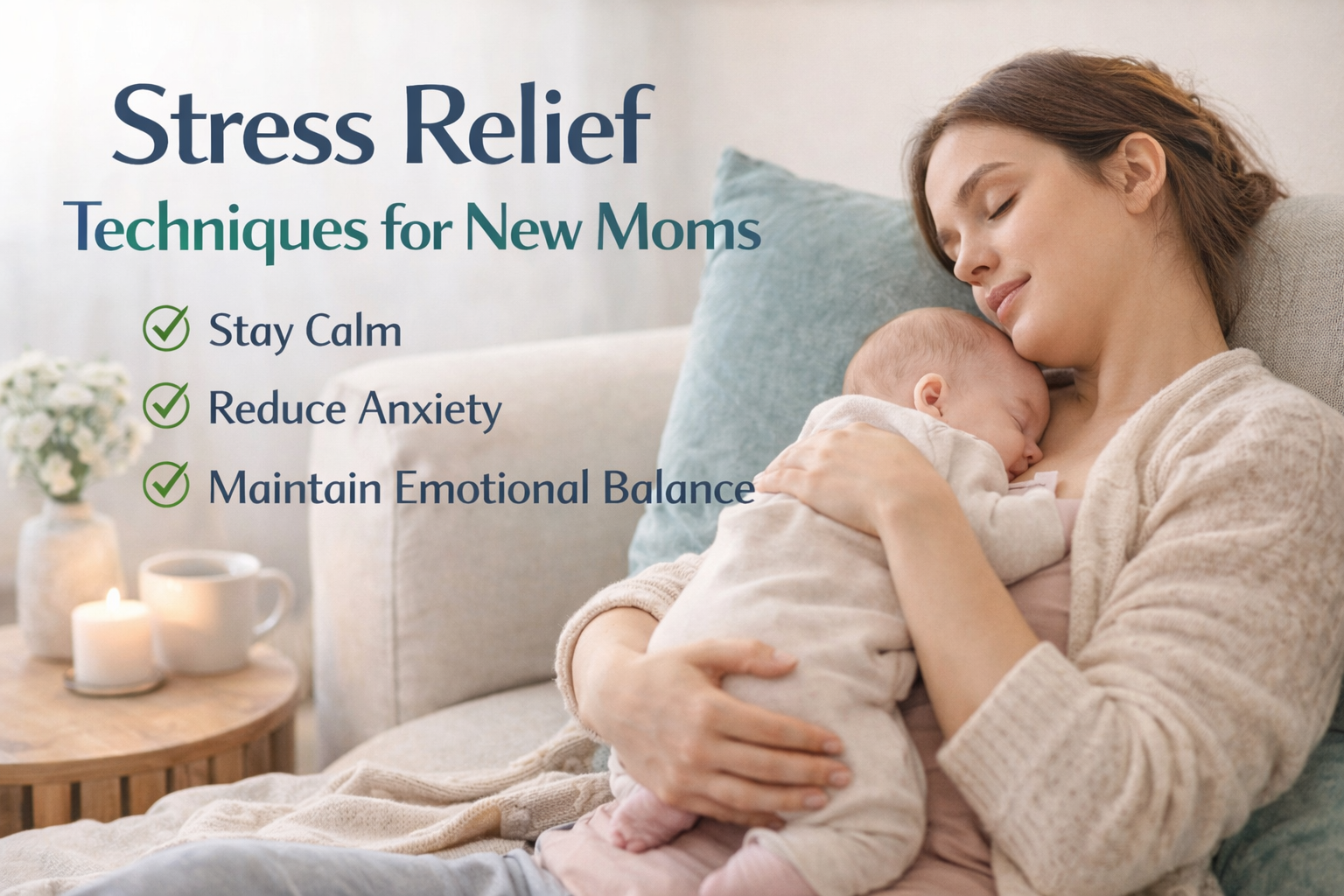
Becoming a new mother is one of life’s most joyful experiences—but it can also be overwhelming. Between sleepless nights, feeding schedules, physical recovery, and emotional changes, many new moms feel stressed, anxious, or emotionally drained. If you’re feeling this way, you are not alone—and you are not doing anything wrong.
Stress after childbirth is incredibly common. Your body is healing, your hormones are shifting, and your responsibilities have increased overnight. The key is not to eliminate stress completely (which is unrealistic), but to manage it in healthy, gentle ways that support both your mental well-being and your ability to care for your baby.
This comprehensive guide shares easy, realistic stress-relief techniques for new moms—practical habits that fit into busy days and help you feel calmer, more balanced, and emotionally supported during the postpartum period.
Understanding Stress in New Moms
Stress is your body’s natural response to change, pressure, or demands. After childbirth, those demands increase significantly—physically, emotionally, and mentally.
Common Sources of Stress for New Moms
- Sleep deprivation
- Physical recovery after childbirth
- Hormonal fluctuations
- Feeding challenges
- Fear of “doing things right”
- Constant responsibility
- Lack of personal time
- Social pressure and comparison
Stress does not mean you are failing—it means you are adapting to a huge life change.
Why Managing Stress Is Important After Childbirth
Chronic stress can affect both physical and emotional health. When stress builds up without relief, it can lead to:
- Constant fatigue
- Irritability
- Difficulty concentrating
- Feeling overwhelmed
- Weakened immune system
- Trouble bonding with your baby
Managing stress helps you:
- Feel more emotionally balanced
- Improve sleep quality
- Increase patience and confidence
- Support postpartum recovery
- Enjoy motherhood more fully
Accept That You Don’t Have to Be Perfect
One of the biggest sources of stress for new moms is the pressure to be perfect.
Let Go of Unrealistic Expectations
- You don’t need to do everything “right”
- Every baby is different
- Every mother learns through experience
- Mistakes are part of parenting
Replacing perfection with self-compassion is one of the most powerful stress-relief techniques.
Simple Breathing Techniques to Calm the Nervous System
Breathing is one of the fastest ways to reduce stress—no equipment or extra time needed.
Deep Belly Breathing
- Sit or lie comfortably
- Place one hand on your belly
- Inhale slowly through your nose
- Exhale gently through your mouth
Even 2–3 minutes can calm your mind and body.
4-4-6 Breathing Technique
- Inhale for 4 seconds
- Hold for 4 seconds
- Exhale for 6 seconds
This helps reduce anxiety and bring your nervous system into a relaxed state.
Rest Whenever Possible (Without Guilt)
Sleep deprivation is one of the biggest stress triggers for new moms.
Rest Tips That Actually Work
- Sleep when your baby sleeps (even short naps)
- Let household tasks wait
- Ask for help without guilt
- Create a calm sleep environment
Rest is not laziness—it is recovery.
Create Small Daily Moments Just for You
You don’t need hours of self-care. Even 5–10 minutes can make a difference.
Simple Self-Care Ideas
- A warm shower
- Drinking tea quietly
- Stretching gently
- Sitting near a window
- Listening to calming music
Consistency matters more than duration.
Gentle Movement to Release Stress
Physical activity helps release tension and improve mood.
Safe Postpartum Movement
- Short walks
- Gentle stretching
- Postpartum yoga
- Light mobility exercises
Movement increases circulation, boosts energy, and reduces emotional stress.
Nourish Your Body to Support Emotional Balance
What you eat affects how you feel.
Stress-Reducing Nutrition Tips
- Eat regular meals
- Include protein and healthy fats
- Stay hydrated
- Avoid skipping meals
- Choose whole, nourishing foods
Low energy and poor nutrition can intensify stress.
Lower Mental Load by Simplifying Your Day
Mental overload is exhausting.
Ways to Reduce Mental Clutter
- Create simple routines
- Write things down
- Limit daily goals
- Focus on one task at a time
- Let go of non-essential tasks
Doing less—but with intention—reduces stress significantly.
Limit Comparison and Social Pressure
Social media often shows unrealistic versions of motherhood.
Protect Your Mental Health
- Limit scrolling time
- Unfollow triggering content
- Remember that online images are curated
- Focus on your own journey
Comparison steals joy and increases stress.
Ask for Help and Accept Support
You are not meant to do this alone.
Support Can Look Like:
- Help with household chores
- Emotional support from loved ones
- Advice from experienced parents
- Professional guidance when needed
Asking for help is a strength, not a weakness.
Practice Mindfulness in Everyday Moments
Mindfulness doesn’t require meditation sessions—it can happen anytime.
Simple Mindfulness Practices
- Notice your baby’s breathing
- Focus on sensations during feeding
- Pay attention to sounds around you
- Take one mindful breath before reacting
Mindfulness keeps you grounded in the present.
Set Healthy Boundaries
Too many visitors, opinions, or obligations can increase stress.
Boundary Tips
- Say no when needed
- Limit visits if you feel overwhelmed
- Protect your rest time
- Prioritize your recovery
Boundaries protect your energy and emotional health.
Reframe Negative Thoughts
Stress often comes from negative self-talk.
Replace Thoughts Like:
- “I’m not doing enough”
With: “I’m doing my best” - “I should handle this better”
With: “I’m learning every day”
Gentle thoughts create emotional calm.
Build a Simple Daily Stress-Relief Routine
Structure helps reduce anxiety.
Example Routine
- Morning: Deep breathing + breakfast
- Afternoon: Short walk or stretch
- Evening: Warm shower + calming music
- Night: Gratitude reflection
Small routines bring stability to busy days.
Emotional Expression Is Healthy
Crying, talking, or writing are natural emotional releases.
Healthy Emotional Outlets
- Journaling
- Talking with a trusted person
- Creative activities
- Quiet reflection
Bottling emotions increases stress.
Strengthen Your Bond With Your Baby (Without Pressure)
Connection can reduce stress—but bonding doesn’t have to be perfect.
Simple Bonding Ideas
- Skin-to-skin contact
- Talking softly to your baby
- Gentle touch
- Eye contact
Bonding develops over time—there’s no deadline.
Recognize When Stress Feels Too Heavy
Some stress is normal, but ongoing emotional distress needs attention.
Reach Out for Help If You Experience:
- Constant sadness
- Feeling emotionally numb
- Overwhelming anxiety
- Difficulty functioning daily
- Loss of interest in things you enjoy
Getting support early leads to better outcomes.
Partner Support and Shared Responsibility
Stress reduces when responsibilities are shared.
Ways Partners Can Help
- Take turns with baby care
- Support rest time
- Listen without fixing
- Encourage self-care
Communication reduces emotional strain.
Celebrate Small Wins Every Day
Motherhood is made of small victories.
Celebrate things like:
- Feeding your baby
- Getting through a hard day
- Taking a shower
- Asking for help
- Showing up with love
Progress is not loud—it’s steady.
Be Patient With Yourself
Healing, adjusting, and learning all take time.
Remember:
- Stress does not define you
- You are allowed to rest
- You are learning something new
- You are doing meaningful work
Kindness toward yourself is the foundation of calm.
Final Thoughts
Motherhood is a beautiful transformation—but it can also be emotionally demanding. Stress relief for new moms is not about adding more tasks to your day; it’s about slowing down, simplifying, and supporting yourself with compassion.
By practicing small stress-relief techniques—like mindful breathing, gentle movement, rest, nourishment, and emotional expression—you can create a calmer, more balanced postpartum experience.
You don’t need to be perfect.
You don’t need to have it all figured out.
You just need care—just like your baby.
You’re doing better than you think.