
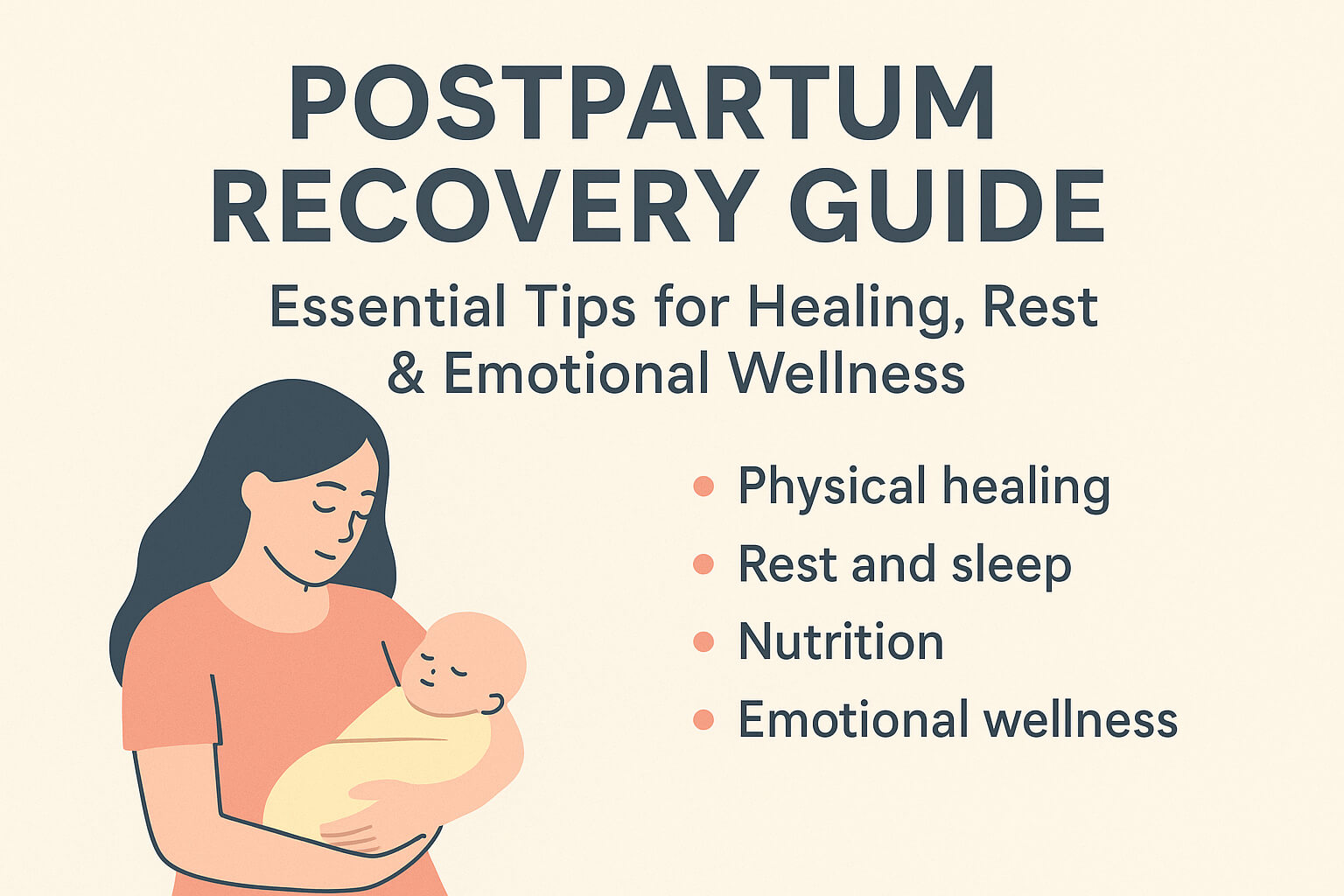
The postpartum period—often called the fourth trimester—is a time of major physical, emotional, and hormonal changes. While everyone focuses on the newborn, a mother’s recovery is just as important. This postpartum recovery guide will help new moms understand what to expect after birth and how to heal, rest, and care for emotional well-being.
What Is Postpartum Recovery?
Postpartum recovery begins immediately after childbirth and typically lasts 6–8 weeks, though some changes may continue for several months. Your body is healing from pregnancy and delivery, while your mind adjusts to new responsibilities, sleep changes, and hormonal shifts.
Physical Healing After Childbirth
1. Vaginal Birth Recovery
If you had a vaginal delivery, common recovery experiences include:
- Vaginal soreness or swelling
- Perineal stitches or tears
- Postpartum bleeding (lochia)
- Pelvic floor weakness
Healing Tips:
- Use ice packs during the first 24 hours
- Clean the area gently with warm water
- Use a peri bottle after urination
- Do Kegel exercises once approved by your doctor
2. C-Section Recovery
Recovery from a cesarean birth usually takes longer:
- Abdominal pain or tightness
- Limited mobility at first
- Incision healing and scar care
Healing Tips:
- Avoid lifting heavy objects
- Keep the incision clean and dry
- Wear loose clothing
- Take prescribed pain medication as directed
Managing Postpartum Bleeding (Lochia)
Postpartum bleeding is normal and can last 4–6 weeks.
- First days: heavy and bright red
- Weeks later: lighter, pink or brown
- Final stage: yellowish-white discharge
Important: Contact your doctor if bleeding becomes very heavy, has a bad smell, or includes large clots.
Postpartum Rest & Sleep Tips
Lack of sleep is one of the biggest challenges after birth.
How to Get More Rest:
- Sleep when the baby sleeps
- Accept help from family or friends
- Keep nighttime feedings calm and quiet
- Avoid visitors during early recovery
Even short naps help your body heal.
Nutrition for Postpartum Recovery
Your body needs extra nutrients to heal and produce breast milk.
Foods to Focus On:
- Protein-rich foods (eggs, fish, lentils)
- Iron-rich foods (spinach, dates, red meat)
- Calcium sources (milk, yogurt)
- Fruits and vegetables
- Plenty of water
Tip: Continue prenatal vitamins unless your doctor advises otherwise.
Breast Care & Feeding Support
Whether breastfeeding or formula feeding, breast care is essential.
Breastfeeding Moms:
- Expect nipple tenderness at first
- Use nipple cream for soreness
- Ensure proper latch
- Feed frequently to prevent engorgement
Formula or Mixed Feeding:
- Wear a supportive bra
- Avoid breast stimulation if not breastfeeding
- Use cold compresses for discomfort
Emotional Wellness After Birth
Postpartum emotions can vary widely.
Baby Blues (Very Common)
- Mood swings
- Crying spells
- Anxiety or irritability
Usually appear within a few days and fade within two weeks.
Postpartum Depression (PPD)
Seek help if symptoms last longer than two weeks:
- Persistent sadness or hopelessness
- Loss of interest in daily activities
- Trouble bonding with baby
- Thoughts of self-harm
Important: Postpartum depression is treatable. Talk to your doctor or a mental health professional immediately.
Self-Care Tips for New Moms
- Take short walks once approved
- Practice deep breathing or prayer
- Take warm showers
- Limit social media pressure
- Speak kindly to yourself
Healing takes time—there is no “perfect” recovery.
When to Call Your Doctor
Contact your healthcare provider if you experience:
- Fever over 38°C (100.4°F)
- Severe pain
- Heavy bleeding soaking a pad in one hour
- Foul-smelling discharge
- Signs of depression or anxiety
Final Thoughts
Postpartum recovery is not just about physical healing—it’s about rest, nourishment, and emotional care. Give yourself grace, ask for support, and remember that caring for yourself is part of caring for your baby.
💛 You’ve just done something incredible. Healing is your next journey.