
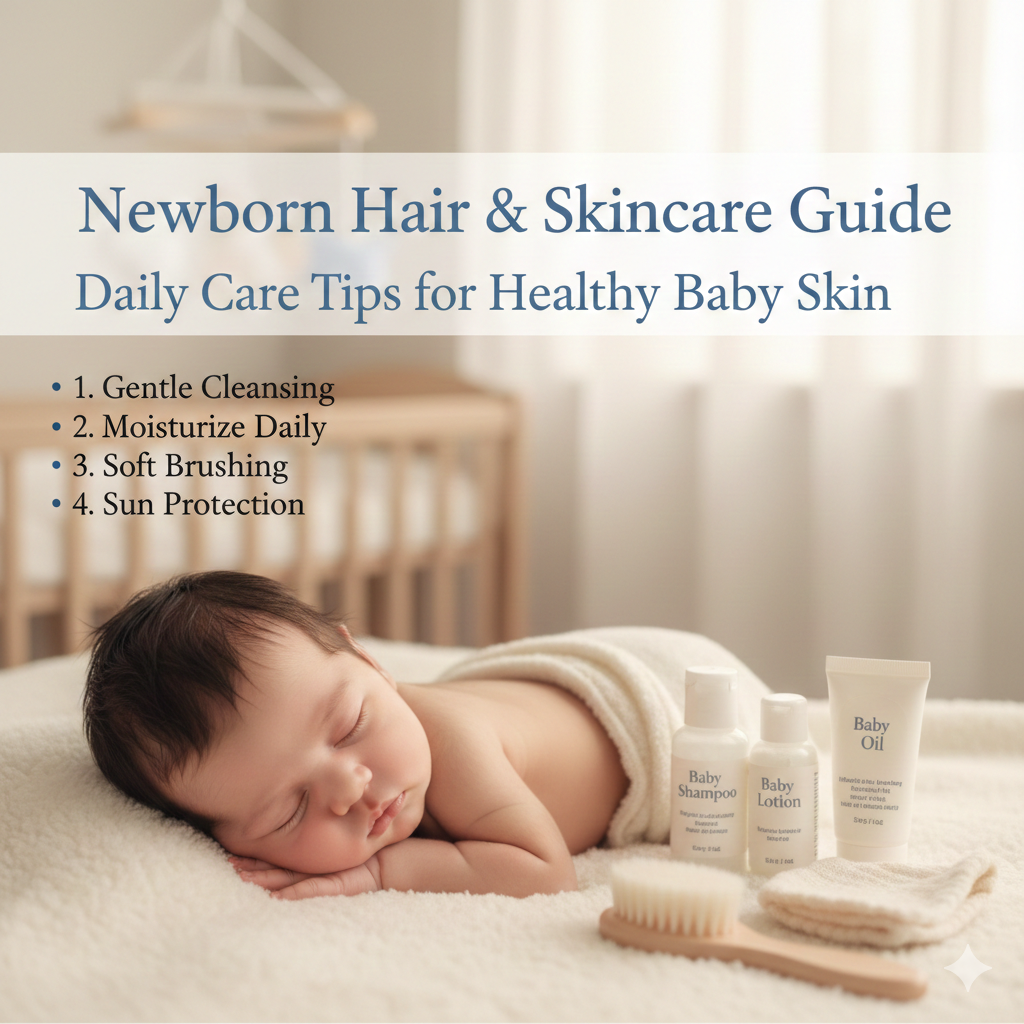
Bringing a newborn home is one of the most joyful experiences for parents, but it also comes with many questions—especially about hair and skin care. Newborn skin is incredibly delicate, sensitive, and still adjusting to the outside world. What works for adults or even older children may not be safe for babies.
From dry patches and cradle cap to baby acne and flaky skin, many newborn skin conditions are completely normal. With the right knowledge and gentle daily care routine, parents can keep their baby’s skin soft, healthy, and protected.
This Newborn Hair & Skincare Guide will walk you through everything you need to know—from understanding baby skin, daily routines, safe products, common skin issues, and seasonal care tips—so you can confidently care for your little one.
Understanding Newborn Skin & Hair
Why Newborn Skin Is So Sensitive
Newborn skin is:
- About 30% thinner than adult skin
- More prone to moisture loss
- Easily irritated by chemicals, fragrances, and friction
At birth, babies are covered in vernix caseosa, a white, creamy substance that protects their skin in the womb. After birth, their skin begins adjusting to dry air, clothing, and bathing, which can lead to dryness and peeling.
Newborn Hair Basics
Some babies are born with thick hair, while others have very fine or little hair. Both are completely normal. Newborn hair may:
- Fall out in the first few months
- Change color or texture
- Grow unevenly at first
Hair growth is influenced by genetics, not by shaving or frequent washing.
Daily Newborn Skincare Routine
A simple routine is best. Over-cleansing or using too many products can irritate baby skin.
1. Gentle Daily Cleaning
You don’t need to bathe your newborn every day. In fact:
- 2–3 baths per week are enough
- Clean the face, neck folds, hands, and diaper area daily
Use a soft cotton cloth with warm water to gently wipe dirt, milk residue, and sweat.
2. Choosing the Right Baby Cleanser
When bathing:
- Use soap-free, pH-balanced baby cleansers
- Avoid sulfates, parabens, dyes, and artificial fragrances
- Choose products labeled “newborn-safe” or “dermatologist-tested”
A mild cleanser helps remove dirt without stripping natural oils.
3. Moisturizing Baby Skin
Moisturizing is essential, especially after bathing.
- Apply a gentle baby lotion or cream while skin is slightly damp
- Look for ingredients like shea butter, glycerin, or ceramides
- Avoid essential oils unless approved for newborns
Regular moisturizing prevents dryness, eczema flare-ups, and irritation.
Newborn Hair Care: Simple & Safe
How Often to Wash Newborn Hair
Newborn hair does not get dirty easily.
- Washing 1–2 times per week is enough
- Use plain water or mild baby shampoo
Overwashing can cause dryness and scalp irritation.
Best Way to Wash Baby Hair
- Support your baby’s head
- Use lukewarm water
- Apply a drop of baby shampoo
- Gently massage the scalp with fingertips
- Rinse thoroughly
Avoid rubbing or scratching the scalp.
Brushing & Combing
- Use a soft-bristle baby brush
- Helps remove flakes and improves circulation
- Brush gently, especially if baby has cradle cap
Never use adult combs or brushes.
Common Newborn Skin Conditions & How to Care for Them
1. Baby Acne
Baby acne appears as small red or white bumps on the face.
- Caused by maternal hormones
- Usually clears up on its own within weeks
Care Tips:
- Wash with warm water only
- Avoid creams or acne treatments
- Do not squeeze pimples
2. Dry & Peeling Skin
Very common in the first few weeks.
- Especially on hands, feet, and ankles
Care Tips:
- Moisturize daily
- Avoid long baths
- Use lukewarm water
3. Cradle Cap (Seborrheic Dermatitis)
Appears as yellow or white scaly patches on the scalp.
Care Tips:
- Apply a small amount of baby oil
- Gently brush with a soft brush
- Wash with mild baby shampoo
Cradle cap is harmless and temporary.
4. Diaper Rash
Caused by moisture, friction, or irritation.
Care Tips:
- Change diapers frequently
- Keep area clean and dry
- Use zinc-oxide diaper cream
Letting baby go diaper-free for short periods can help healing.
5. Eczema (Atopic Dermatitis)
Dry, itchy, red patches often on cheeks, arms, or legs.
Care Tips:
- Use fragrance-free products
- Moisturize multiple times daily
- Avoid overheating
Consult a pediatrician if eczema worsens.
Safe Ingredients for Newborn Skincare
When choosing products, look for gentle and proven ingredients:
Good Ingredients
- Glycerin
- Shea butter
- Ceramides
- Oat extract
- Aloe vera (baby-safe formulations)
Ingredients to Avoid
- Artificial fragrance
- Alcohol
- Parabens
- Phthalates
- Essential oils (unless pediatrician-approved)
Reading labels is key to protecting newborn skin.
Seasonal Newborn Skincare Tips
Summer Skincare
- Bathe after sweating
- Keep skin dry, especially neck folds
- Use breathable cotton clothing
- Avoid direct sunlight
Babies under 6 months should not use sunscreen—use shade and protective clothing instead.
Winter Skincare
- Moisturize more frequently
- Use thicker creams instead of lotions
- Avoid very hot baths
- Use a humidifier indoors
Cold air can dry out baby skin quickly.
Newborn Bathing Safety Tips
- Always test water temperature
- Never leave baby unattended
- Keep bath time short (5–10 minutes)
- Have towel and clothes ready beforehand
Bathing should be calming, not stressful.
Natural vs Commercial Baby Products
Many parents prefer natural products, but “natural” doesn’t always mean safe.
Tips:
- Choose products specifically made for newborns
- Avoid homemade remedies without medical advice
- Patch-test new products on a small area
Balance safety with simplicity.
How Often Should You Change Baby Skincare Products?
If a product works well:
- No need to change frequently
- Consistency helps sensitive skin
Change products only if:
- You notice irritation
- Pediatrician recommends it
- Baby develops allergies
When to See a Pediatrician
Consult a doctor if:
- Rashes spread rapidly
- Skin becomes swollen or oozing
- Baby seems uncomfortable or itchy
- No improvement after home care
Early advice prevents complications.
Building a Gentle Daily Care Routine
A simple daily routine might look like:
- Morning face & neck cleaning
- Diaper area care after every change
- Moisturizing after baths
- Weekly gentle hair wash
Consistency matters more than complexity.
Final Thoughts
Caring for newborn hair and skin doesn’t require expensive products or complicated routines. What your baby needs most is gentle handling, minimal products, and lots of love.
By understanding newborn skin, choosing safe products, and following a simple daily routine, parents can protect their baby’s delicate skin and scalp while preventing common issues like dryness, rashes, and irritation.
Every baby is unique—observe how your baby’s skin reacts and adjust care as needed. When in doubt, keep it simple and consult your pediatrician.
Healthy skin means a comfortable, happy baby—and confident parents.