
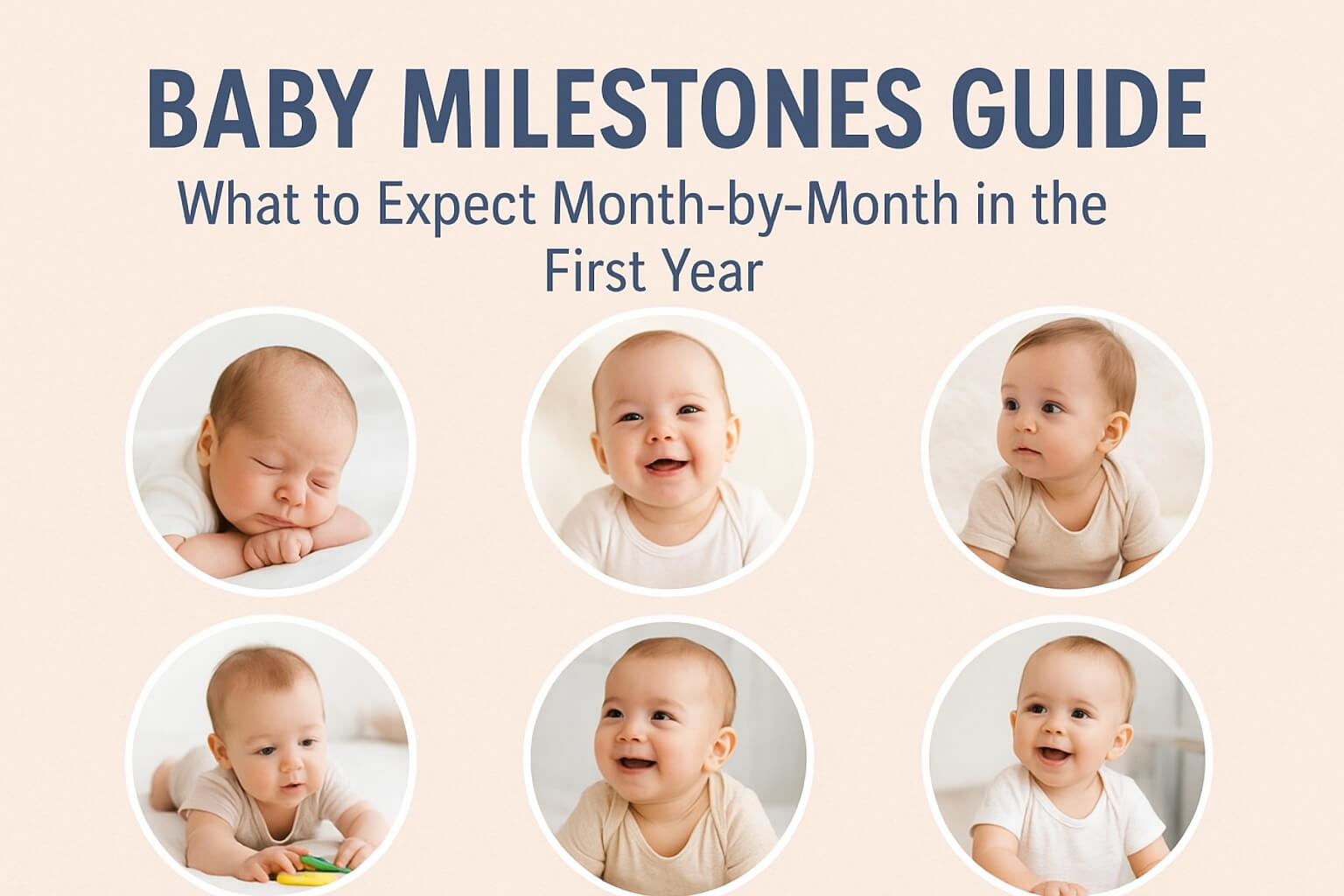
Your baby’s first year is full of magical moments—first smile, first roll, first crawl, first word. Every month brings new skills that show how fast your little one is growing. As exciting as it is, the rapid development can also feel overwhelming for new parents who are unsure what to expect or whether their baby is “on track.”
This month-by-month development guide walks you through physical, cognitive, emotional, and communication milestones from birth to 12 months. Remember: every baby grows at their own pace. Milestones are general guidelines, not strict deadlines.
Month 1: Getting Used to the World
Physical Development
- Lifts head slightly while on tummy
- Makes jerky arm and leg movements
- Hands are usually in a fist
- Begins focusing on faces and contrasting shapes
Cognitive Development
- Recognizes parents’ voices
- Responds to sounds (startles, quiets, turns head slightly)
- Stares at high-contrast patterns
Social & Emotional
- Enjoys being held
- Starts making simple facial expressions
- Calms when swaddled or rocked
Communication
- Cries differently for hunger, discomfort, or tiredness
- Makes little grunts and coos
Month 2: The First Smiles Begin
Physical
- Holds head up for longer moments
- Moves arms and legs more smoothly
- Begins to track moving objects
Cognitive
- Recognizes caregivers visually
- Starts to anticipate feeding
Social & Emotional
- Social smile appears—one of the most rewarding milestones!
- Begins responding to affection
- Enjoys observing surroundings
Communication
- Produces cooing sounds (“oooh,” “aaah”)
- Turns head toward voices
Month 3: Emerging Personality
Physical
- Lifts head and chest during tummy time
- Brings hands together
- Kicks with more purpose
- Opens and closes hands
Cognitive
- Follows objects across the room
- Begins to understand cause and effect (shake a toy → noise)
Social & Emotional
- Smiles at familiar people
- Shows excitement (leg kicks, wide eyes)
- Enjoys playtime
Communication
- Makes more varied sounds
- Starts mimicking facial expressions
Month 4: Rolling, Reaching & Laughing
Physical
- Rolls from tummy to back
- Pushes up on elbows
- Grasps toys with purpose
- Holds head steady without support
Cognitive
- Looks for dropped objects briefly
- Shows early problem-solving (shifting body to reach a toy)
Social & Emotional
- Laughs out loud—another favorite milestone
- Shows clear preferences for familiar people
Communication
- Makes squeals, giggles, babbles
- Responds to name tone
Month 5: Curious About Everything
Physical
- Rolls both ways
- Sits with support
- Reaches and grabs objects
- Brings toys to mouth
Cognitive
- Explores textures, shapes
- Recognizes their own name
Social & Emotional
- Enjoys mirror time
- May show early signs of separation anxiety
Communication
- Produces consonant-like sounds (“ma,” “ba,” “ga”)
- Laughs at silly sounds
Month 6: Sitting & Solids
Physical
- Sits without support for short moments
- Transfers toys from one hand to another
- Bears weight on legs with help
- Begins starting foods (depending on readiness signs)
Cognitive
- Understands object permanence beginnings
- Examines surroundings with curiosity
Social & Emotional
- Smiles socially and interactively
- Recognizes strangers vs. familiar faces
Communication
- Babbles (“mamama,” “bababa”)
- Responds to simple words like “no” or “bye-bye”
Month 7: Exploring the World
Physical
- Sits confidently
- Begins to crawl or scoot
- Picks up objects using a raking motion
- Bounces while standing with support
Cognitive
- Plays with toys in more complex ways (bangs, shakes, drops)
- Understands cause and effect more deeply
Social & Emotional
- Shows more personality and preferences
- May cling to parents more
Communication
- Responds to name consistently
- Babbles with more variety and rhythm
Month 8: Mobility & Independence
Physical
- Crawls more efficiently
- Pulls up to stand (some babies)
- Improves hand-eye coordination
Cognitive
- Looks for hidden objects
- Mimics actions like clapping or waving
Social & Emotional
- Enjoys interactive games (peek-a-boo, pat-a-cake)
- Separation anxiety may increase
Communication
- Understands simple phrases (“come here,” “give me”)
- Produces sounds that mimic conversation
Month 9: The Explorer Stage
Physical
- Crawls quickly
- Cruises along furniture
- Picks up tiny foods with pincer grasp
Cognitive
- Imitates actions (phone talk, waving, clapping)
- Understands “no,” though may choose to ignore it
Social & Emotional
- Enjoys being center of attention
- Shows frustration when toys are taken away
Communication
- Uses meaningful gestures
- Babbles in longer strings (“mamamaba-dada”)
Month 10: Little Problem-Solvers
Physical
- Stands briefly without support
- May take steps holding furniture
- Points with index finger
Cognitive
- Experiments with objects (stacking, opening, banging)
- Understands simple instructions
Social & Emotional
- Shows preferences for favorite people
- Plays simple games intentionally
Communication
- May attempt first word-like sounds
- Uses gestures like waving, pointing
Month 11: Becoming More Independent
Physical
- Moves quickly and confidently
- Cruises and may stand alone for longer periods
- Likes pushing toys while walking with support
Cognitive
- Understands more words (milk, ball, mama)
- Tries to mimic everyday actions (brushing hair)
Social & Emotional
- Shows strong emotions (joy, frustration)
- May test limits as independence grows
Communication
- Tries to repeat simple words
- Uses gestures paired with sounds for communication
Month 12: One Year Old!
Physical Milestones
- Many babies take their first steps, but it’s also normal to walk later
- Uses pincer grasp perfectly
- Climbs on low furniture
- Feeds self with hands
Cognitive
- Understands simple commands
- Explores everything—opening drawers, banging objects, dropping items
Social & Emotional
- Shows affection (hugs, kisses)
- Imitates adults
- Displays stronger personality traits
Communication
- Says first real words (“mama,” “dada,” “ball”)
- Responds to simple phrases
- Combines gestures with sounds
Red Flags to Watch for (General Guidelines)
Contact your pediatrician if your baby:
- Seems very floppy or very stiff
- Doesn’t respond to loud sounds
- Doesn’t smile by 3 months
- Can’t hold head up by 4 months
- Isn’t rolling by 6 months
- Doesn’t sit with support by 9 months
- Shows no interest in communicating
- Isn’t babbling by 7–8 months
- Isn’t attempting to stand by 12 months
Remember: a single delay doesn’t always mean something serious—babies grow at different speeds.
Tips to Support Baby’s Development
1. Tummy Time Every Day
Strengthens neck, shoulder, and core muscles.
2. Talk, Sing & Read
Boosts language development and bonding.
3. Offer Age-Appropriate Toys
Rattles, soft books, stacking cups, push toys.
4. Encourage Exploration
Safe, supervised floor play is essential.
5. Respond to Your Baby’s Cues
Helps emotional and social growth.
6. Limit Screen Time
Experts recommend no screen time under 18 months except video calls.
7. Maintain Routines
Predictability helps babies feel secure.
Final Thoughts
Your baby’s first year is a beautiful journey filled with milestones, surprises, and emotional moments that become lifelong memories. Use this guide to understand what to expect, but remember—every child grows at their own pace. Celebrate progress, enjoy the tiny moments, and trust your intuition as a parent.