
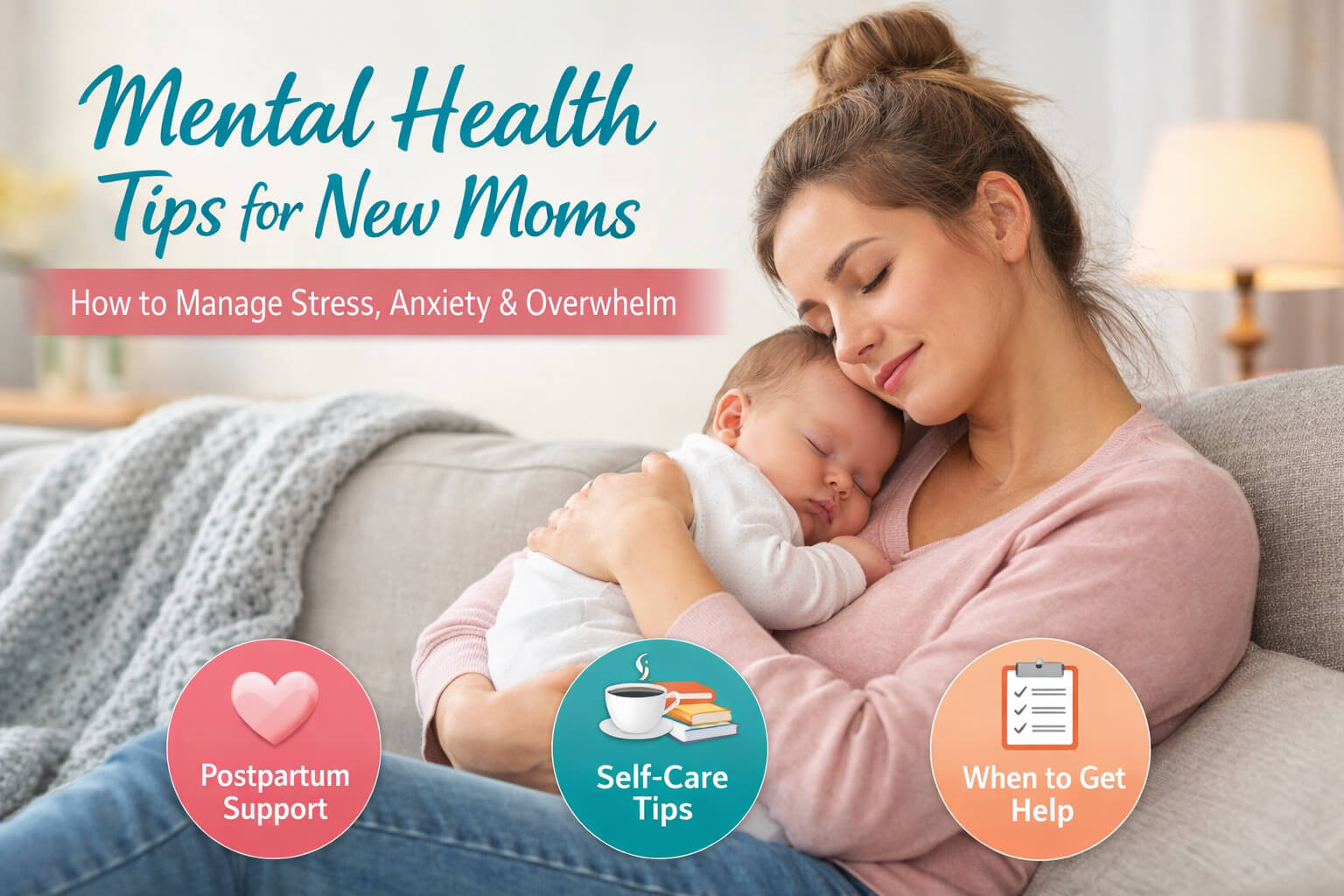
Becoming a mother is often described as one of the happiest moments in life—but for many women, the reality of new motherhood is far more complex. Alongside love and joy, new moms may experience stress, anxiety, exhaustion, and emotional overwhelm. These feelings are common, valid, and manageable, yet they are rarely talked about openly.
This guide is designed to support new mothers by explaining why mental health challenges happen after childbirth and offering practical, compassionate strategies to manage stress, anxiety, and overwhelm—without guilt or unrealistic expectations.
Why Mental Health Matters for New Moms
Your mental health is just as important as your physical recovery after childbirth. When a mother’s emotional well-being suffers, it can affect:
- Her ability to rest and heal
- Bonding with the baby
- Relationships with family and partner
- Long-term emotional health
Caring for your mental health is not selfish—it is essential for both you and your baby.
Common Mental Health Challenges After Childbirth
1. Postpartum Stress
New responsibilities, constant baby care, lack of sleep, and physical recovery can create intense stress. Many moms feel pressure to “do everything right,” which only adds to the burden.
2. Postpartum Anxiety
Anxiety may appear as:
- Constant worry about the baby’s health
- Fear of something going wrong
- Racing thoughts
- Trouble relaxing, even when the baby sleeps
Postpartum anxiety is very common and often overlooked.
3. Baby Blues
Up to 80% of new mothers experience mood swings, crying spells, irritability, or sadness during the first two weeks after birth due to hormonal changes.
4. Postpartum Depression (PPD)
PPD is more intense and longer-lasting than baby blues. Symptoms may include:
- Persistent sadness or numbness
- Loss of interest in things you once enjoyed
- Feelings of guilt or worthlessness
- Difficulty bonding with your baby
If symptoms last longer than two weeks, professional support is important.
Understanding Emotional Overwhelm in New Motherhood
Overwhelm happens when your emotional load exceeds your capacity to cope. New moms juggle:
- Feeding schedules
- Sleep deprivation
- Physical pain
- Household responsibilities
- Social expectations
Feeling overwhelmed does not mean you are failing—it means you are human.
Practical Mental Health Tips for New Moms
1. Let Go of Perfection
There is no such thing as a perfect mother.
Your baby does not need perfection—your baby needs:
- Safety
- Care
- Love
Messy homes, unfinished chores, and imperfect routines are normal. Focus on connection, not control.
2. Prioritize Rest (Even If Sleep Is Broken)
Sleep deprivation strongly affects mental health.
Helpful strategies:
- Sleep when your baby sleeps (even short naps help)
- Share night duties if possible
- Lower expectations during the first months
- Rest without guilt
Rest is not a luxury—it is a medical need.
3. Eat to Support Your Mind and Body
Skipping meals can worsen anxiety and fatigue.
Aim for:
- Regular meals
- Protein-rich snacks
- Plenty of fluids
- Simple, nourishing foods
You don’t need perfect nutrition—just consistent fuel.
4. Ask for Help Without Guilt
Many new moms struggle because they try to do everything alone.
You can ask for help with:
- Baby care
- Cooking or cleaning
- Grocery shopping
- Emotional support
Accepting help is a sign of strength, not weakness.
5. Talk About How You Feel
Bottling up emotions increases anxiety and sadness.
Talk to:
- Your partner
- A trusted friend
- Another mom
- A healthcare provider
If possible, join a new mom support group—online or in person.
Managing Anxiety as a New Mom
Grounding Techniques
When anxiety feels overwhelming:
- Take slow, deep breaths
- Focus on what you can see, hear, and feel
- Remind yourself: “I am safe. My baby is safe.”
Limit Information Overload
Too much advice from social media and the internet can increase anxiety.
Try:
- Following fewer accounts
- Avoiding negative birth or parenting stories
- Trusting your instincts
Coping With Mom Guilt
Mom guilt is extremely common.
You may feel guilty for:
- Taking breaks
- Wanting time alone
- Not enjoying every moment
Remember:
- You are allowed to have needs
- Taking care of yourself benefits your baby
- Loving your child doesn’t mean losing yourself
Gentle Self-Care for New Moms (That’s Actually Realistic)
Self-care doesn’t need to be expensive or time-consuming.
Simple self-care ideas:
- A warm shower
- Sitting in silence for 5 minutes
- Drinking tea while the baby sleeps
- Stretching your body
- Stepping outside for fresh air
Small moments matter.
Strengthening Emotional Connection With Your Baby
Bonding doesn’t always happen instantly—and that’s okay.
Ways to nurture connection:
- Skin-to-skin contact
- Talking or singing to your baby
- Holding your baby close
- Making eye contact
Bonding grows over time, not overnight.
When to Seek Professional Help
Please seek professional support if you experience:
- Persistent sadness or anxiety
- Panic attacks
- Thoughts of harming yourself or your baby
- Feeling disconnected from reality
- Inability to function daily
Contact:
- A doctor
- A mental health professional
- A postpartum counselor
- Emergency services if thoughts feel unsafe
Help is available, and recovery is possible.
Supporting Your Mental Health Long-Term
Mental health care doesn’t end after the newborn phase.
Continue to:
- Communicate your needs
- Set boundaries
- Maintain social connections
- Schedule check-ups
- Be kind to yourself
Motherhood evolves—and so should your support system.
You Are Not Alone
If you are struggling, please remember:
- Many mothers feel exactly the same way
- You are not weak
- You are not failing
- You are learning
Taking care of your mental health is one of the most loving things you can do—for yourself and your baby.
Final Thoughts
New motherhood is beautiful, challenging, exhausting, and emotional—all at once. Managing stress, anxiety, and overwhelm takes time, patience, and support. Be gentle with yourself. Healing is not linear, and asking for help is part of being a strong mother.
You are doing better than you think. 💙