
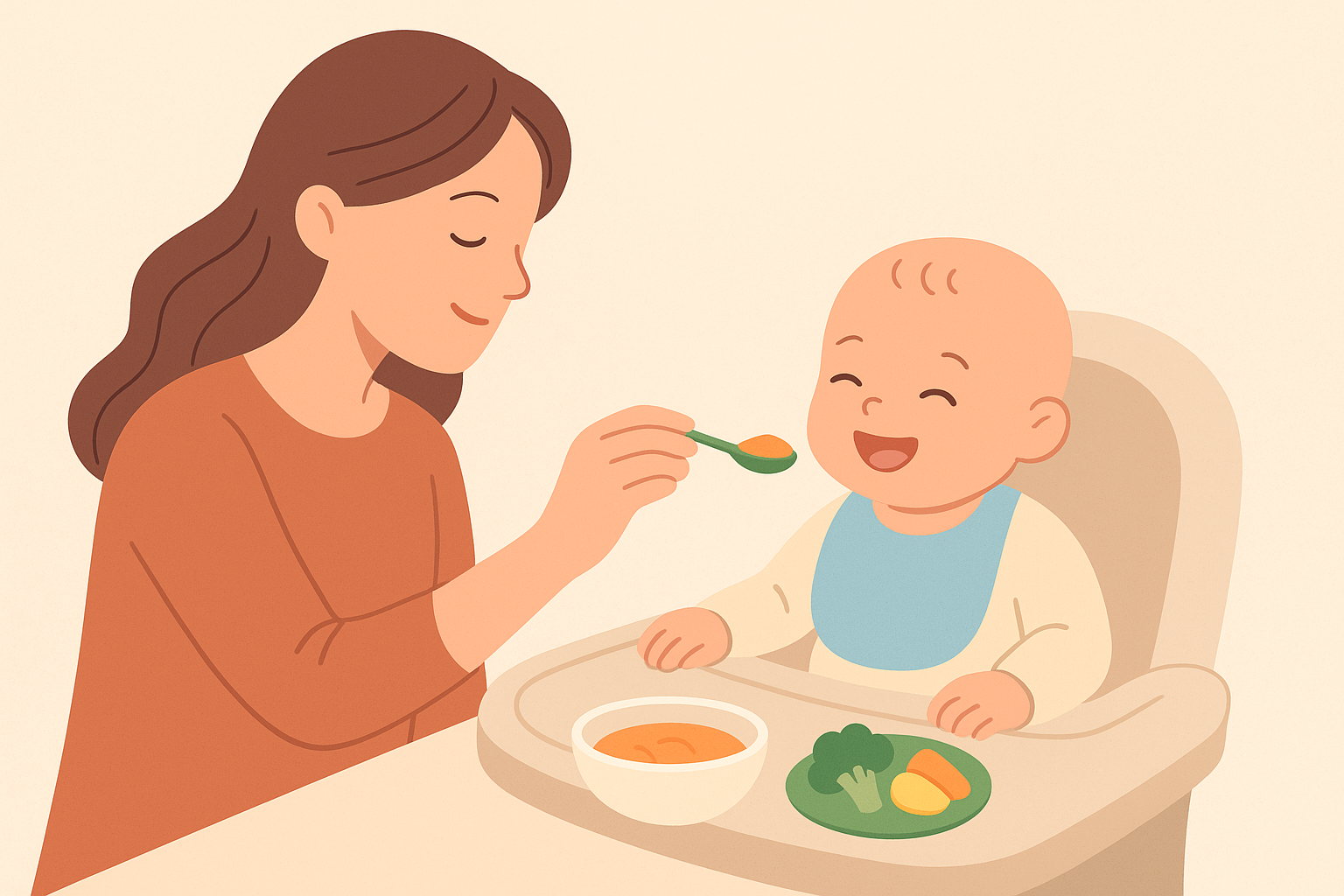
Introducing your baby to solid foods is one of the most exciting milestones of early childhood. Those first taste-test reactions—curiosity, surprise, delight—are unforgettable. But for parents, this stage also brings many questions: When is the right time to start? What foods should come first? How much should my baby eat? How do I prevent allergies?
This comprehensive guide will walk you through everything you need to know about starting solids safely, confidently, and joyfully.
When Should You Introduce Solid Foods?
Most babies are ready for solid foods around 6 months of age. This recommendation comes from major health organizations, including the World Health Organization (WHO), AAP, and CDC.
However, age is only one factor. What matters most is developmental readiness.
Signs Your Baby Is Ready for Solids
Look for these key signs—your baby should show most or all before starting solids:
✔ 1. Can sit up with little or no support
Good head and neck control is essential to prevent choking.
✔ 2. Shows interest in food
Your baby may:
- Watch you eat
- Lean forward toward food
- Try to grab food from your plate
✔ 3. Loss of the tongue-thrust reflex
This reflex pushes food out of the mouth; losing it means baby can safely swallow.
✔ 4. Ability to close mouth around a spoon
Baby can take food from spoon and swallow instead of pushing it out.
✔ 5. Increased appetite or still hungry after milk feeds
If your baby is under 6 months but showing these signs, consult your pediatrician before early introduction.
Why Not Start Solids Too Early?
Introducing solids before 4 months increases risks including:
- Choking
- Poor digestion
- Increased infection risk
- Obesity later in life
- Replacing necessary breast milk/formula nutrients
Starting at the right time ensures healthy growth and development.
Why Not Start Too Late?
Delaying solids past 7 months may lead to:
- Iron deficiency
- Oral motor delays
- Texture aversion
- Feeding difficulties in toddlerhood
The 5–7 month window is ideal.
How to Start Solids: The Three Main Methods
Parents today generally choose from three approaches:
1. Traditional Purees (Spoon Feeding)
This involves offering smooth purees and gradually increasing texture.
Benefits:
- Easy to gauge how much baby eats
- Good for parents anxious about choking
- Helpful for babies who prefer smoother textures
How to do it:
Start with thin purees → thicker purees → mashed foods → soft finger foods.
2. Baby-Led Weaning (BLW)
Baby self-feeds soft, appropriately sized pieces of food from the start.
Benefits:
- Encourages independence
- Helps baby develop chewing skills early
- Babies eat at their own pace
Common BLW first foods:
- Soft ripe avocado slices
- Steamed carrot sticks
- Banana halves
- Soft scrambled eggs
3. Hybrid Method (Most Popular)
This flexible approach combines spoon-fed purees with soft finger foods, allowing:
- Texture variety
- Motor skill development
- Parent reassurance
There’s no “right” method—choose what aligns with your comfort and your baby’s needs.
Best First Foods for Baby (6 Months+)
Choose nutrient-dense options that support growth, especially iron-rich foods.
Below are the best categories and specific first foods.
1. Iron-Rich Foods (Top Priority)
By 6 months, babies’ natural iron stores decrease—so iron-rich foods are essential.
Best iron-rich options:
- Iron-fortified baby cereals (oatmeal, multigrain)
- Mashed or pureed lentils
- Pureed meats (chicken, beef, turkey)
- Mashed beans or chickpeas
- Scrambled eggs or egg yolk
- Tofu
Iron deficiency is common in infants, making this category especially important.
2. Healthy Fats for Brain Development
Fat supports brain growth during the first two years.
Great options:
- Avocado
- Full-fat yogurt (plain)
- Nut butters (thinned with water or breast milk)
- Salmon (well cooked and flaked)
Avoid feeding nuts whole—they pose a choking hazard.
3. Fruits
Introduce one fruit at a time and observe for reactions.
Baby-friendly fruits:
- Banana (mashed or sliced for BLW)
- Pear (steamed or mashed)
- Apple (stewed or grated raw for older babies)
- Peach
- Mango
- Papaya
Fruits provide fiber, vitamins, and natural sweetness babies love.
4. Vegetables
Offer vegetables early to help babies develop a taste for non-sweet flavors.
Good starter vegetables:
- Sweet potato
- Carrots
- Green beans
- Zucchini
- Peas
- Pumpkin
- Broccoli (steamed florets)
Vegetables can be steamed, pureed, or served as soft finger foods depending on preference.
5. Grains & Starches
These add energy and nutrients.
Gentle options:
- Oatmeal or baby cereal
- Mashed potatoes
- Soft rice or rice porridge
- Quinoa
- Whole-wheat pasta (soft-cooked)
6. Proteins
Introduce early to reduce allergy risks.
Protein-rich options:
- Chicken
- Beef
- Turkey
- Fish
- Beans
- Lentils
- Eggs
How to Introduce Common Allergenic Foods Safely
Introducing allergenic foods early (between 6–12 months) can reduce the risk of food allergies.
Major allergens include:
- Eggs
- Cow’s milk (NOT cow’s milk as a drink, but dairy products like yogurt/cheese are fine)
- Peanut
- Tree nuts
- Wheat
- Soy
- Fish & shellfish
How to safely introduce allergens:
✔ Choose a time when baby is healthy
No rash, fever, or congestion.
✔ Offer allergen in small amounts
Example: ¼ teaspoon of peanut powder mixed with puree.
✔ Watch for signs of reaction for 2 hours
Possible allergy symptoms:
- Hives
- Vomiting
- Swelling
- Wheezing
If no reaction, continue offering the allergen 1–2 times weekly.
How Much Should Your Baby Eat When Starting Solids?
In the beginning, solids are complementary, not a replacement for milk.
General guideline:
- First month of solids: 1–2 tablespoons once daily
- 7–8 months: 2–3 meals + 1 snack
- 9–12 months: 3 meals + 2 snacks
Remember: Breast milk or formula remains the primary nutrition source until 12 months.
Sample Feeding Schedule for a 6-Month-Old Starting Solids
Here’s a simple starting routine:
Morning
- Breast milk/formula
- 1–2 tbsp iron-rich cereal OR mashed avocado
Midday
- Breast milk/formula
- 1–2 tbsp pureed vegetables
Evening
- Breast milk/formula
- 1–2 tbsp fruit puree or mashed banana
As your baby adjusts, gradually increase portions and add variety.
Textures: How to Progress Safely
6–7 months:
Smooth purees, mashed foods, soft finger foods
7–9 months:
Thicker mashed foods, soft chunks, BLW pieces
9–12 months:
Small chopped foods, family meals (modified), finger feeding
Exposing your baby to many textures helps prevent picky eating later.
Foods to Avoid for Babies Under 1 Year
Some foods are unsafe for babies. Avoid:
❌ Honey
Risk of botulism.
❌ Whole nuts or popcorn
Major choking hazard.
❌ Whole grapes, hot dogs, raw carrots
Must be sliced safely.
❌ Cow’s milk as a drink
But yogurt and cheese are allowed.
❌ Added salt or sugar
Baby kidneys aren’t ready for excess salt; sugar contributes to poor feeding habits.
❌ Unpasteurized foods
Risk of infection.
Safety always comes first.
Common Myths About Introducing Solids
Myth 1: Babies need solids at 4 months to sleep better.
➡ FALSE. No evidence supports this claim.
Myth 2: Start with rice cereal only.
➡ FALSE. Any iron-rich food can come first.
Myth 3: Babies shouldn’t have strong flavors.
➡ FALSE. Babies actually enjoy flavorful foods!
Myth 4: Allergens should be delayed.
➡ FALSE. Early introduction reduces allergy risk.
Tips for Stress-Free, Joyful Feeding
✔ Let your baby explore and get messy
Mess is learning!
✔ Follow baby’s lead
Don’t force bites; watch hunger/fullness cues.
✔ Offer a variety of colors and flavors
Build healthy taste preferences early.
✔ Sit with your baby
Eat together to model healthy eating habits.
✔ Practice patience
Some babies need multiple exposures—10–15 tries—before liking a new food.
When to Call Your Pediatrician
Contact your doctor if your baby shows:
- Poor weight gain
- Persistent vomiting
- Constipation lasting more than a few days
- Rash or hives after eating
- Difficulty swallowing
- Signs of allergy (swelling, wheezing)
Better safe than unsure.
Final Thoughts: Enjoy the Journey
Introducing solid foods is an adventure—for both baby and parent. It’s a time of discovery, learning, and joyful bonding. There is no perfect way to start, no perfect schedule, no perfect first food.
What matters most is:
- Watch for readiness signs
- Offer a variety of nutrient-rich foods
- Introduce allergens early and safely
- Keep mealtimes relaxed and positive
- Follow your baby’s cues
With patience and love, feeding becomes more than nourishment—it becomes connection.