
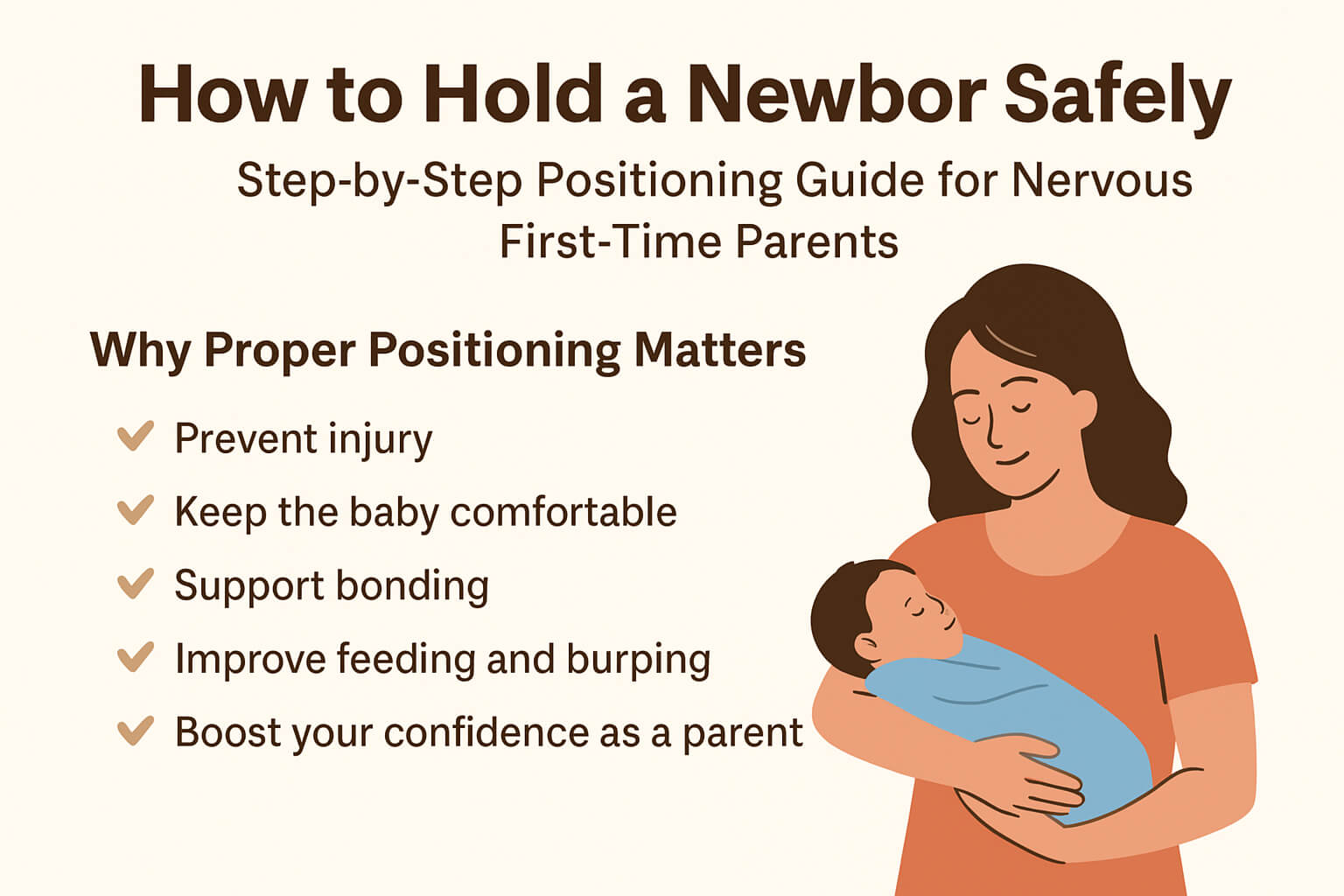
Becoming a parent is exciting, but the first days with a newborn can feel intimidating—especially when it comes to holding your tiny baby. Newborns feel fragile, and their head control isn’t developed yet, making many first-time parents nervous about lifting, carrying, and positioning them.
The good news? With the right techniques, holding a newborn safely becomes natural and comfortable. This guide gives you simple, step-by-step instructions for each safe position so you can hold your baby with confidence.
⭐ Why Proper Positioning Matters
Newborns have delicate neck muscles and need continuous head and neck support. Correct holding helps:
- Prevent injury
- Keep the baby comfortable
- Support bonding
- Improve feeding and burping
- Boost your confidence as a parent
Step-by-Step: How to Hold Your Newborn Safely
1. The Basic Cradle Hold
This is the most common and natural way to hold a newborn.
Steps:
- Place one hand under the baby’s head and neck.
- Slide your other hand under their bottom.
- Gently lift the baby toward your chest.
- Let the baby’s head rest in the bend of your elbow.
- Keep their body along your forearm with full support.
Best for:
- Newborns
- Bonding
- Feeding (bottle or breast)
2. The Shoulder Hold
Ideal for closeness and burping.
Steps:
- Lift baby with one hand supporting the head and neck.
- Place their head on your shoulder.
- Use the other hand to support baby’s back and bottom.
- Keep their head high enough to breathe easily.
Best for:
- Burping
- Cuddling
- Babies who like to “snuggle in”
3. The Upright Hold
Great for reflux-prone babies or when moving around.
Steps:
- Hold baby against your chest with their head against your collarbone.
- Keep one hand supporting the head and neck.
- Use the other hand to hold their bottom or back.
- Ensure the baby’s airway stays clear.
Best for:
- Babies with gas or reflux
- Situations where you need free movement
4. The Football Hold
Often used for breastfeeding or parents recovering from C-section.
Steps:
- Support baby’s head with your hand.
- Tuck baby gently under your arm—like holding a football.
- Keep their body along your forearm.
- Support the neck and keep their head turned outward.
Best for:
- Breastfeeding
- Moms post C-section
- Dads with bigger hands/arms
- Holding twins together (one on each side)
5. The Lap Hold
Perfect for eye contact and bonding.
Steps:
- Sit comfortably with your back supported.
- Place the baby on your lap, facing you.
- Support their head with both hands.
- Keep baby slightly reclined for comfort.
Best for:
- Talking and bonding
- Newborn stimulation
- Gentle playtime
⭐ Important Safety Tips When Holding a Newborn
Always Support the Head & Neck
Until around 3 months, newborns cannot hold their head up—so your hand must always be underneath.
Keep Baby’s Airway Clear
Ensure the baby’s nose and mouth are not pressed into your clothing or arms.
Hold Baby Close to Your Body
Closer = safer. It gives you control and helps the baby feel secure.
Don’t Multi-Task While Holding Baby
Avoid hot drinks, cooking, or carrying heavy items.
Stay Calm and Move Slowly
Babies feel your tension. Smooth, slow movements help them relax.
⭐ Signs Your Baby Is Positioned Correctly
- Baby’s neck is supported
- Airway is clear
- Baby’s back and bottom are supported
- Baby looks relaxed, not stiff or uncomfortable
- You feel stable and in control
⭐ Final Thoughts
Holding a newborn becomes easier with practice. Start slowly, stay calm, and follow these simple positioning steps. Within days, you’ll feel much more confident—and your baby will feel safe, secure, and loved in your arms.