
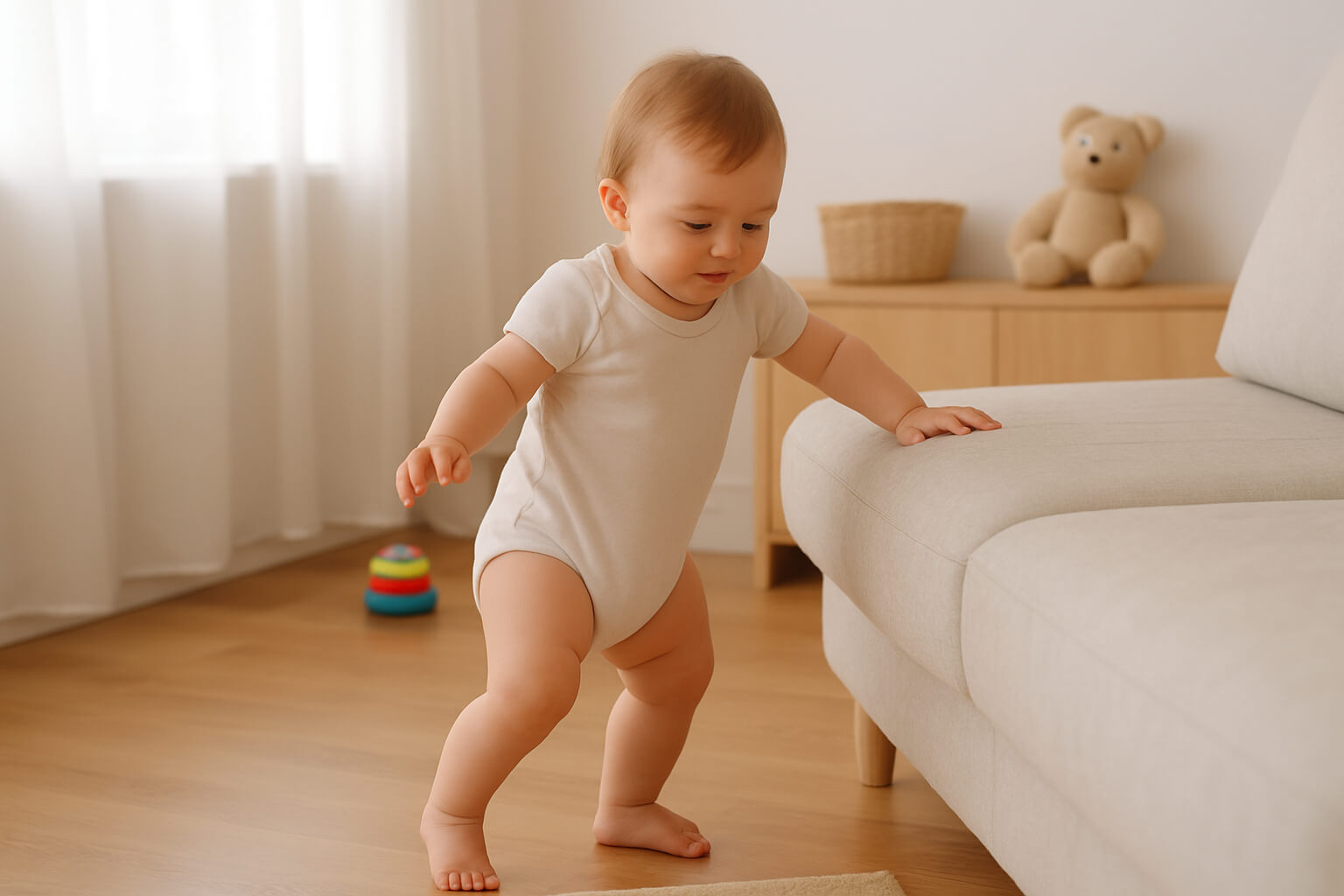
How to Encourage Your Baby to Walk: Expert-Backed Tips & Activities
Watching your baby take their first steps is one of the most unforgettable moments of parenthood. Those tiny, wobbly steps mark a huge milestone in your baby’s growth—independence, balance, and muscle strength all coming together in one magical moment. But while some babies start walking as early as 9 months, others take their time until 15–18 months. Both are completely normal.
If you’re wondering how to support your baby’s journey toward walking, this guide shares expert-backed tips, daily activities, safety advice, and developmental insights to help encourage walking naturally and confidently.
Understanding the Walking Milestone
Before jumping into activities, it helps to know the stages your baby goes through before walking. Pediatricians and child development experts agree that walking is the result of several smaller motor milestones working together.
Typical Stages Before Walking
- Tummy time (0–3 months)
Builds neck, shoulder, and core strength. - Rolling (4–6 months)
Helps with coordination and body awareness. - Sitting independently (6–8 months)
Strengthens core muscles needed for balance. - Crawling (7–10 months)
Develops bilateral coordination and arm-leg strength. - Pulling to stand (8–11 months)
Strengthens leg muscles. - Cruising (9–12 months)
Walking while holding furniture builds confidence and weight shifting. - First steps (9–15 months)
When baby learns to balance unsupported.
Different babies progress at different speeds. Your job is to provide the right opportunities, not rush the process.
When Do Babies Usually Start Walking?
Most babies walk between 12–15 months, but walking as early as 9 months or as late as 18 months can still be normal. Genetics, temperament, muscle tone, and daily movement opportunities all play a role.
If your baby is close to walking age, the tips below will help strengthen the physical and emotional skills needed to take those first steps.
Expert-Backed Tips to Encourage Your Baby to Walk
Below are safe, evidence-based ways to help your baby gain strength, balance, and confidence to begin walking.
1. Encourage Lots of Floor Time
Floor time allows your baby to move freely without restrictions.
Why it helps:
- Strengthens core, arms, and legs
- Improves balance and coordination
- Gives your baby the freedom to practice natural movements
How to do it:
- Set up a soft play mat in a safe area
- Keep toys within reach but not too close
- Join your baby on the floor to motivate and interact
A child who spends more time on the floor typically gains better gross motor skills more quickly.
2. Practice Supported Standing
Holding your baby upright helps them learn to put weight on their legs.
Try this activity:
- Sit on the floor and hold your baby under the arms
- Let their feet touch the floor
- Gently bounce them up and down
Benefits:
- Builds leg strength
- Encourages muscle memory
- Helps baby learn balance
Just make sure your baby is developmentally ready—usually around 6–8 months.
3. Let Your Baby Cruise Along Furniture
Cruising is one of the biggest pre-walking milestones.
How to support cruising:
- Set up stable furniture like a sofa or low table
- Place toys on both ends to encourage movement
- Use soft corner protectors for safety
Why it works:
Cruising teaches babies how to shift weight from one leg to the other, a skill essential for independent steps.
4. Use Push Toys (But the Right Kind!)
Push toys can be helpful as long as they’re sturdy and weighted.
Good push toys include:
- Wooden push walkers
- Weighted shopping carts
- Activity push toys with wide bases
Avoid:
- Baby walkers with wheels that move too fast
- Toys that tip easily
- Walkers that lift the baby off the ground
Push toys help with balance, coordination, and confidence.
5. Strengthen Core Muscles with Fun Activities
Your baby needs strong core muscles to walk independently.
Expert-recommended core-building activities:
✔ Tummy time every day
✔ Place toys slightly out of reach
✔ Let baby climb over safe obstacles
✔ Play “baby sit-ups”
- Hold baby’s hands and gently help them sit up
Why it matters:
A strong core helps babies maintain balance while standing and taking steps.
6. Encourage Barefoot Walking
Experts recommend barefoot walking for better balance and foot development.
Benefits of walking barefoot:
- Improves grip and muscle control
- Helps baby feel the ground surface
- Supports natural foot arch development
Use shoes only when outside or on rough surfaces.
7. Help Your Baby Practice Weight Shifting
Weight shifting teaches your baby how to transition weight from one side to the other—crucial for walking.
Simple exercise:
- While your baby stands holding your hands, gently sway them side-to-side
- Encourage them to lift one foot
Why it helps:
Weight shifting improves balance, coordination, and confidence.
8. Give Your Baby Something to Hold While Walking
Holding objects can distract your baby from the fear of falling.
Try giving:
- A soft toy
- A small cloth
- A plastic rattle
Why it works:
Your baby feels more stable and confident, making it easier to take steps.
9. Use Motivational Toys & Games
Make walking fun, not pressured.
Fun activities:
“Come to Mommy” Game
- Sit a few steps away and call your baby
- Clap, smile, and offer praise
“Toy Chase” Game
- Move a colorful toy a few steps away
- Encourage your baby to reach you
“Walking Between Adults”
- Two adults sit or kneel a short distance apart
- Let baby walk between you
Games make practice enjoyable and natural.
10. Avoid Overusing Baby Walkers and Jumpers
Pediatric experts warn that walkers and jumpers can delay walking because they:
- Encourage unnatural posture
- Reduce floor time
- Don’t build the right muscles
- Increase injury risk
If you use them, keep it to 10–15 minutes maximum per day.
Daily Routine to Encourage Walking
Here’s an example routine you can follow:
Morning
- 10 minutes of tummy time
- 10 minutes of supported standing
- Cruising along furniture
Afternoon
- Push toy practice
- Play on uneven surfaces (floor mat, carpet)
- Pull-to-stand practice
Evening
- Barefoot walking practice
- “Come to Mommy” or “Toy Chase” games
- Gentle stretching and massage
Consistency is key. Short, frequent sessions work better than long ones.
Helpful Activities to Build Walking Skills
Below are more expert-approved activities to try with your baby.
1. The Pillow Obstacle Course
Create soft obstacles with pillows to encourage stepping, climbing, and balance.
Benefits:
- Strengthens legs
- Improves coordination
- Teaches baby how to navigate uneven surfaces
Make sure the area is safe and supervised.
2. The “Stand Up and Reach” Game
Place a toy on a low stool and encourage your baby to stand up and reach.
Why it helps:
- Strengthens thigh muscles
- Teaches balance
- Builds confidence in standing and squatting
3. Walking on Different Textures
Different textures stimulate sensory development.
Try walking on:
- Grass
- Carpet
- Foam mats
- Sand
- Tile (supervised)
New textures help improve balance and adaptability.
4. Blow Bubbles and Let Baby Chase
Bubbles encourage movement, reaching, and stepping.
Benefits:
- Encourages stepping without pressure
- Improves coordination
- Keeps baby engaged and active
5. Use Mirrors for Motivation
Babies love watching themselves.
Place a baby-safe mirror at baby’s height and let them interact while standing or cruising.
Why it helps:
Stimulates curiosity and movement.
Tips for Parents to Stay Calm and Encouraging
Walking is a big emotional milestone—for both baby and parent. Here’s how to support the process without stress.
1. Don’t Compare Your Baby to Others
Every baby moves at their own pace.
Comparing milestones creates unnecessary stress and pressure.
2. Celebrate Small Wins
Pulling to stand
Standing for 2 seconds
Cruising a few steps
These are huge achievements!
3. Don’t Force the Walking Process
Let baby build skills naturally. Forcing can cause fear and slow development.
4. Provide a Safe Environment
Baby-proof rooms where your baby practices walking:
- Cover corners
- Use anti-slip mats
- Secure furniture
A safe space allows baby to explore freely.
5. Offer Encouragement, Not Pressure
Use positive words like:
- “You’re doing it!”
- “Come to Mama!”
- “Great job standing!”
Your tone makes a huge difference in confidence.
When Should You Be Concerned?
Most late walking is normal. But consider talking to a pediatrician if:
- Baby is not weight-bearing by 10 months
- Not pulling to stand by 12 months
- Not cruising by 14 months
- Not walking by 18 months
- Baby’s legs appear very stiff or very floppy
- Baby only uses one side of the body
Early intervention can help if needed.
Frequently Asked Questions
1. Is it okay if my baby skips crawling?
Yes! Some babies skip crawling and go straight to cruising or walking.
2. Should my baby wear shoes while learning to walk?
Barefoot is best indoors. Shoes only when outdoors.
3. How many hours of floor time does my baby need?
Experts recommend at least 1–2 hours daily, broken into small sessions.
4. Is walking early better?
No. Early or late walking does NOT indicate intelligence or future physical ability.
Final Thoughts: Walking is a Journey, Not a Race
Encouraging your baby to walk isn’t about pushing milestones—it’s about creating the right conditions, offering support, and celebrating progress. With the tips and activities above, you can help your baby build strength, balance, and confidence naturally.
Remember:
Your baby will walk when they’re ready. Your role is to guide, motivate, and cheer them on every step of the way.