
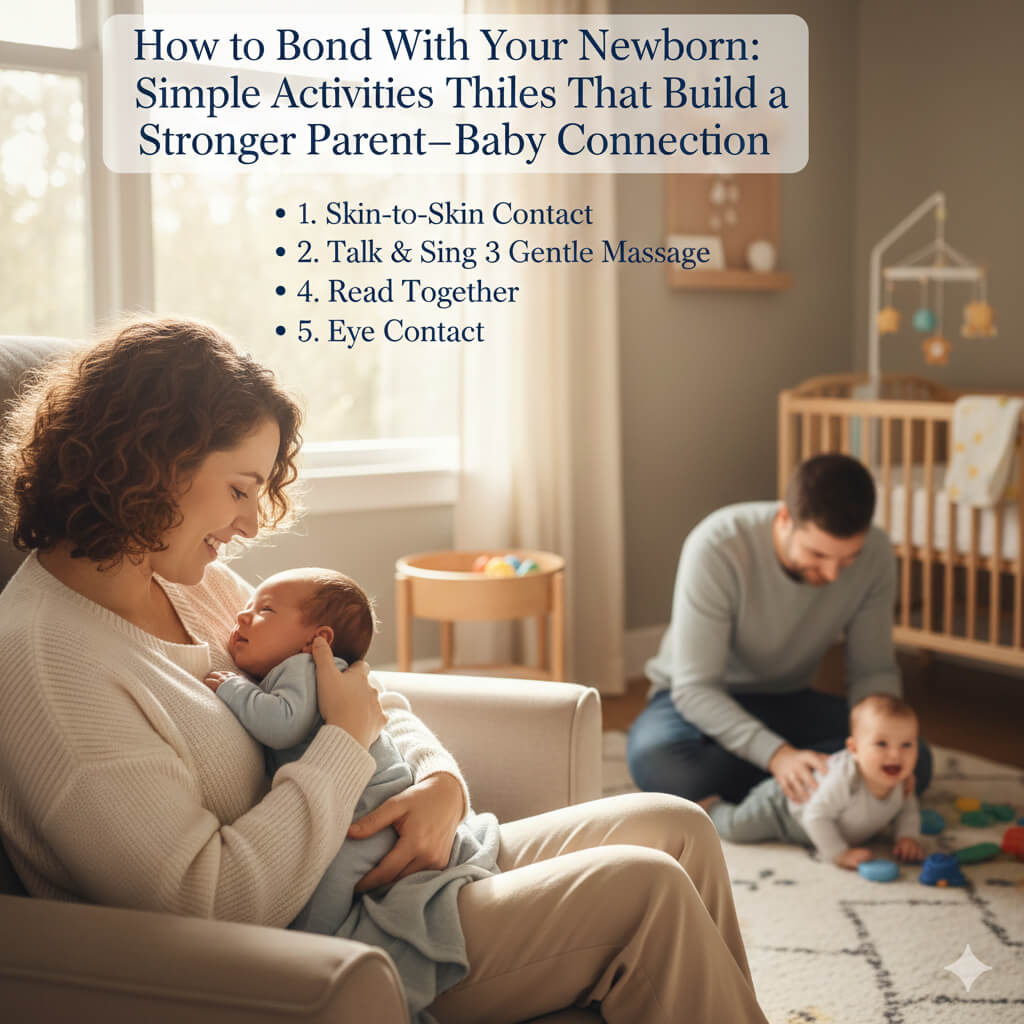
Bringing a newborn home is one of life’s most exciting—and sometimes overwhelming—experiences. As a parent, you want to create a loving, secure connection with your baby from day one. This connection, often called bonding, is essential for your baby’s emotional, social, and cognitive development.
The good news? Bonding doesn’t require complicated activities or long hours. Simple, consistent interactions can strengthen your relationship and help your baby feel safe, loved, and nurtured.
This guide will cover why bonding matters, ways to bond with your newborn, daily activities, and tips for both parents to build a strong, lasting connection.
Why Bonding With Your Newborn Matters
Bonding is more than affection—it’s a foundation for your baby’s future well-being.
Benefits of Early Bonding
- Emotional security: Babies who feel loved and safe develop trust in their caregivers.
- Brain development: Gentle interactions and responsive care support neural connections.
- Better sleep and feeding: Bonded babies often have more regular sleep and feeding patterns.
- Stronger parent–child relationship: Early attachment fosters long-term closeness.
Bonding is a two-way street: as you connect with your baby, you also experience fulfillment, confidence, and a deeper emotional bond.
Understanding Your Baby’s Cues
Babies communicate through nonverbal cues. Learning to recognize them is key to building connection.
Common Cues
- Hunger: Rooting, sucking fingers, smacking lips
- Tiredness: Yawning, rubbing eyes, fussiness
- Interest: Eye contact, cooing, reaching out
- Discomfort: Crying, squirming, arching back
Responding to these cues consistently strengthens trust and emotional bonding.
Hands-On Bonding Activities for Parents
Bonding is most effective when it’s interactive and sensory-rich. Here are proven ways to connect with your newborn:
1. Skin-to-Skin Contact
- Hold your naked baby against your bare chest
- Cover with a soft blanket for warmth
- Helps regulate baby’s temperature, heartbeat, and stress levels
- Promotes breastfeeding and emotional closeness
Tip: Skin-to-skin can be done any time, even during diaper changes or after baths.
2. Eye Contact and Talking
- Hold your baby at eye level
- Make gentle facial expressions and smile
- Speak softly or narrate your actions
- Respond to coos and babbles
Even newborns can focus on faces. Your voice and gaze are comforting and stimulating.
3. Gentle Massage
- Use soft, circular motions on arms, legs, back, and tummy
- Helps with digestion and relaxation
- Promotes healthy circulation and flexibility
- Creates a calming, secure environment
Tip: Use baby-safe oil or lotion, warm hands, and observe your baby’s reactions.
4. Singing and Music
- Sing lullabies or gentle songs
- Play soft music in the background
- Babies respond to rhythm and tone
- Encourages language development and emotional bonding
Even humming or soft talking strengthens connection.
5. Reading Aloud
- Choose short, colorful books
- Use expressive tones and gestures
- Helps with language skills and attention
- Builds early positive associations with reading
Reading doesn’t require understanding yet—babies love the sound of your voice.
6. Babywearing
- Use a safe sling or carrier
- Baby stays close while you move around
- Encourages bonding through touch, warmth, and rhythm
- Helps parents feel more confident and hands-free
7. Tummy Time
- Place baby on a blanket on their stomach for short periods
- Strengthens muscles and motor skills
- Look and interact with your baby during tummy time
- Use mirrors, soft toys, or gentle voice cues
Tip: Start with 1–2 minutes, several times a day, and gradually increase.
8. Play and Sensory Stimulation
- Introduce textures, colors, and sounds
- Soft rattles, plush toys, or textured blankets
- Encourage reaching and grasping
- Keep interactions short but frequent
This builds cognitive skills and a sense of security.
Bonding During Daily Care
Even routine tasks are opportunities to bond:
- Feeding: Eye contact, talking, gentle touch
- Diapering: Use this moment for singing or gentle interaction
- Bathing: Talk, smile, and make the experience fun
- Dressing: Explain what you’re doing, narrate movements
Consistency in responsiveness during everyday care strengthens attachment.
Tips for Moms and Dads
Bonding is equally important for both parents. Here’s how moms and dads can create strong connections:
For Moms
- Use breastfeeding or bottle time for bonding
- Practice skin-to-skin after delivery
- Involve partner in care to reduce stress
For Dads
- Take on diaper changes, feeding prep, and bath time
- Use babywearing to increase closeness
- Talk, sing, and play actively with your newborn
Shared responsibilities strengthen family bonds.
Managing Challenges in Bonding
Some parents worry they aren’t bonding “enough.” This is normal.
Common Challenges
- Fatigue and sleep deprivation
- Postpartum recovery for mom
- Baby’s fussiness or health issues
- Feeling unsure of what to do
Solutions
- Take small bonding moments consistently
- Share duties with partner or support system
- Focus on your baby’s cues rather than perfection
- Consult professionals if bonding feels difficult
Remember, bonding grows over time, and consistency matters more than intensity.
Bonding Benefits Beyond the Newborn Stage
Strong early bonding creates a foundation for:
- Emotional resilience and confidence
- Positive social interactions and friendships
- Better academic and cognitive outcomes
- Lifelong parent–child trust and communication
Every interaction—feeding, playing, cuddling—lays this foundation.
Practical Daily Bonding Routine
Here’s a sample routine to weave bonding naturally into daily life:
| Time | Activity | Bonding Tip |
|---|---|---|
| Morning | Feed & burp | Maintain eye contact, gentle talk |
| Mid-morning | Tummy time | Encourage reaching and cooing |
| Noon | Diaper change | Sing or narrate what you’re doing |
| Afternoon | Skin-to-skin | Quiet bonding, gentle touch |
| Evening | Bath | Talk softly, use gentle massage afterward |
| Night | Lullaby or reading | Eye contact, soft voice to help sleep |
Flexibility is key; let your baby’s cues guide the timing.
Building a Strong Emotional Connection
Bonding is as much emotional as physical. Strategies include:
- Respond quickly to your baby’s cries
- Show affection through gentle touch and words
- Celebrate small milestones
- Maintain consistency and patience
Your presence, tone, and responsiveness matter more than perfection.
When to Seek Professional Support
Reach out to pediatricians or therapists if:
- Your baby shows extreme fussiness or feeding issues
- You struggle with overwhelming stress or postpartum emotions
- Bonding feels consistently difficult despite effort
Early guidance helps strengthen parent–child relationships.
Final Thoughts
Bonding with your newborn is a journey, not a checklist.
From skin-to-skin contact and gentle massage to reading, singing, and daily care, small, consistent interactions build trust, emotional security, and a strong parent–baby connection.
Be patient with yourself. Respond to your baby’s cues. Celebrate every coo, smile, and milestone. These early days set the foundation for a lifelong, loving relationship with your child.
The key takeaway: presence, responsiveness, and love are the most powerful bonding tools you have.