
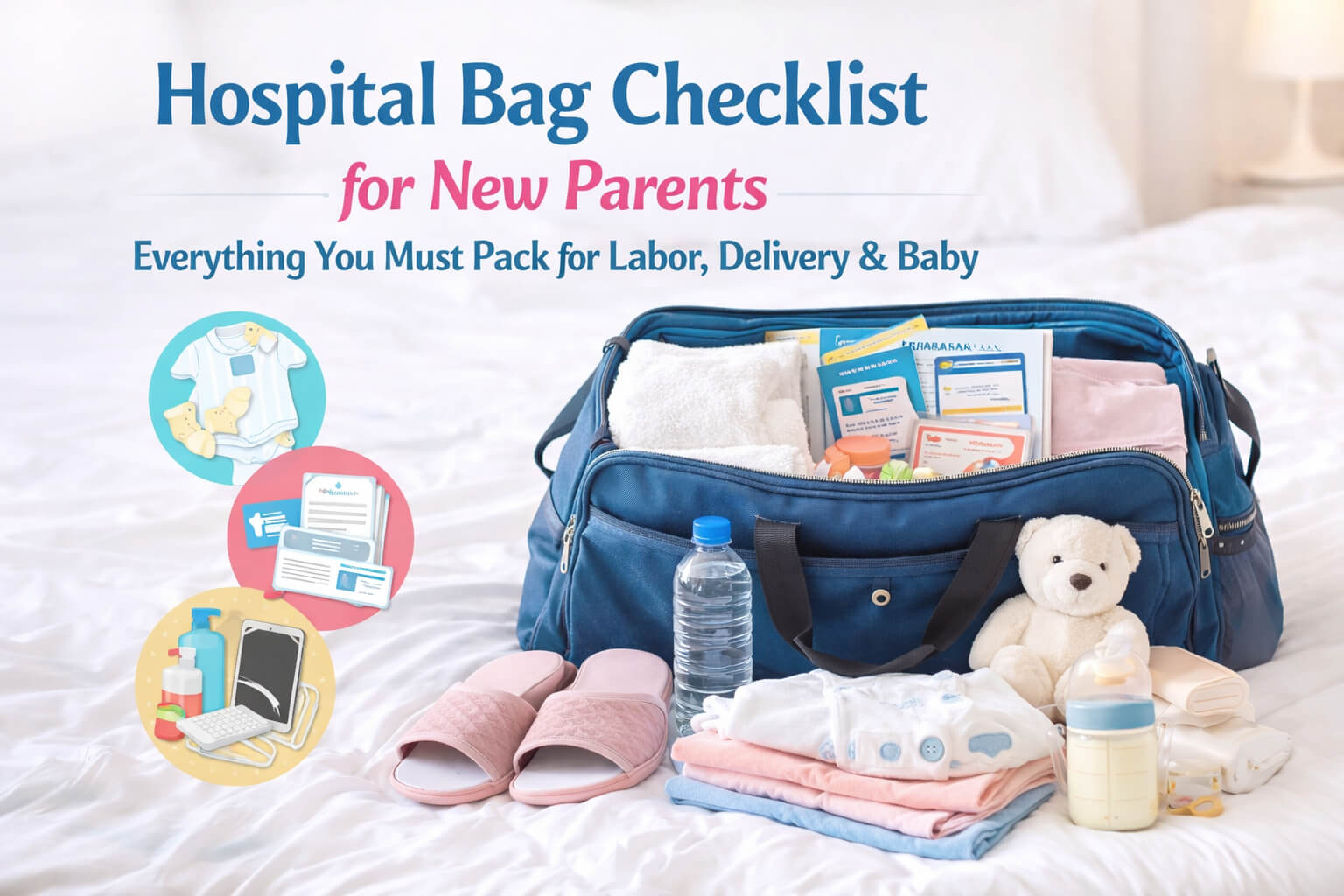
Preparing for the arrival of your baby is exciting, but it can also be overwhelming. One of the most important things new parents can do is pack a hospital bag in advance. A well-prepared hospital bag ensures that you have everything you need for labor, delivery, and the first few days after your baby’s birth. In this guide, we’ll provide a complete hospital bag checklist for moms, dads/partners, and the baby, along with packing tips and advice to make your hospital stay as smooth as possible.
Why Packing a Hospital Bag Early Is Important
Many parents wait until the last minute to pack their hospital bag, but labor can start unexpectedly. Packing your bag by around 36 weeks of pregnancy is recommended. Here’s why having a hospital bag ready is essential:
- Reduces Stress: You won’t have to worry about forgetting essential items when the big day arrives.
- Ensures Comfort: You’ll have personal items that make your stay more comfortable and stress-free.
- Prepares for Unexpected Stays: Labor may last longer than anticipated, and hospitals may not provide everything you need.
- Helps Your Partner Support You: A packed bag allows your partner to focus on comforting and assisting you rather than running errands.
Hospital Bag Checklist for Moms
Your comfort, health, and convenience are a priority during labor and after delivery. Here’s a detailed packing list:
Essentials for Labor
- Hospital Paperwork & ID: Bring insurance cards, ID, birth plan, and hospital forms.
- Birth Plan: Include your preferences for labor, pain management, and newborn care.
- Phone & Charger: Consider a long charging cable for hospital beds.
- Snacks & Drinks: Energy bars, nuts, or juice for both mom and partner.
- Lip Balm & Moisturizer: Labor can be long, and hospital air is often dry.
- Hair Ties & Headbands: Keep hair away from your face.
- Comfortable Robe & Slippers: Hospitals can be cold, and these make moving easier.
Post-Delivery Essentials
- Maternity Bras & Nursing Pads: Comfortable bras and absorbent pads help with breastfeeding and leakage.
- Loose, Comfortable Clothing: Pack pajamas, nightgowns, or oversized T-shirts.
- Heavy-Duty Maternity Underwear: Hospitals may provide some, but having your own is more comfortable.
- Toiletries: Toothbrush, toothpaste, shampoo, conditioner, body wash, deodorant, hairbrush, and skincare products.
- Sanitary Pads: The hospital may provide some, but extra heavy-duty pads are recommended.
- Glasses or Contact Lenses: If needed, along with solution and case.
Optional Comfort Items
- Pillow from Home: Familiar pillow can make hospital sleep more comfortable.
- Music or Headphones: To help relax during labor.
- Essential Oils or Massage Tools: Only if allowed by the hospital.
- Notebook & Pen: To jot down questions, milestones, or thoughts.
Hospital Bag Checklist for Dads/Partners
Your partner also needs items to support both mom and baby efficiently. Here’s what to pack:
- Change of Clothes: Comfortable outfits for a 1–2 day stay.
- Toiletries: Toothbrush, toothpaste, deodorant, and shampoo.
- Snacks & Drinks: Energy bars, water, or favorite beverages.
- Phone & Charger: Include a power bank if needed.
- Camera or Phone with Extra Memory: For capturing first baby moments.
- List of Contacts: Friends and family to inform about the birth.
- Cash or Cards: For hospital vending machines or parking fees.
- Comfortable Shoes: Hospitals often require walking, especially after long hours of support.
Hospital Bag Checklist for Baby
Your newborn will need essentials for both the hospital stay and the trip home. Most hospitals provide diapers and wipes, but bringing your own ensures comfort.
Baby Clothing & Accessories
- Onesies & Sleepers: Pack 2–3 sets for a 1–2 day stay.
- Socks & Mittens: To keep tiny hands and feet warm.
- Hat or Cap: Helps regulate body temperature.
- Going-Home Outfit: Choose something soft, comfortable, and weather-appropriate.
- Swaddle or Receiving Blankets: For warmth and comfort.
Feeding Essentials
- Bottles & Formula: Only if formula feeding; otherwise, breastmilk is fine.
- Burp Cloths: Useful for spit-ups and feeding messes.
- Breast Pump: Optional if planning to pump in the hospital.
Diapering Essentials
- Newborn Diapers: Hospitals usually provide these, but extra packs are helpful.
- Wipes: Gentle, fragrance-free wipes for sensitive skin.
- Diaper Cream: To prevent or treat rashes.
Packing Tips for Your Hospital Bag
Packing strategically can make your hospital stay much smoother. Here’s how to stay organized:
- Use Separate Bags: Consider using three smaller bags – one for mom, one for dad, and one for baby.
- Pack Early: Ideally by 36 weeks of pregnancy.
- Label Everything: Helps hospital staff and keeps your items organized.
- Bring a Backpack or Tote: Easier to carry and access during labor.
- Include a Checklist: Tick off items as you pack to avoid missing anything.
- Think About the Hospital Stay Duration: Pack extra items if your stay could be longer.
Essential Documents and Paperwork
Don’t forget these important documents:
- Insurance cards and hospital registration forms
- ID cards or driver’s license
- Birth plan and any medical records
- Pediatrician contact information
- Emergency contacts list
Pro Tip: Keep documents in a small folder or zippered pouch for easy access.
Comfort Items for a More Relaxed Labor Experience
Labor can be long, but certain items can make it more comfortable:
- Massage Tools: Tennis ball or massage stick for back pain.
- Heating Pad or Warm Compress: Relieves cramps and discomfort.
- Eye Mask: Helps you rest in a bright hospital room.
- Entertainment: Books, magazines, or tablet for distraction during early labor.
Packing for a Natural Birth vs. Cesarean Section
Depending on your birth plan, some items may vary:
For Natural Birth
- Extra comfortable clothing for labor
- Birth ball or yoga mat (if allowed)
- Essential oils or music for relaxation
For C-Section
- Loose, high-waisted clothing to avoid the incision
- Extra pillows for comfort while seated
- Abdominal binder if recommended by your doctor
Going Home: Must-Have Items
Before leaving the hospital, make sure you have:
- Car Seat: Properly installed; most hospitals won’t let you leave without one.
- Diaper Bag: Packed with diapers, wipes, change of clothes, and feeding supplies.
- Baby Blanket or Swaddle: For warmth during the ride home.
- Mom’s Essentials: Any medications, sanitary pads, or breastfeeding supplies.
Tips for a Stress-Free Hospital Bag Packing
- Don’t Overpack: Hospitals provide many items; focus on what makes you comfortable.
- Prepare a “Labor Bag” and a “Postpartum Bag”: Labor bag for the delivery room, postpartum bag for after delivery.
- Consider Hospital Amenities: Some hospitals provide toiletries, gowns, and baby supplies.
- Ask Your Partner to Pack Their Bag: Sharing responsibilities reduces stress.
- Keep a Small Overnight Bag in Your Car: In case labor starts suddenly away from home.
Common Mistakes to Avoid
- Forgetting chargers or essential documents
- Overpacking unnecessary items
- Not labeling items
- Packing too late and missing urgent needs
- Not including comfort items for both mom and partner
Hospital Bag Checklist Summary
Here’s a quick overview:
For Mom: ID, birth plan, phone & charger, snacks, robe, slippers, maternity bras, comfortable clothing, toiletries, sanitary pads, nursing pads.
For Partner: Clothes, toiletries, snacks, phone & charger, camera, list of contacts, comfortable shoes, cash/cards.
For Baby: Onesies, sleepers, socks, mittens, hat, swaddle blankets, going-home outfit, diapers, wipes, burp cloths, diaper cream.
Optional Comfort Items: Pillow, music, heating pad, eye mask, massage tools, entertainment, essential oils.
Documents: Insurance card, ID, medical records, pediatrician contacts, emergency contacts.
Final Thoughts
Packing a hospital bag may feel daunting, but having everything prepared in advance reduces stress and allows you to focus on the most important thing – welcoming your baby. Use this checklist as a guide, but remember that every family’s needs are unique. Prioritize comfort, practicality, and items that will make your stay easier and more enjoyable.
By preparing thoughtfully, you can approach labor, delivery, and the first few days with confidence and peace of mind. Congratulations, and get ready to enjoy one of the most memorable moments of your life!