
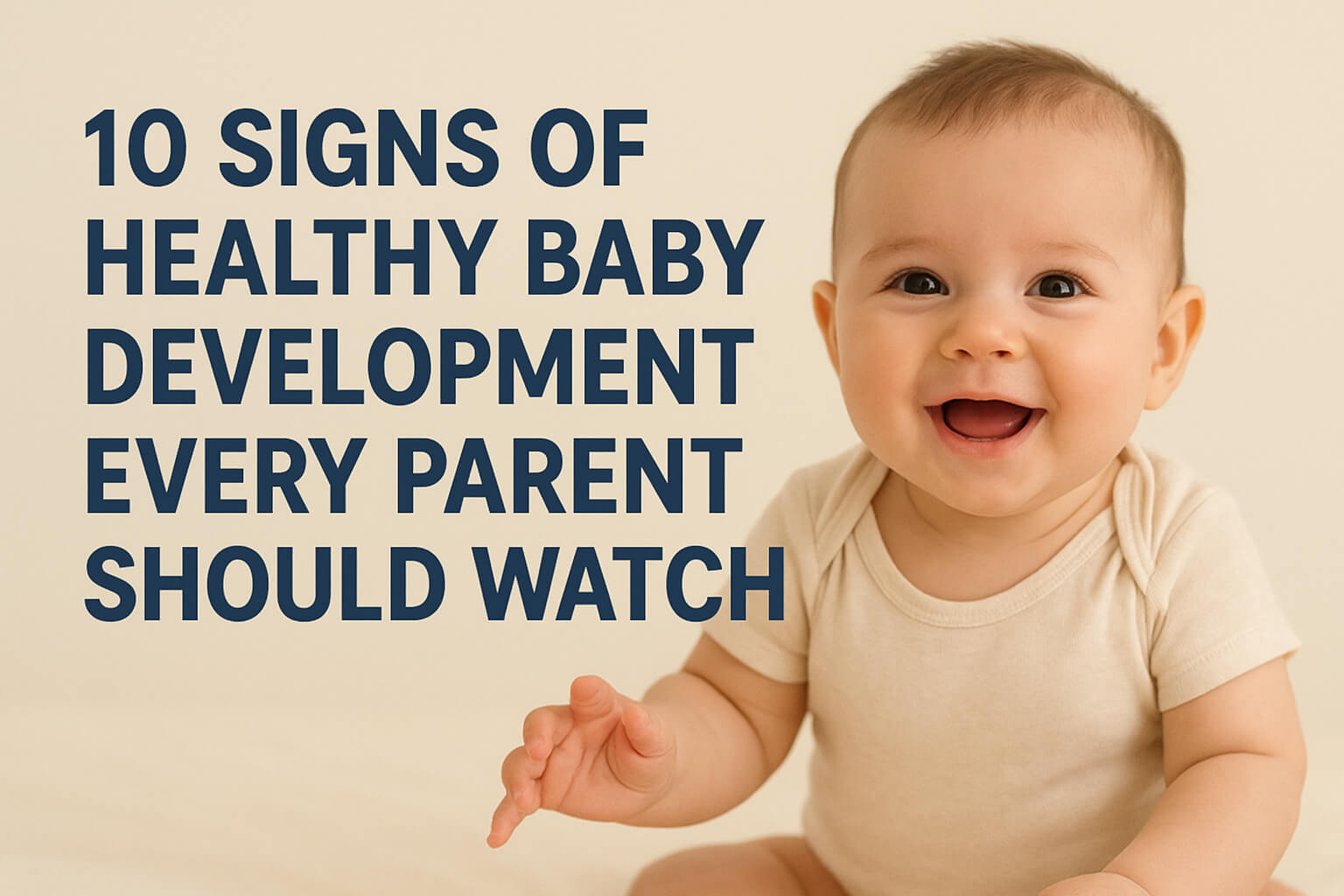
Watching your baby grow is one of life’s greatest joys. Every smile, coo, and step feels like a milestone—and for good reason. Understanding the signs of healthy baby development can help you ensure your little one is on the right track physically, emotionally, and cognitively. While every baby develops at their own pace, there are key markers that most healthy babies reach within typical age ranges.
Here’s a guide to the 10 most important signs of healthy development parents should watch for.
1. Responsive Smiling and Eye Contact
One of the first indicators of healthy social and emotional development is your baby’s ability to respond to faces and voices. By around 6–8 weeks, babies typically start to smile at familiar faces. This is more than just an adorable expression—it’s a sign that your baby is engaging with the world.
What to watch:
- Does your baby smile back when you smile at them?
- Do they make eye contact during feeding or playtime?
These interactions help strengthen parent-child bonding and support early social development.
2. Coos, Babbling, and Early Sounds
Language development begins long before your baby says their first word. Cooing around 6–8 weeks and babbling around 4–6 months are key milestones.
Signs to notice:
- Variety of sounds such as “ahh,” “ohh,” or “ba-ba”
- Attempting to mimic the pitch or rhythm of your voice
Babbling is the foundation for later speech and indicates healthy cognitive development.
3. Steady Weight Gain and Physical Growth
A healthy baby grows rapidly in the first year. Regular weight gain, increased height, and head circumference growth are primary indicators of good physical health.
Typical growth patterns:
- Babies usually double their birth weight by 4–5 months
- Triple it by 1 year
Your pediatrician tracks growth using growth charts. Consistent growth along these percentiles is a sign of good nutrition and health.
4. Strong Motor Skills
From lifting their head to crawling and eventually walking, physical milestones are vital. These skills indicate healthy muscle and brain development.
What to look for:
- 2–3 months: Lifts head and chest while on tummy
- 4–6 months: Rolls over both ways
- 6–9 months: Sits without support, begins crawling
- 12 months: Takes first steps
Motor milestones vary, but steady progress is key.
5. Curiosity and Exploration
Healthy babies are naturally curious. They reach for toys, explore objects with their hands and mouth, and pay attention to new sights and sounds.
Indicators:
- Shows interest in new objects and people
- Uses hands and mouth to explore textures and shapes
- Reaches for and grasps toys
Curiosity is a sign of cognitive and sensory development.
6. Healthy Sleep Patterns
While newborns sleep up to 16–18 hours a day, sleep gradually consolidates as babies grow. By 6 months, many babies can sleep 6–8 hours at a stretch.
Signs of healthy sleep:
- Falls asleep relatively easily
- Regular napping during the day
- Wakes up alert and content
Sleep is critical for brain growth, memory consolidation, and overall health.
7. Consistent Feeding and Appetite
Healthy babies typically have strong, consistent appetites. Whether breastfed or formula-fed, they show interest in feeding and gain weight steadily.
What to monitor:
- Regular feeding every 2–3 hours in newborns
- Gradual introduction of solid foods around 6 months
- Signs of hunger like rooting, sucking, or reaching for food
A good appetite signals proper nutrition and energy for growth.
8. Social Interaction and Imitation
Babies are social learners. They begin to mimic gestures, facial expressions, and sounds.
Key signs:
- Laughs when others laugh
- Waves bye-bye or claps hands
- Copies simple actions like sticking out their tongue
Social imitation demonstrates cognitive development and understanding of cause-and-effect relationships.
9. Problem-Solving Skills
Even simple problem-solving is a sign of a healthy developing brain. By 6–12 months, babies begin to figure out how to reach toys, manipulate objects, or overcome minor obstacles.
Examples:
- Pulls a blanket to reach a toy
- Drops objects repeatedly to see what happens
- Fits shapes into a sorting toy
These behaviors show curiosity, learning, and early cognitive growth.
10. Emotional Expression and Regulation
Babies express a wide range of emotions, including happiness, frustration, and curiosity. Healthy emotional development includes the ability to self-soothe, seek comfort, and respond appropriately to caregivers.
What to look for:
- Cries when in discomfort and calms when comforted
- Shows affection like hugging or reaching out to parents
- Experiences varied emotions appropriate for age
Understanding and responding to emotions helps build secure attachment and social-emotional skills.
Conclusion
Every baby is unique, and development may vary slightly. However, these 10 signs provide a useful checklist for parents to monitor overall growth and well-being. Regular pediatric checkups are essential to track milestones and address concerns early.
By observing your baby’s social, emotional, cognitive, and physical behaviors, you can celebrate milestones confidently while ensuring your child is developing healthily.