
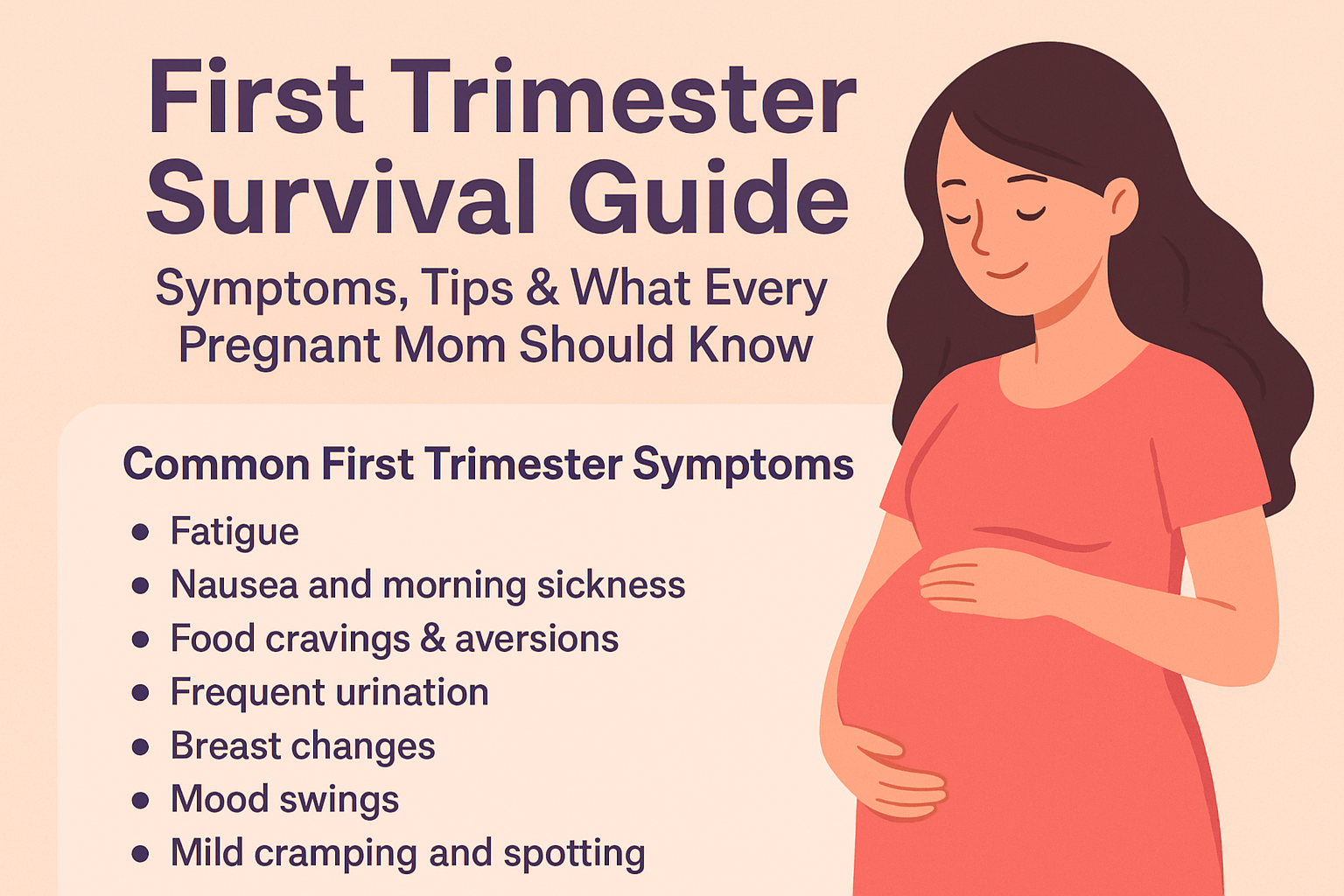
The first trimester of pregnancy, covering weeks 1 through 12, is a time of incredible change. While it’s exciting to know a new life is growing inside you, it can also be overwhelming with physical and emotional changes. This guide will walk you through common symptoms, helpful tips, and essential knowledge for a smoother start to your pregnancy journey.
Understanding the First Trimester
The first trimester is crucial for your baby’s development. During these early weeks:
- Major organs begin forming – including the heart, brain, and spinal cord.
- Hormonal changes peak – leading to mood swings, fatigue, and other symptoms.
- Body adaptations occur – your body starts adjusting to support your growing baby.
Knowing what to expect can reduce stress and help you make informed decisions about your health and lifestyle.
Common First Trimester Symptoms
Every pregnancy is unique, but many women experience a combination of the following:
1. Fatigue
Hormonal changes, especially increased progesterone, can leave you feeling exhausted. Even small tasks can seem overwhelming.
Tip: Take short naps, prioritize rest, and avoid over-scheduling.
2. Nausea and Morning Sickness
Nausea is common, affecting up to 80% of pregnant women. It can occur anytime, not just in the morning.
Tip: Eat small, frequent meals, stay hydrated, and try ginger or peppermint tea for relief.
3. Food Cravings & Aversions
You may suddenly crave certain foods or feel repulsed by others. Hormones influence taste and smell sensitivity.
Tip: Listen to your body, but maintain a balanced diet to meet nutritional needs.
4. Frequent Urination
Your growing uterus puts pressure on your bladder, and increased blood flow leads to more trips to the bathroom.
Tip: Stay hydrated, but avoid excessive fluids before bedtime.
5. Breast Changes
Tenderness, swelling, and darkening of areolas are common due to hormonal shifts.
Tip: Wear a supportive bra and avoid tight clothing.
6. Mood Swings
Fluctuating hormones can affect your emotions. Anxiety, irritability, or crying spells are normal.
Tip: Practice relaxation techniques, connect with supportive friends or family, and consider prenatal yoga or meditation.
7. Mild Cramping and Spotting
Some women experience light cramps or spotting, often caused by implantation or hormonal changes.
Tip: Contact your doctor if cramps are severe or bleeding is heavy.
Essential Tips for First Trimester Survival
Navigating the first trimester is easier with these practical strategies:
1. Prioritize Nutrition
- Eat folate-rich foods (leafy greens, beans) to support fetal development.
- Include protein, calcium, and iron for energy and bone health.
- Stay hydrated to help with fatigue and nausea.
2. Take Prenatal Vitamins
A daily prenatal vitamin with folic acid, iron, and DHA is essential to reduce birth defect risks and support overall health.
3. Manage Nausea
- Eat bland snacks like crackers or dry toast.
- Avoid strong odors that trigger nausea.
- Eat smaller meals throughout the day.
4. Exercise Safely
Gentle activities like walking, swimming, or prenatal yoga can boost energy, reduce stress, and improve circulation.
5. Rest and Sleep
Aim for 7–9 hours of sleep per night and take naps if needed. Listen to your body—fatigue is a natural signal.
6. Stay Informed
Learn about prenatal care, screenings, and your baby’s development. Knowledge helps reduce anxiety.
7. Avoid Harmful Substances
- No smoking, alcohol, or recreational drugs.
- Limit caffeine and avoid certain medications unless approved by your doctor.
8. Emotional Health
Pregnancy hormones can impact your mood. Connect with supportive friends, join prenatal groups, or speak with a counselor if needed.
When to Call Your Doctor
Some symptoms are normal, but others require prompt medical attention:
- Severe abdominal pain or cramping
- Heavy bleeding or passing large clots
- Persistent vomiting that prevents you from keeping food down
- Severe headaches, vision changes, or sudden swelling
- Signs of infection, like fever or burning urination
Your doctor is your partner in navigating any complications.
First Trimester Checklist
- ✅ Schedule your first prenatal appointment
- ✅ Start prenatal vitamins with folic acid
- ✅ Eat a balanced diet and stay hydrated
- ✅ Rest and manage stress
- ✅ Educate yourself on early pregnancy symptoms and screenings
Final Thoughts
The first trimester is a time of adjustment, growth, and sometimes discomfort. By understanding the symptoms, prioritizing self-care, and seeking medical guidance when necessary, you can navigate these early weeks with confidence. Remember, every pregnancy is unique—trust your instincts, and give yourself grace as your body adapts to this incredible journey.