
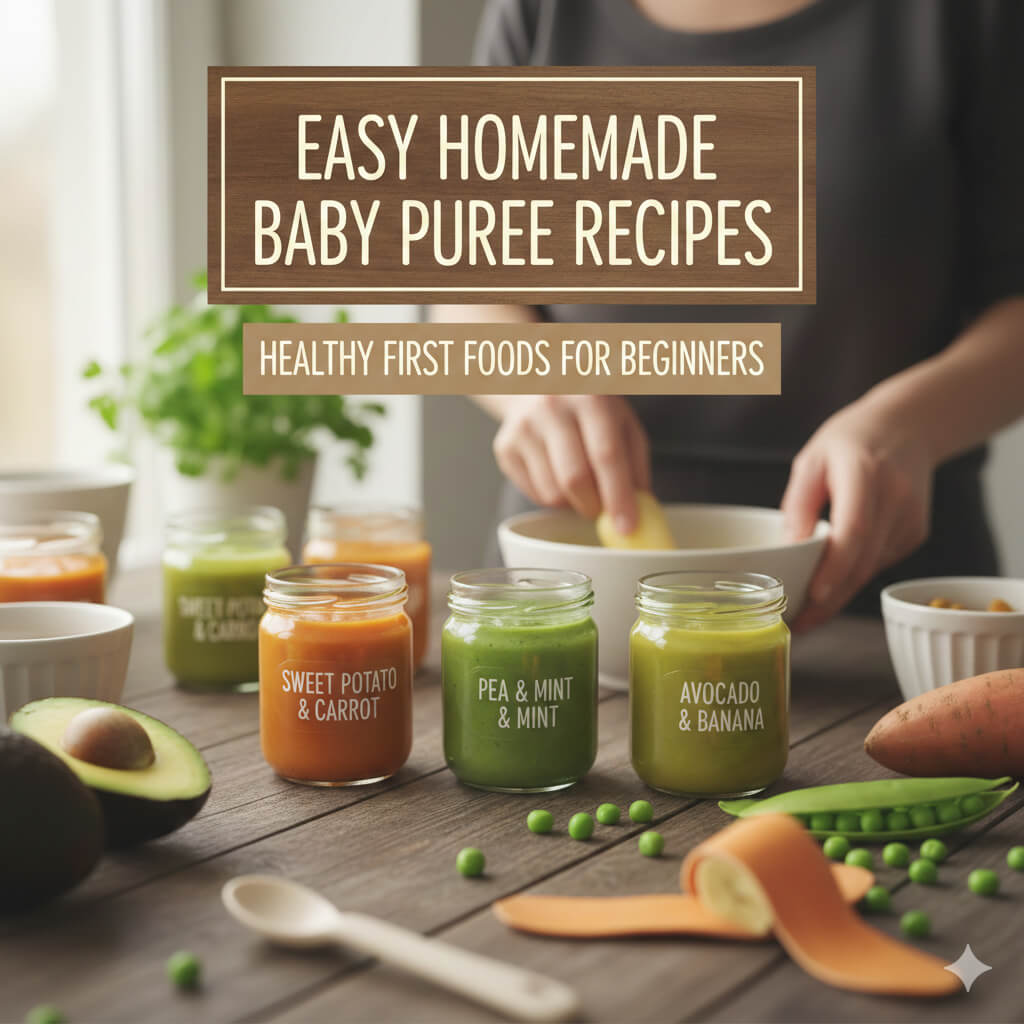
Introducing solid foods to your baby is an exciting milestone—but it can also feel overwhelming for first-time parents. Questions like “What should I start with?”, “Is homemade baby food safe?”, and “How do I prepare purees properly?” are very common.
The good news is that homemade baby purees are simple, affordable, and one of the healthiest ways to begin your baby’s solid food journey. With just a few fresh ingredients and basic kitchen tools, you can prepare nutritious first foods that support your baby’s growth and taste development.
This complete beginner’s guide will walk you through everything you need to know about making easy homemade baby purees, including safety tips, preparation methods, and step-by-step recipes for healthy first foods.
Why Choose Homemade Baby Purees?
Homemade baby food offers many benefits compared to store-bought options.
1. Full Control Over Ingredients
When you make purees at home, you know exactly what goes into your baby’s food—no preservatives, artificial flavors, added sugar, or salt.
2. Fresh and Nutritious
Fresh fruits and vegetables retain more nutrients when prepared and served quickly, giving your baby the best possible start.
3. Cost-Effective
Homemade baby food is often much cheaper than packaged jars or pouches, especially if you buy seasonal produce.
4. Encourages Healthy Eating Habits
Babies who are exposed to a variety of natural flavors early on are more likely to enjoy healthy foods as they grow.
When Is Your Baby Ready for Purees?
Most babies are ready to start solid foods around 6 months of age, but readiness depends on development, not just age.
Signs Your Baby Is Ready:
- Can sit with support and hold their head steady
- Shows interest in food
- Opens mouth when food approaches
- Has lost the tongue-thrust reflex
- Can swallow food rather than pushing it out
Always consult your pediatrician before starting solids.
Essential Safety Tips for Homemade Baby Food
Before jumping into recipes, it’s important to follow some basic safety guidelines.
- Wash hands, utensils, and produce thoroughly
- Cook foods until soft enough to mash easily
- Avoid adding salt, sugar, honey, or spices for babies under 1 year
- Introduce one new food at a time and wait 2–3 days before adding another
- Watch for any signs of food allergies
Kitchen Tools You’ll Need
You don’t need fancy equipment to make baby purees. Simple tools work just fine.
Basic Tools:
- Steamer basket or pot
- Blender, food processor, or hand blender
- Fork or potato masher (for soft foods)
- Ice cube trays or small containers for storage
Best Cooking Methods for Baby Purees
Steaming (Best Option)
Steaming preserves nutrients better than boiling and keeps flavors natural.
Boiling
Easy and quick, but some nutrients may be lost in water.
Baking or Roasting
Works well for vegetables like sweet potatoes and carrots, adding natural sweetness.
Best First Foods for Baby Purees
For beginners, single-ingredient purees are ideal.
Top First Foods:
- Banana
- Avocado
- Apple
- Pear
- Sweet potato
- Carrot
- Pumpkin
- Zucchini
Easy Homemade Baby Puree Recipes (Step-by-Step)
1. Banana Puree (No Cooking Required)
Age: 6 months+
Why it’s great: Easy to digest, naturally sweet, rich in potassium
Ingredients:
- 1 ripe banana
Instructions:
- Peel the banana
- Mash with a fork or blend until smooth
- Add breast milk or formula if needed
Tip: Serve immediately to prevent browning.
2. Avocado Puree
Age: 6 months+
Why it’s great: Healthy fats for brain development
Ingredients:
- 1 ripe avocado
Instructions:
- Scoop out the flesh
- Mash or blend until creamy
- Thin with milk or water if needed
3. Apple Puree
Age: 6 months+
Why it’s great: Gentle on the stomach, high in fiber
Ingredients:
- 2 apples
Instructions:
- Peel, core, and chop apples
- Steam for 8–10 minutes until soft
- Blend until smooth
4. Pear Puree
Age: 6 months+
Why it’s great: Helps with digestion and mild constipation
Ingredients:
- 2 ripe pears
Instructions:
- Peel and chop pears
- Steam until tender
- Blend until smooth
5. Sweet Potato Puree
Age: 6 months+
Why it’s great: Rich in vitamin A and naturally sweet
Ingredients:
- 1 medium sweet potato
Instructions:
- Peel and cube sweet potato
- Steam or bake until very soft
- Blend with water or milk
6. Carrot Puree
Age: 6 months+
Why it’s great: Supports eye health and immunity
Ingredients:
- 3 medium carrots
Instructions:
- Peel and slice carrots
- Steam for 10–12 minutes
- Blend until smooth
7. Pumpkin Puree
Age: 6 months+
Why it’s great: Packed with vitamins and gentle fiber
Ingredients:
- Fresh pumpkin chunks
Instructions:
- Steam pumpkin until soft
- Blend thoroughly
- Add liquid if needed
8. Zucchini Puree
Age: 6 months+
Why it’s great: Light, hydrating, and easy to digest
Ingredients:
- 1 zucchini
Instructions:
- Peel and chop
- Steam until soft
- Blend until smooth
Simple Combination Purees (After Single Foods)
Once your baby tolerates individual foods, you can mix flavors.
Popular Combos:
- Apple + Pear
- Sweet Potato + Carrot
- Banana + Avocado
- Pumpkin + Apple
Always introduce combinations only after individual ingredients are tested.
How to Store Homemade Baby Purees
Refrigerator
- Store in airtight containers
- Use within 24–48 hours
Freezer
- Freeze in ice cube trays
- Transfer to freezer bags
- Label with date
- Use within 1–3 months
Reheating Tips:
- Thaw overnight in the fridge
- Warm gently using hot water
- Stir well and check temperature
How Much Puree Should a Baby Eat?
Every baby is different, but here’s a general guideline:
- Start with 1–2 teaspoons once per day
- Gradually increase quantity
- Let baby lead—stop if they turn away
Remember: Breast milk or formula remains the main source of nutrition until age 1.
Common Mistakes to Avoid
- Adding salt or sugar
- Forcing baby to finish food
- Introducing too many foods at once
- Skipping texture progression as baby grows
Tips for Success With Baby Purees
- Keep meals relaxed and positive
- Eat together to model behavior
- Offer variety even if baby refuses at first
- Be patient—new foods can take multiple tries
Final Thoughts
Making easy homemade baby purees doesn’t have to be complicated. With simple ingredients, basic tools, and a little preparation, you can provide your baby with healthy, nutritious first foods that support growth and establish lifelong healthy eating habits.
Enjoy this special stage, take it slow, and trust your instincts. Every baby develops at their own pace—and every spoonful is a step toward a healthier future.