
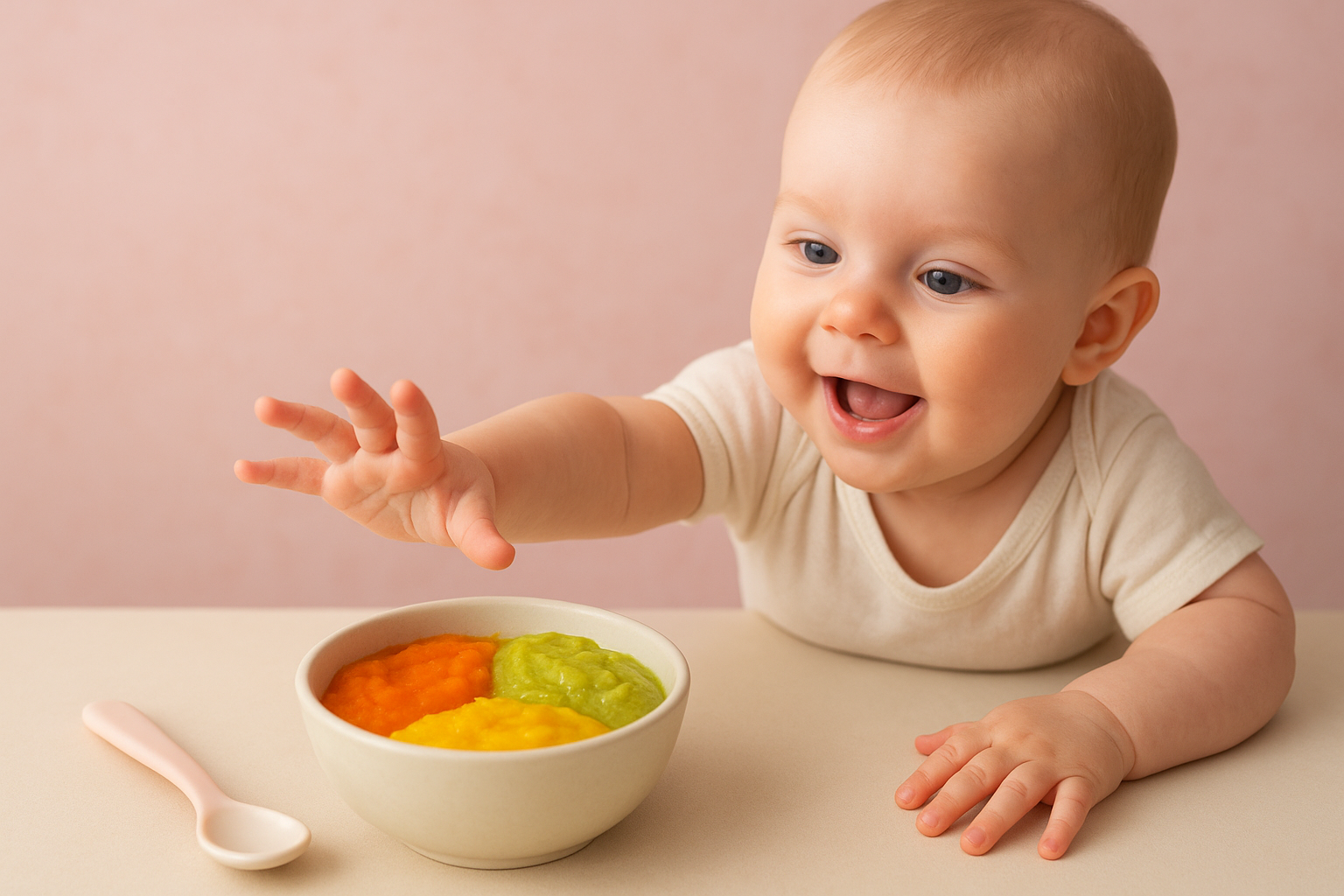
Welcoming your baby’s first taste of solid food is one of the most exciting milestones in early parenthood. After months of exclusive breastfeeding or formula feeding, introducing solids opens a whole new world of flavors, textures, and nutrients. But it can also feel overwhelming: Which foods are safe? How do you prepare them? How do you know your little one is ready?
In this guide, we’ll cover everything from easy first foods to nutritionally balanced meals, offering practical tips to make mealtime both safe and enjoyable for your baby.
When to Start Solids
Most babies are ready for solid foods around 6 months of age, although a few may show readiness a little earlier or later. Look for these signs that your baby is ready:
- Can sit up with minimal support.
- Shows interest in food (watching you eat, reaching for food).
- Has good head and neck control.
- The tongue-thrust reflex, which pushes food out, has diminished.
Introducing solids too early can increase the risk of choking or allergies, while delaying too long might affect nutritional intake, especially iron and zinc.
Nutritional Essentials for Your Baby
When it comes to first foods, nutrition is key. Babies grow rapidly, and their small stomachs need nutrient-dense foods. Focus on:
- Iron-rich foods: Pureed meats, lentils, and iron-fortified cereals.
- Vitamins and minerals: Vegetables like carrots, sweet potatoes, and peas.
- Healthy fats: Avocado, full-fat yogurt, and certain nut butters (after 6 months, with care).
- Protein: Eggs, lentils, tofu, or pureed meats for muscle development.
Important tips: Avoid added salt, sugar, and honey (until after age 1). Start with single-ingredient foods to monitor for allergies.
Easy & Tasty First Foods
Here are some simple, nutritious, and delicious meals you can prepare for your little one:
1. Vegetable Purees
Carrot, pumpkin, and sweet potato are classic first foods because they are naturally sweet and easy to digest.
How to prepare:
- Peel and chop vegetables into small pieces.
- Steam or boil until soft.
- Blend with a little breastmilk, formula, or water until smooth.
- Cool and serve in small portions.
Tip: Freeze in ice cube trays for easy meal prep and storage.
2. Fruit Purees
Fruits add natural sweetness and vitamins. Start with apple, pear, banana, or avocado.
Preparation:
- Apple or pear: Steam until soft, then blend.
- Banana: Mash with a fork; no cooking needed.
- Avocado: Mash until creamy.
Mixing fruits can introduce new flavors, like apple + pear or banana + avocado, making mealtime more exciting.
3. Simple Cereals & Grains
Cereals like oatmeal, rice, and quinoa are gentle on tiny tummies and provide iron and fiber.
How to serve:
- Cook until soft.
- Blend with breastmilk or formula to reach a smooth, pourable consistency.
- Introduce gradually, starting with 1–2 teaspoons per meal.
Tip: Avoid instant cereals with added sugar or flavoring.
Finger Foods & Self-Feeding
Once your baby shows interest in self-feeding (around 8–9 months), you can introduce soft, easy-to-grasp foods:
- Soft-cooked veggie sticks (carrot, zucchini, sweet potato).
- Ripe fruit slices (banana, peach, pear).
- Small pieces of toast or pancake.
- Soft cheese or scrambled egg pieces.
Self-feeding encourages fine motor skill development and helps your baby explore different textures.
Allergy-Friendly Tips
Introducing new foods can be stressful, especially with allergies. Follow these guidelines:
- Introduce one new food at a time. Wait 3–5 days before introducing another.
- Watch for signs of reaction: rash, vomiting, diarrhea, or swelling.
- Common allergens (egg, peanut, dairy, fish) can be introduced gradually, usually after 6 months. Consult your pediatrician if unsure.
Meal Planning & Storage
Planning meals in advance can make feeding easier:
- Batch cook and freeze: Purees can be frozen in small portions for up to 1 month.
- Portion size: Start with 1–2 teaspoons and gradually increase.
- Safe storage: Refrigerate leftovers for no longer than 24 hours. Reheat gently and test the temperature before serving.
Tip: Label containers with the date and ingredients to avoid confusion.
Making Mealtime Fun
Eating should be enjoyable, not stressful. Simple ways to make it fun:
- Use colorful plates and bowls.
- Offer foods in different textures: smooth purees, soft lumps, and finger foods.
- Encourage your baby to explore with hands—it’s messy but educational!
- Eat together whenever possible. Babies learn by watching adults.
Common Challenges & Solutions
- Messiness: Expect it. Use bibs and a mat to make cleanup easier.
- Refusal of food: Try again later; tastes develop over time.
- Constipation: Include fiber-rich fruits and vegetables; ensure adequate fluids.
Remember, patience is key. Every baby has a unique eating pace.
Conclusion
Your baby’s first bites are more than just food—they’re the start of a lifetime relationship with healthy eating. Focus on nutritious, easy-to-prepare meals, and let your baby explore flavors and textures at their own pace.
By planning, prepping, and making mealtime fun, you’re setting the stage for healthy growth, happy taste buds, and confident self-feeding skills.