
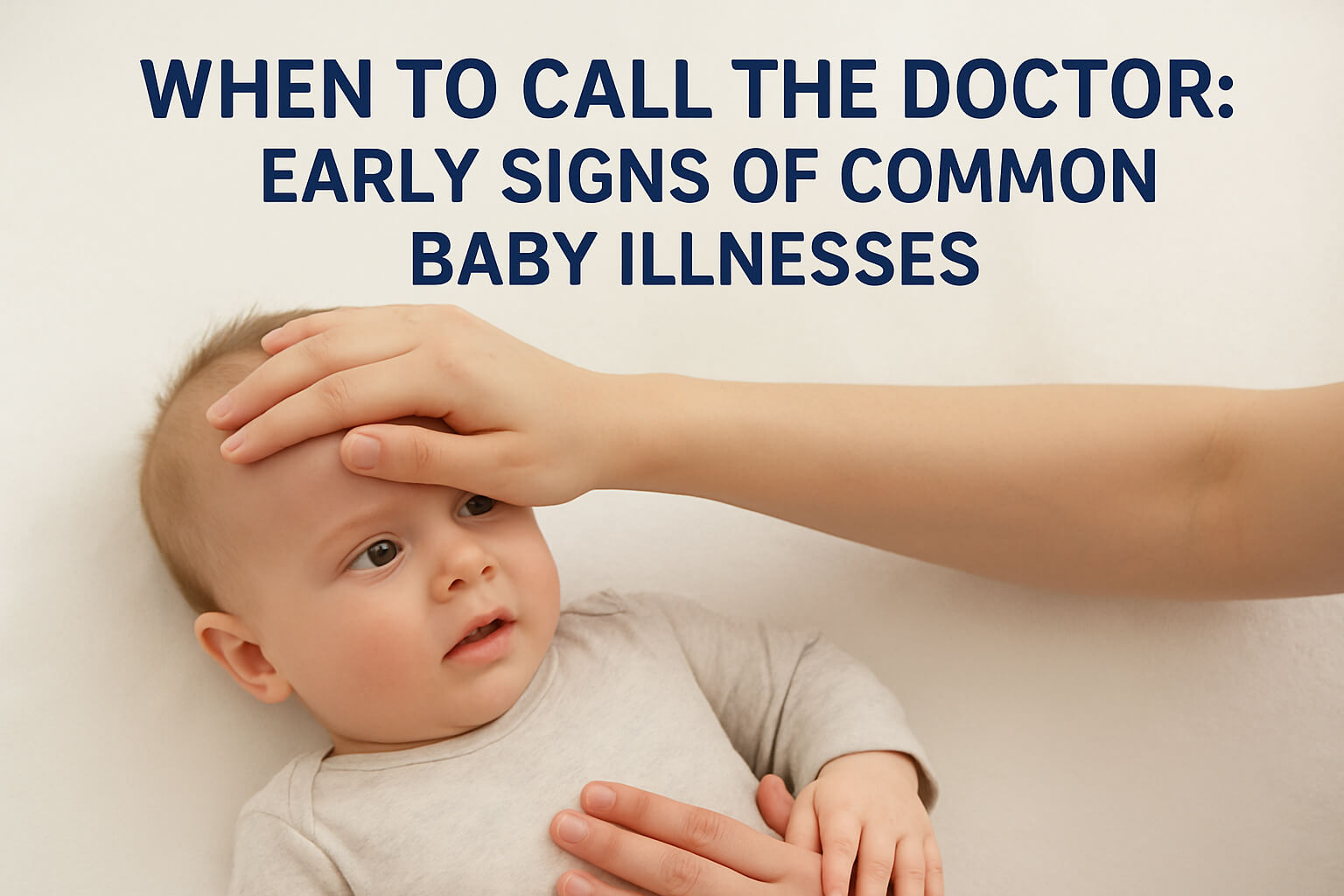
Bringing a baby into the world is a beautiful experience—but it also comes with worries, especially around illness. Babies can’t communicate what hurts, and early symptoms of sickness often appear subtle. For new parents, it’s hard to know when something is normal and when it requires medical attention. Should you call the doctor for a mild fever? What about a persistent cough? Is vomiting serious? Understanding the early signs of common baby illnesses can help you respond quickly and confidently, ensuring your baby gets care at the right time.
This comprehensive guide explains how to spot early symptoms, which signs are normal, which symptoms are warning signals, and when you need to call the doctor immediately. Whether your baby is a newborn, infant, or toddler, these insights help you make informed decisions when your little one isn’t feeling well.
Why Babies Get Sick Easily
Babies have developing immune systems. During the first few months, they rely heavily on antibodies from their mother (via pregnancy and breastfeeding). As they grow, exposure to germs helps build immunity—but this also means colds, fevers, and infections are common.
Babies are more vulnerable because:
- Their immune defenses are still developing
- They can’t cough effectively to clear mucus
- They have tiny nasal passages that clog easily
- They explore everything with their hands and mouth
- They spend time around other children (who share germs)
Most illnesses are minor and temporary, but some symptoms require professional medical attention.
Common Baby Illnesses & Early Warning Signs
Below are the most frequent illnesses babies experience, early symptoms to watch for, and when to call the doctor.
1. Fever
Fever is one of the most common reasons parents call the doctor. It’s usually the body’s way of fighting infection, but in babies, certain fever levels are considered emergencies.
Early Signs
- Warm forehead or body
- Flushed cheeks
- Fussiness
- Poor feeding
- Sleepiness
When to Call the Doctor
Call immediately if:
- Your baby is under 3 months and temperature is 100.4°F (38°C) or higher — this is a medical emergency
- 3–6 months old with fever above 102°F (38.9°C)
- Fever lasts more than 24 hours in babies <2 years
- Fever lasts over 3 days in older infants
- Baby has fever + rash
- Baby has seizures (febrile seizure)
Emergency Signs
Seek immediate care if fever is accompanied by:
- Difficulty breathing
- Blue lips or skin
- Severe lethargy or unresponsiveness
- Stiff neck
2. Cold, Cough & Congestion
Most babies get 6–8 colds per year, especially once they attend daycare. Their tiny airways make congestion more noticeable.
Early Signs
- Sneezing
- Runny or stuffy nose
- Mild cough
- Trouble feeding due to congestion
When to Call the Doctor
- Baby is under 3 months with cold symptoms
- Cough lasts more than 10 days
- Baby has persistent fever
- Thick green/yellow nasal discharge for more than 3 days
- Baby shows signs of ear pain
Emergency Signs
- Fast or difficult breathing
- Wheezing
- Blue tint around lips
- Baby refuses to drink and has dehydration signs
3. Ear Infections
Ear infections are common after colds because fluid gets trapped in the middle ear.
Early Signs
- Tugging or pulling at ears
- Sudden fussiness
- Crying during feeding
- Trouble sleeping
- Fever (often mild to moderate)
When to Call the Doctor
- Symptoms last more than 24 hours
- Baby has fever + ear pulling
- Yellow or bloody drainage from ear
- Baby is extremely irritable
Left untreated, ear infections can affect hearing and speech development.
4. Stomach Flu (Gastroenteritis)
Viral stomach infections cause vomiting, diarrhea, and dehydration.
Early Signs
- Vomiting
- Loose or watery stools
- Reduced appetite
- Mild fever
When to Call the Doctor
- Baby is under 6 months
- Vomiting more than 2–3 times in an hour
- No wet diaper for 6+ hours
- Baby produces little or no tears
- Diarrhea lasts more than 48 hours
- Signs of dehydration
Emergency Signs
- Blood in stool
- Green or yellow vomiting (possible intestinal blockage)
- Sunken soft spot on head
- Extreme lethargy
5. RSV, Bronchiolitis & Breathing Problems
Respiratory illnesses like RSV can be serious in infants.
Early Signs
- Cough that worsens
- Nasal congestion
- Difficulty feeding
- Wheezing
- Fast breathing
When to Call the Doctor
- Baby is struggling to breathe
- Baby has less than 3 wet diapers in 24 hours
- Symptoms worsen after 3–4 days
Emergency Signs
- Flaring nostrils
- Chest sinking in while breathing
- Blue lips or nails
Breathing problems are always urgent for infants.
6. Rashes
Rashes are common and often harmless. But some indicate infection or allergies.
Early Signs
- Red spots
- Dry or itchy patches
- Tiny bumps
- Skin swelling
Common Causes
- Heat rash
- Eczema
- Diaper rash
- Viral rashes
When to Call the Doctor
- Rash with fever
- Rash that spreads quickly
- Blisters or oozing
- Rash that doesn’t improve after 48 hours
- Rash covering eyes or mouth
Emergency Signs
- Purple spots that don’t fade (may signal serious infection)
- Difficulty breathing + rash (allergic reaction)
7. Teething vs. Illness
Teething can mimic illness.
Typical Teething Symptoms
- Drooling
- Gum swelling
- Chewing on hands
- Mild irritability
Not Teething Symptoms
- High fever
- Severe diarrhea
- Persistent vomiting
If these appear, call a doctor.
8. Allergies (Food or Environmental)
Babies can develop allergies anytime.
Early Signs
- Hives
- Vomiting after eating
- Diarrhea
- Eczema flare-ups
- Coughing or sneezing
When to Call the Doctor
- Symptoms appear after new food
- Baby has repeated reactions
Emergency Signs
- Difficulty breathing
- Swelling of lips or face
- Sudden vomiting
- Wheezing
These indicate anaphylaxis—seek emergency care immediately.
9. Dehydration
Dehydration is serious in babies and can happen quickly due to fever, diarrhea, or poor feeding.
Early Signs
- Fewer wet diapers
- Dark yellow urine
- Dry mouth
- Less active or sleepy
- Sunken eyes
When to Call the Doctor
- No wet diaper for 6–8 hours
- Diarrhea or vomiting continues
- Refusal to drink
10. Behavioral Changes
Sudden changes in behavior often indicate illness.
Early Signs
- Less active
- Unusual crying
- Sleep more than normal
- Not feeding well
When to Call the Doctor
- Behavior seems “not like them”
- Baby is inconsolable
- Baby is excessively sleepy
Trust your instincts—you know your baby best.
When to Seek Emergency Medical Attention Immediately
🚨 Call emergency services or go to ER if your baby shows:
- Difficulty breathing
- Blue lips or face
- Unresponsiveness
- Seizures
- High fever in a baby under 3 months
- Severe dehydration
- Green or yellow vomiting
- Significant head injury
- Rash with purple dots
- Ingested a poisonous substance
Do not wait—infant emergencies can escalate quickly.
How Parents Can Monitor Illness at Home
✔️ Keep a thermometer handy
Digital thermometers are fast and accurate.
✔️ Track symptoms
Note:
- When symptoms began
- Feeding and diaper patterns
- Temperature readings
- Behavior changes
✔️ Watch for dehydration
Wet diaper count is crucial.
✔️ Keep nasal passages clear
A nasal aspirator and saline drops help relieve congestion.
✔️ Maintain hydration
Breast milk or formula is best.
How to Prevent Common Baby Illnesses
While you cannot prevent every infection, these steps reduce risks.
1. Practice Good Hygiene
- Frequent handwashing
- Clean toys and surfaces
- Avoid sick visitors
2. Breastfeeding (if possible)
Breast milk boosts immunity naturally.
3. Keep Vaccinations Up to Date
Vaccines protect against severe illnesses.
4. Limit Crowded Places
Especially important in newborn stage.
5. Maintain Clean Air
Avoid smoke, strong perfumes, and dusty environments.
When Parents Should Trust Their Instincts
Parents often sense something is wrong before symptoms are obvious.
If your baby seems “off”—not feeding, not smiling, or unusually quiet—contact your doctor.
You never need to hesitate or fear “overreacting.” Pediatricians prefer early calls to delayed emergencies.
Conclusion
Babies can’t explain how they feel, which makes noticing early signs of illness incredibly important. While many symptoms like mild coughs or low-grade fevers are not urgent, others require prompt medical attention. Understanding what’s normal, what’s concerning, and when to call the doctor helps you respond confidently and keep your baby safe and healthy.
As a parent, you are your baby’s best advocate. Trust your instincts, monitor symptoms closely, and seek medical help whenever something feels unusual. Early attention can prevent complications and ensure your little one receives the care they need.