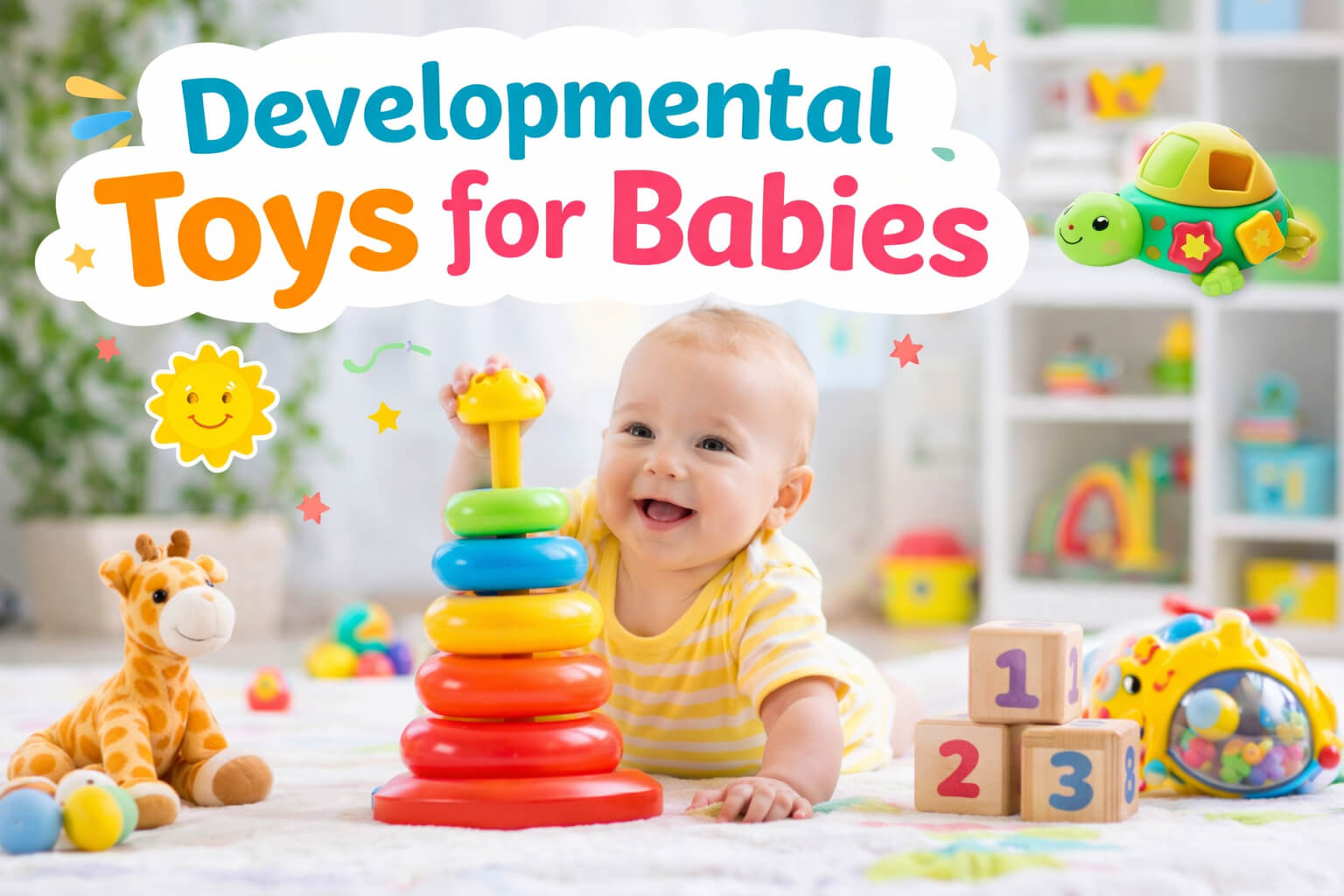
From the moment babies are born, they begin learning about the world around them. Every sound they hear, texture they touch, and object they explore helps shape their developing brains. One of the most effective and enjoyable ways to support this early learning is through developmental toys.
But with so many baby toys on the market, it can be overwhelming for parents to know which ones truly support development and which are simply entertaining. This guide will help you understand what developmental toys are, why they matter, and which toys best support your baby’s growth at every stage—from newborn to toddler.
What Are Developmental Toys?
Developmental toys are designed to support a baby’s physical, cognitive, sensory, emotional, and language development. Unlike ordinary toys, these are created with specific milestones in mind, such as grasping, rolling, problem-solving, or language recognition.
The best developmental toys:
- Encourage active play
- Engage the senses
- Grow with your baby
- Promote learning through exploration
Importantly, developmental toys don’t need to be expensive or high-tech. Simple, well-designed toys are often the most effective.
Why Developmental Toys Are Important for Babies
1. Support Brain Development
During the first three years of life, a baby’s brain develops rapidly. Toys that encourage interaction help build neural connections that support learning, memory, and problem-solving.
2. Build Motor Skills
Reaching, grasping, pushing, pulling, and crawling are all supported by toys that promote movement and coordination.
3. Encourage Sensory Exploration
Babies learn by using their senses. Developmental toys expose them to different sounds, textures, shapes, and colors.
4. Promote Independent Play
Age-appropriate toys help babies learn to explore and engage independently, building confidence and focus.
5. Strengthen Parent–Baby Bonding
Many developmental toys encourage interactive play, which strengthens emotional connection and communication.
How to Choose the Right Developmental Toys
When selecting toys for your baby, keep these factors in mind:
- Age-appropriate: Match toys to your baby’s developmental stage, not just their age
- Safety first: Non-toxic materials, no small parts, smooth edges
- Open-ended play: Toys that can be used in multiple ways
- Durability: Babies chew, drop, and throw toys
- Simple design: Avoid overstimulation
Remember, babies don’t need dozens of toys—just a few high-quality ones that encourage learning.
Best Developmental Toys by Age Group
Newborn to 3 Months: Sensory Discovery Stage
At this stage, babies are learning to focus their eyes, recognize sounds, and move their bodies.
Best Toys for Newborns:
- High-contrast black-and-white toys
- Soft rattles
- Crinkle cloths
- Baby-safe mirrors
- Soft fabric books
Developmental Benefits:
- Visual tracking
- Auditory awareness
- Early muscle movement
- Sensory stimulation
Simple toys that engage sight and sound are perfect for newborns.
3 to 6 Months: Reaching and Grasping Stage
Babies become more active and curious. They start reaching, grabbing, and bringing objects to their mouths.
Best Toys for 3–6 Months:
- Teething toys
- Textured balls
- Grasping rings
- Activity mats
- Musical toys (gentle sounds)
Developmental Benefits:
- Hand-eye coordination
- Fine motor skills
- Oral exploration
- Cause-and-effect understanding
This is a great time to introduce toys that respond to your baby’s actions.
6 to 9 Months: Exploration and Movement Stage
Babies begin sitting, rolling, and crawling. They want to explore everything around them.
Best Toys for 6–9 Months:
- Stacking cups
- Soft blocks
- Push-and-roll toys
- Interactive activity cubes
- Peek-a-boo toys
Developmental Benefits:
- Gross motor skills
- Problem-solving
- Object permanence
- Spatial awareness
Toys that encourage movement and exploration are ideal at this stage.
9 to 12 Months: Problem-Solving and Imitation Stage
Babies start to understand how things work and love copying adults.
Best Toys for 9–12 Months:
- Shape sorters
- Nesting toys
- Musical instruments
- Pull toys
- Simple puzzles
Developmental Benefits:
- Logical thinking
- Fine motor control
- Early reasoning
- Imitation skills
These toys help babies experiment, test ideas, and feel proud of their achievements.
12 to 24 Months: Language and Creativity Stage
Toddlers are busy learning words, walking, and expressing themselves.
Best Toys for 1–2 Years:
- Pretend play toys
- Building blocks
- Ride-on toys
- Board books
- Art supplies (crayons, scribble pads)
Developmental Benefits:
- Language development
- Imagination
- Social skills
- Coordination and balance
Toys that encourage creativity and storytelling are especially valuable at this stage.
Types of Developmental Toys and Their Benefits
Sensory Toys
Examples: textured balls, crinkle toys, water mats
Benefits: sensory processing, focus, exploration
Motor Skill Toys
Examples: push walkers, stacking toys
Benefits: coordination, muscle strength, balance
Cognitive Toys
Examples: puzzles, shape sorters
Benefits: problem-solving, memory, reasoning
Language Toys
Examples: books, talking toys, flashcards
Benefits: vocabulary, communication, listening skills
Emotional & Social Toys
Examples: dolls, stuffed animals
Benefits: empathy, comfort, social understanding
How Many Toys Does a Baby Really Need?
More toys do not equal more learning. In fact, too many toys can overwhelm babies and reduce focus.
Toy Rotation Tip:
- Offer 4–6 toys at a time
- Rotate weekly
- Observe which toys your baby enjoys most
This keeps playtime exciting and meaningful.
Common Mistakes Parents Make When Buying Baby Toys
- Choosing toys that are too advanced
- Prioritizing entertainment over development
- Overstimulating with lights and sounds
- Ignoring safety labels
- Buying too many toys at once
The best toy is one that matches your baby’s current abilities and encourages interaction.
Can Everyday Objects Be Developmental Toys?
Yes! Babies learn just as much from household items when supervised.
Examples:
- Measuring cups for stacking
- Plastic containers for filling and emptying
- Scarves for peek-a-boo
- Wooden spoons for tapping
Play doesn’t have to be expensive to be effective.
Safety Tips for Developmental Toys
- Always check age recommendations
- Avoid small parts
- Clean toys regularly
- Supervise playtime
- Store toys safely after use
Safety is just as important as learning.
Final Thoughts: Choosing Toys That Truly Matter
Developmental toys are powerful tools that support your baby’s early learning journey. When chosen thoughtfully, they help build essential skills while making playtime joyful and meaningful.
Remember:
- Simple toys are often the best
- Follow your baby’s interests
- Play together as often as possible
- Focus on quality, not quantity
With the right developmental toys and loving interaction, you’re giving your baby a strong foundation for lifelong learning.