
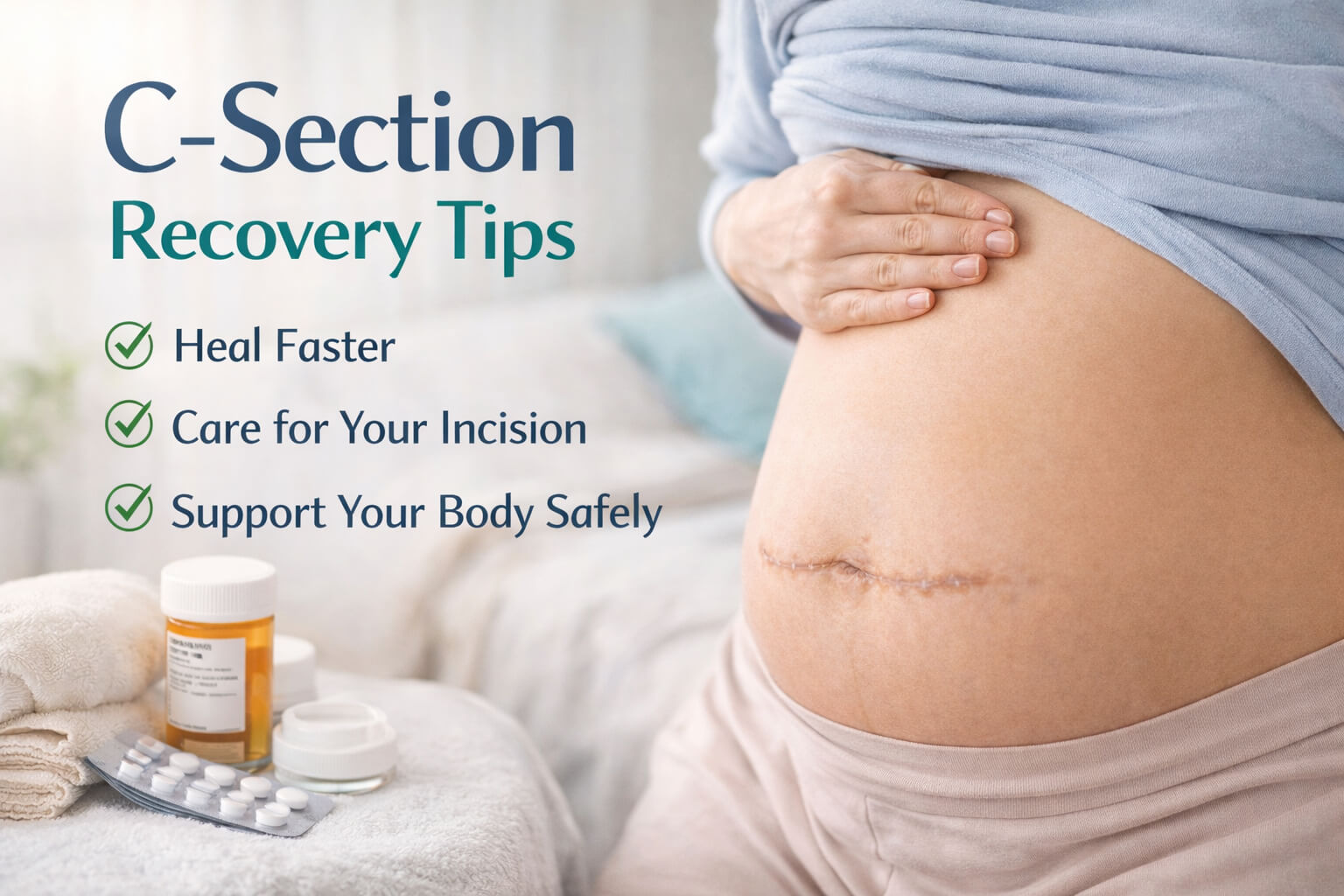
A cesarean section (C-section) is a major abdominal surgery that brings a beautiful reward—your baby—but also requires time, patience, and proper care for recovery. While every mother’s healing journey is different, understanding what to expect and how to care for your body can make recovery smoother, safer, and less stressful.
This guide covers essential C-section recovery tips, from incision care and pain management to emotional well-being and long-term healing. Whether you are preparing for a planned C-section or recovering from an unexpected one, these practical tips will help you heal faster and regain strength safely.
Understanding C-Section Recovery
A C-section involves surgical incisions through the abdomen and uterus. Because it is major surgery, recovery generally takes 6–8 weeks, though some women may need more time.
What Happens After a C-Section?
- Abdominal and uterine healing
- Hormonal changes
- Postpartum bleeding (lochia)
- Muscle weakness
- Fatigue and soreness
Knowing that healing takes time helps set realistic expectations and reduces frustration.
The First 24–72 Hours After a C-Section
The early recovery period is crucial.
What to Expect:
- Pain and tenderness around the incision
- Limited mobility
- Swelling and bloating
- Fatigue
- Hospital monitoring
Early Recovery Tips:
- Accept help from nurses and family
- Begin gentle movement as advised
- Stay hydrated
- Focus on rest and bonding with your baby
Early walking (short, slow walks) can help improve circulation and prevent complications.
Incision Care: Protecting Your C-Section Scar
Proper incision care is essential to prevent infection and promote healing.
How to Care for Your Incision:
- Keep the area clean and dry
- Gently wash with mild soap and water
- Pat dry—do not rub
- Avoid tight clothing that rubs the scar
- Do not apply creams unless approved
Watch for Warning Signs:
- Redness or swelling
- Foul-smelling discharge
- Fever
- Increasing pain
- Opening of the incision
If any of these occur, contact a healthcare provider promptly.
Managing Pain Safely After a C-Section
Pain is normal after surgery, especially during the first two weeks.
Safe Pain Management Tips:
- Take prescribed pain medication as directed
- Use a pillow to support your abdomen when coughing or laughing
- Change positions slowly
- Use gentle heat (if approved)
Never ignore severe or worsening pain.
Gentle Movement & Physical Activity
Movement helps healing, but overdoing it can slow recovery.
Safe Activities:
- Short walks
- Gentle stretching
- Standing upright gradually
Avoid:
- Heavy lifting
- Intense exercise
- Sudden twisting movements
Listen to your body and increase activity gradually.
Supporting Your Body While Resting
Rest is just as important as movement.
Rest Tips:
- Sleep when your baby sleeps
- Use pillows for support
- Avoid long periods of standing
- Keep essentials within reach
Your body heals best when it is well-rested.
Nutrition for Faster C-Section Recovery
Good nutrition supports tissue repair and energy levels.
Healing-Friendly Foods:
- Lean protein (eggs, fish, chicken)
- Fruits and vegetables
- Whole grains
- Healthy fats
- Fiber-rich foods to prevent constipation
Drink plenty of fluids to support digestion and recovery.
Preventing Constipation After a C-Section
Constipation is common after surgery and can be uncomfortable.
Tips to Prevent It:
- Drink water regularly
- Eat fiber-rich foods
- Walk gently
- Don’t strain during bowel movements
If needed, discuss safe stool softeners with a healthcare provider.
Breastfeeding After a C-Section
Breastfeeding after a C-section is absolutely possible.
Helpful Tips:
- Try side-lying or football hold positions
- Use pillows for support
- Take breaks to rest your incision
- Stay hydrated
Ask for lactation support if you experience difficulties.
Emotional Recovery After a C-Section
Recovery is not only physical—it’s emotional too.
Common Feelings:
- Mood swings
- Anxiety
- Disappointment (especially after an unplanned C-section)
- Emotional exhaustion
These feelings are normal. Talking with loved ones or healthcare providers can help.
Caring for Your Core Muscles
Your abdominal muscles need time to heal.
Core Recovery Tips:
- Avoid crunches early on
- Focus on posture
- Engage your core gently when standing or sitting
- Begin postpartum exercises only when approved
Proper core care helps prevent long-term discomfort.
Wearing Supportive Clothing
What you wear can impact comfort.
Clothing Tips:
- High-waisted underwear
- Loose-fitting pants
- Soft, breathable fabrics
- Postpartum support belts (if recommended)
Avoid anything that presses directly on the incision.
When Can You Resume Normal Activities?
Recovery timelines vary, but general guidance includes:
- Driving: after pain medications are stopped and movement is comfortable
- Exercise: after medical clearance (usually 6–8 weeks)
- Lifting: avoid lifting anything heavier than your baby initially
Always follow professional advice.
Long-Term C-Section Recovery Tips
Even after the initial healing period, your body continues to recover.
Long-Term Care:
- Gentle scar massage (after healing)
- Gradual return to exercise
- Continued balanced nutrition
- Emotional self-care
C-section scars usually fade over time.
When to Call a Healthcare Provider
Seek medical advice if you experience:
- Fever
- Severe pain
- Heavy bleeding
- Signs of infection
- Difficulty breathing
- Persistent sadness or anxiety
Prompt care helps prevent complications.
Self-Care Is Not Selfish
Recovery is not a race. Taking care of yourself allows you to better care for your baby.
Simple self-care ideas:
- Accept help
- Rest without guilt
- Nourish your body
- Be patient with yourself
Final Thoughts
C-section recovery requires time, patience, and proper care. By supporting your body with rest, nutrition, gentle movement, and emotional care, you can heal safely and steadily.
Every mother’s recovery journey is unique. Celebrate small improvements, listen to your body, and remember—you’ve done something incredible.