
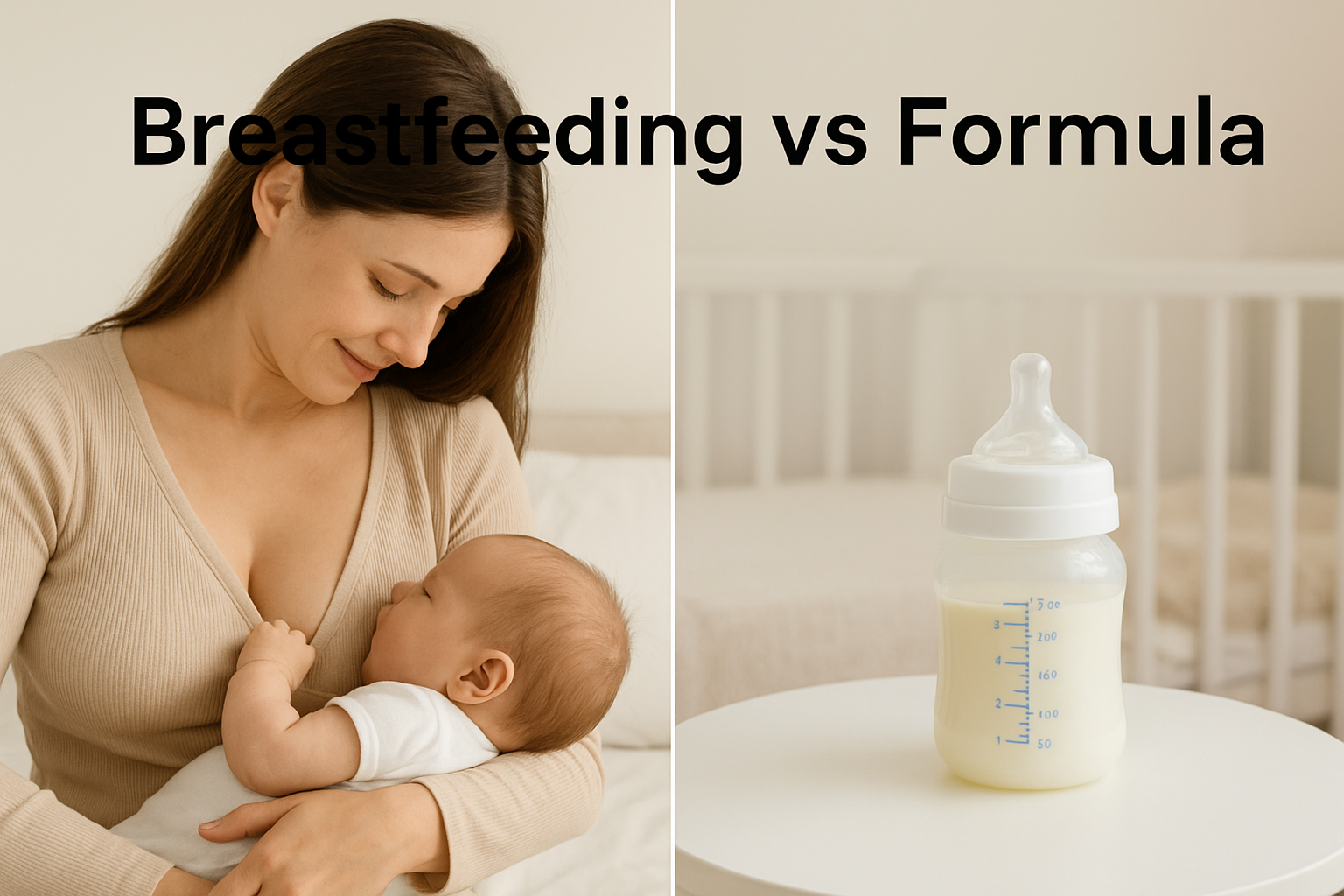
Choosing how to feed your baby is one of the biggest decisions new parents face. Many mothers feel torn between breastfeeding and formula feeding, and with so much information (and pressure) coming from friends, family, and social media, the choice can feel overwhelming.
The truth is simple:
Both breastfeeding and formula feeding can nourish your baby and help them grow healthy and strong.
The “best” choice depends on your health, lifestyle, comfort, and what works best for your family.
This complete guide breaks down the pros and cons of breastfeeding and formula feeding to help you make an informed, confident decision.
1. Breastfeeding: Pros, Cons & When It’s Best
Breastfeeding is considered the natural and recommended method of feeding babies. Health experts, including WHO and pediatricians, strongly encourage it—especially for the first six months.
⭐ Breastfeeding Pros
✔ 1. Perfect Nutrition
Breast milk naturally contains:
- Proteins
- Healthy fats
- Vitamins & minerals
- Enzymes
- Immune-boosting antibodies
It adjusts according to your baby’s age, even changing within a single feed (foremilk → hindmilk).
✔ 2. Boosts Immunity
Breast milk contains powerful antibodies (especially IgA) that:
- Protect against infections
- Reduce cold, flu, and ear infections
- Lower risk of diarrhea
- Improve gut health
✔ 3. Easy Digestion
Babies digest breast milk more easily than formula.
Benefits:
- Less constipation
- Reduced colic
- Fewer tummy issues
✔ 4. Encourages Bonding
Skin-to-skin contact during breastfeeding boosts:
- Comfort
- Security
- Emotional development
It also releases oxytocin (the love hormone) in mothers.
✔ 5. Cost-Friendly
Breast milk is completely free.
You only pay for:
- Healthy mom diet
- Occasional breastfeeding tools
- Breast pads or pump (optional)
✔ 6. Convenient & Always Ready
- No bottle washing
- No formula mixing
- No preparation time
- Always the right temperature
Perfect for nighttime feeds.
✔ 7. Health Benefits for Mom
Breastfeeding helps:
- Reduce postpartum bleeding
- Lower breast & ovarian cancer risk
- Burn extra calories (supporting weight loss)
- Improve emotional connection
❗ Breastfeeding Cons
Even though breastfeeding has many advantages, it comes with challenges that many mothers experience.
✖ 1. Initial Pain or Discomfort
Possible early problems:
- Nipple pain
- Cracked nipples
- Engorgement
- Latch issues
These usually improve with time or lactation support.
✖ 2. Requires Frequent Feeding
Breastfed babies feed more often (8–12 times/day), which may feel exhausting—especially for new moms.
✖ 3. Mom’s Diet & Medications Matter
Some foods, medicines, or illnesses can affect breast milk.
✖ 4. Limited Flexibility
If exclusively breastfeeding, mom must be available for most feeds unless pumping regularly.
✖ 5. Stress & Low Supply
Some mothers struggle with:
- Low milk supply
- Stress
- Poor latch
- Baby feeding issues
All these can make breastfeeding difficult.
2. Formula Feeding: Pros, Cons & When It’s Best
Infant formula is a scientifically designed alternative when breastfeeding is not possible, not enough, or not preferred. Today’s formulas are highly nutritious and closely mimic breast milk.
⭐ Formula Feeding Pros
✔ 1. Flexible Feeding for Parents
Anyone can feed:
- Mother
- Father
- Grandparents
- Caregivers
This helps moms rest, work, or manage time better.
✔ 2. No Discomfort for Mom
Formula feeding avoids common breastfeeding challenges:
- Pain
- Engorgement
- Latch problems
- Low supply issues
✔ 3. Easy to Track Intake
You can measure how much milk your baby consumed.
Useful for:
- Weight monitoring
- Premature babies
- Babies with feeding difficulties
✔ 4. Compatible With All Diets & Medications
Mom doesn’t have to worry about:
- What foods she eats
- Antibiotics
- Allergies
- Caffeine
✔ 5. Longer Gaps Between Feeds
Formula takes longer to digest, so babies may stay full longer.
❗ Formula Feeding Cons
✖ 1. Expensive
Formula costs can add up:
- Monthly formula supply
- Bottles
- Bottle sterilizer
- Nipples
- Cleaners
This makes formula feeding pricier than breastfeeding.
✖ 2. Needs Preparation
Formula must be mixed and heated properly:
- Not too hot
- Not too cold
- Sterilized bottles
Nighttime feeding becomes more time-consuming.
✖ 3. No Natural Antibodies
Formula lacks the immune-boosting properties of breast milk.
Formula-fed babies may experience:
- More colds
- More digestive issues
- Slightly higher infection risk
✖ 4. Digestive Difference
Some formula-fed babies face:
- Constipation
- Gas
- Sensitive stomach reactions
✖ 5. Environmental Factors
Breastfeeding is eco-friendly, while formula:
- Comes in packaging
- Requires plastic bottles
- Uses fuel for manufacturing
3. Head-to-Head Comparison: Breastfeeding vs Formula
| Feature | Breastfeeding | Formula Feeding |
|---|---|---|
| Nutrition | Best natural nutrition, adjusts to baby’s needs | Balanced but fixed composition |
| Immunity | Strong immune protection | No antibodies |
| Digestion | Easy to digest | May cause constipation |
| Convenience | Always ready but mom-dependent | Anyone can feed, requires prep |
| Cost | Free | Expensive |
| Flexibility | Less flexible without pumping | Very flexible |
| Feeding Control | Hard to measure intake | Easy to track |
| Health Benefits | Benefits baby & mom | Benefits baby, not mom |
| Allergies | Rare | More common |
4. When Breastfeeding Is Best
Breastfeeding is usually recommended when:
- Mom can breastfeed comfortably
- Baby is healthy and feeding well
- There’s no medical restriction
- Mom wants the natural bonding experience
It’s especially important for:
- Premature babies
- Babies prone to infections
- Babies with digestive issues
5. When Formula Feeding Is Best
Formula may be the better or necessary choice when:
- Mom has medical conditions
- Mom needs medication not safe for breastfeeding
- Baby cannot latch
- Mom’s milk supply is very low
- Mom returns to work without pumping opportunity
- Mom experiences severe pain or mental stress
Formula feeding is also perfectly okay when mom chooses it for personal comfort or lifestyle reasons.
Fed baby = healthy baby.
6. Can You Combine Breastfeeding and Formula? (YES!)
Absolutely.
This is known as mixed feeding.
Benefits:
- Mom gets rest
- Baby stays full
- Easier transition when returning to work
- Reduces pressure on mother
Many families find mixed feeding to be the perfect balance.
7. Choosing What’s Best for YOUR Baby
There is no one-size-fits-all answer.
Ask yourself:
- Am I comfortable breastfeeding?
- Does my baby latch well?
- Is my milk supply enough?
- Does formula fit my lifestyle better?
- What feels right for me emotionally and physically?
A well-fed baby is a happy, healthy baby—whether through breast milk, formula, or both.