
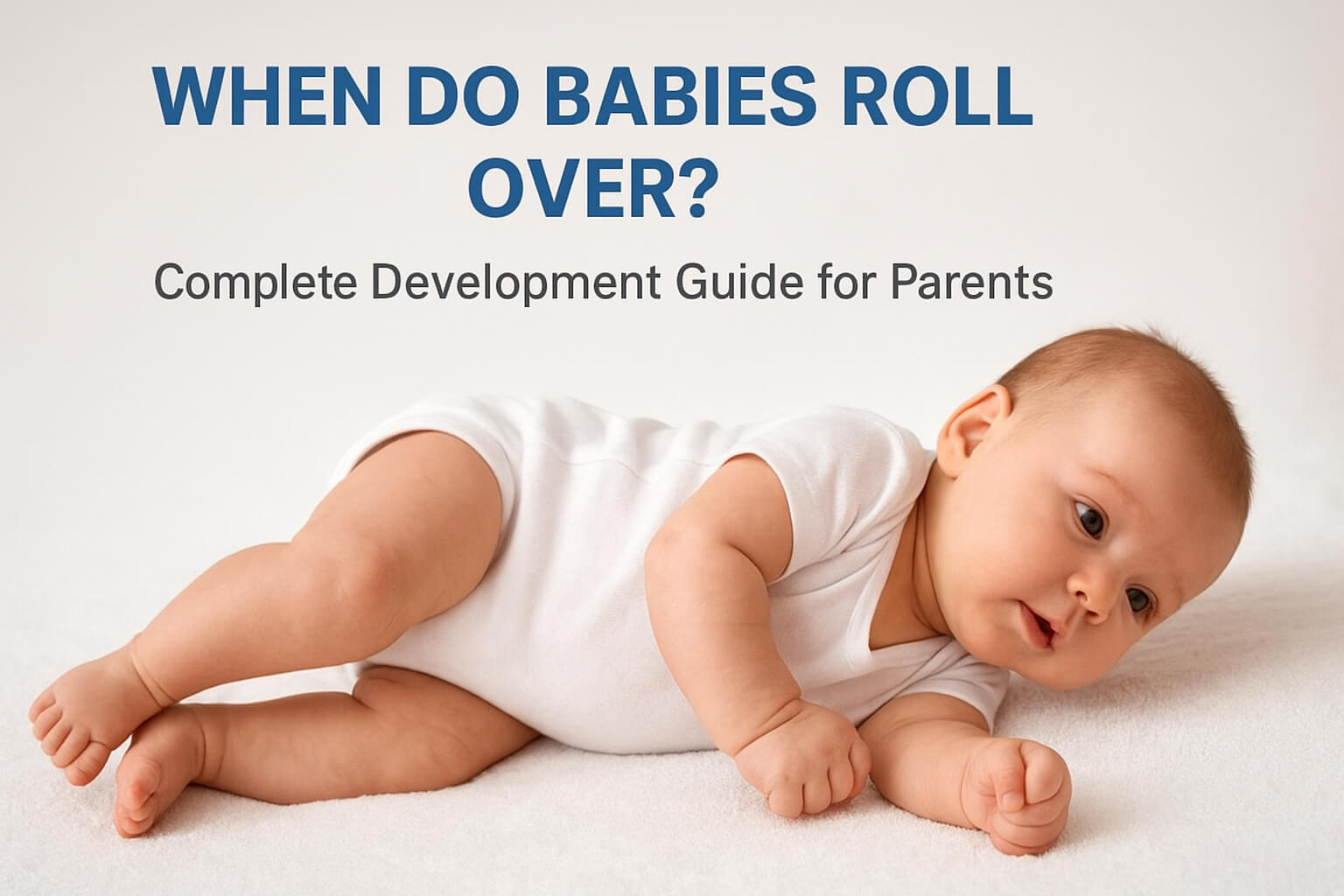
Rolling over is one of the most exciting early milestones your baby will achieve. It’s often the first big sign that your little one is gaining strength, coordination, and independence. But many parents wonder: When do babies actually roll over? And how can you help your baby reach this milestone safely?
This complete guide covers ages, signs, safety tips, how to support rolling, red flags, and when to talk to a pediatrician—everything parents need to know.
When Do Babies Start Rolling Over?
Most babies roll over between:
➡️ 3 to 4 months:
Tummy to back (the easier direction)
➡️ 5 to 6 months:
Back to tummy (requires more strength and coordination)
Some babies start earlier or later. Anything from 2–7 months can still be normal.
Why Rolling Over Is an Important Milestone
Rolling over helps your baby:
- Strengthen neck, back, arm, shoulder, and core muscles
- Build hand–eye coordination
- Improve balance and body awareness
- Develop the skills needed for sitting, crawling, and standing
- Increase independence and mobility
It is often the first step toward major physical development milestones.
Rolling Over Month-by-Month Timeline
Month 1–2: Early Strength
- Baby lifts head briefly during tummy time
- Begins kicking legs and wriggling
- Muscles are still developing, so rolling is rare
Month 3: First Accidental Rolls
- Some babies roll from tummy to back accidentally
- Stronger neck control
- Pushes up on forearms during tummy time
Month 4: Purposeful Rolling Begins
- Many babies now roll tummy to back intentionally
- Uses arms for support
- Can lift chest higher off the ground
Month 5–6: Back-to-Tummy Roll
- Stronger core and shoulder muscles
- Baby may roll both directions
- Can pivot or spin in a circle on the tummy
- Begins trying to reach toys by rolling
Month 7+: More Mobility
- Rolling becomes a form of transportation
- Baby may roll across the room
- Often leads into crawling attempts
Signs Your Baby Is Ready to Roll Over
Look for these readiness signals:
- Holds head steady during tummy time
- Pushes up on elbows
- Kicks legs strongly
- Grabs feet while lying on back
- Rocks side-to-side
- Shows frustration during tummy time
- Tries to reach toys out of reach
These are cues that your baby’s body is preparing for rolling.
How to Help Your Baby Learn to Roll Over
⭐ 1. Daily Tummy Time
This is the most important activity.
- Start from day one
- Aim for 20–30 minutes per day, broken into short sessions
- Use toys, mirrors, and your voice to keep baby engaged
Tummy time strengthens the muscles needed for rolling.
⭐ 2. Encourage Reaching
Place toys just out of reach on either side to motivate movement.
- Helps baby shift weight
- Builds shoulder + core stability
- Encourages side-to-side rolling
⭐ 3. Practice Side-Lying
Let your baby play on their side.
- Great for body awareness
- Teaches rolling mechanics
- Gently support the back if needed
⭐ 4. Reduce Time in Swings, Bouncers & Car Seats
Too much container time slows physical development.
Floor play is always best for motor skills.
⭐ 5. Use Your Hands to Guide the Motion
Gently help your baby roll:
- Move one leg over the other
- Shift their hips
- Support the shoulder
This helps them understand the movement pattern.
⭐ 6. Cheer, Clap & Encourage
Babies love positive reinforcement.
Turn rolling into a playful game!
Safety Tips for Babies Who Are Starting to Roll
Once your baby begins rolling, safety needs change.
✔️ Stop swaddling
Swaddling after baby rolls is dangerous and increases SIDS risk.
✔️ Always place baby to sleep on their back
If baby rolls during sleep, it’s okay—just keep the crib safe.
✔️ Keep the crib clear
No pillows
No blankets
No stuffed animals
No bumpers
✔️ Never leave baby on high surfaces
Changing tables, sofas, beds, etc.
Rolling can happen suddenly—even for first-timers.
✔️ Supervise tummy time
Always stay within arm’s reach.
When to Worry: Rolling Over Red Flags
Every baby develops at their own pace, but consult a pediatrician if:
- Baby still feels very stiff or very floppy
- Baby is not rolling in either direction by 7 months
- Baby shows no signs of trying to roll (reaching, kicking, lifting head)
- Baby seems uncomfortable on tummy consistently
- Baby uses only one side of their body
Early evaluation can help identify muscle tone issues or motor delays, but most delays are mild and easily corrected with guidance.
Frequently Asked Questions
1. Is it normal if my baby rolls early (at 2 months)?
Yes—some babies surprise parents with early accidental rolls.
It’s usually due to strong leg pushes.
2. Is it normal if my baby doesn’t roll until 6–7 months?
Yes—many perfectly healthy babies roll later, especially if they dislike tummy time.
3. Which roll happens first?
Most babies roll tummy to back first
(back-to-tummy requires more strength).
4. Should I re-position baby during sleep if they roll?
No.
Once baby can roll independently, let them sleep in their preferred position.
5. Do some babies skip rolling?
Rare, but yes—some babies go straight to sitting or crawling.
If other milestones are on track, it’s usually fine.
Final Thoughts
Rolling over is a major developmental milestone and an exciting step toward a more mobile, curious baby. While most babies roll somewhere between 3 and 6 months, the timeline can vary widely. The best way to support your baby is through daily tummy time, floor play, encouragement, and a safe environment.