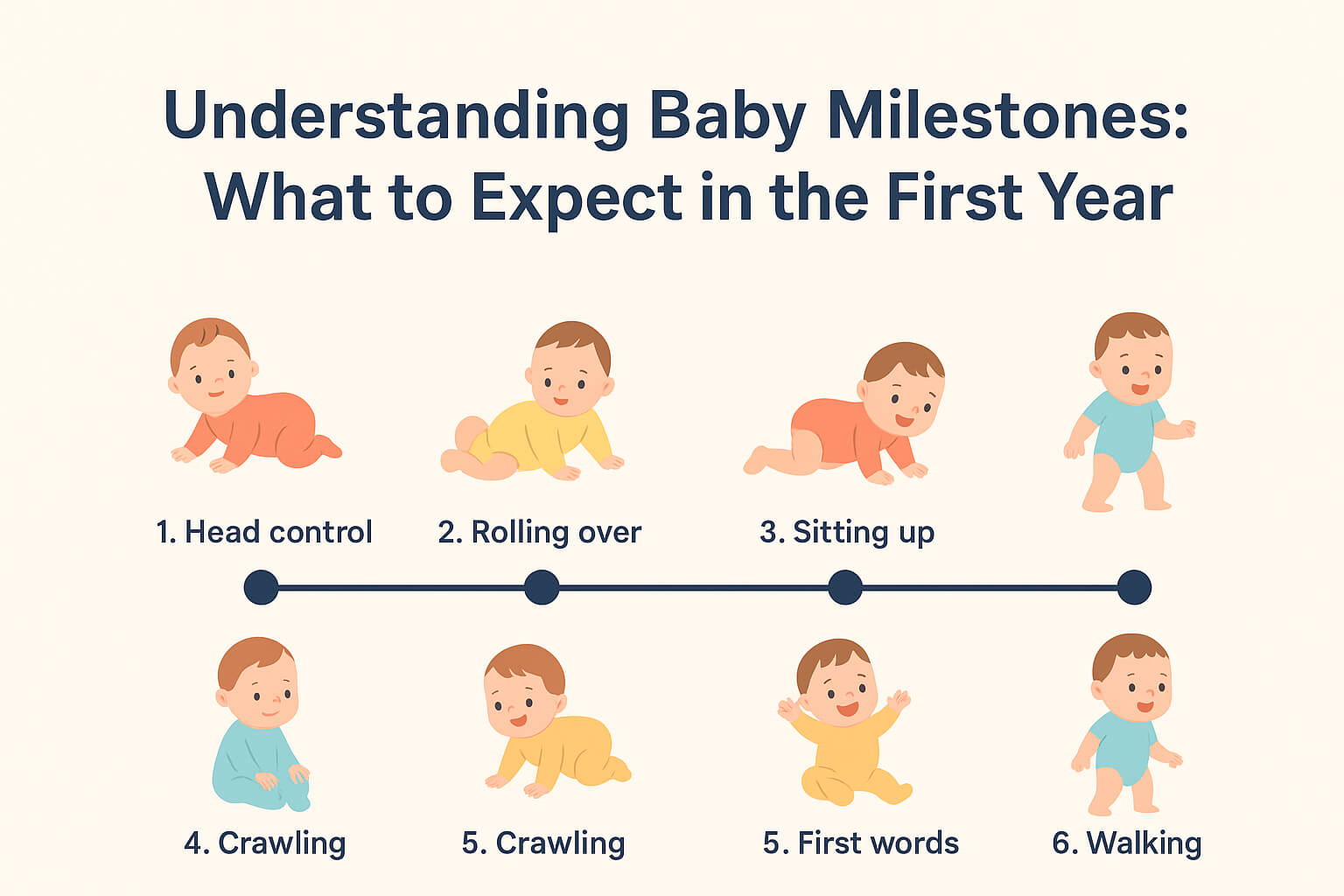
The first year of a baby’s life is filled with unbelievable growth, small wonders, and big developmental leaps. Parents often find themselves asking: Is my baby developing on time? Should they be doing this by now? What milestones should I expect next?
The truth is, every baby grows at their own pace—but having a clear understanding of baby milestones helps parents track progress, encourage healthy development, and identify when extra support may be needed. From newborn reflexes to first steps, this comprehensive guide walks you through what to expect month-by-month, what’s normal, how to support each stage, and when to speak with a doctor.
Let’s explore your baby’s incredible first-year journey.
What Are Baby Milestones?
Baby milestones are developmental skills that most children achieve within a certain age range. These milestones fall under four key categories:
1. Physical / Gross Motor Skills
Movement of large muscles: rolling, crawling, sitting, standing, walking.
2. Fine Motor Skills
Smaller movements: grabbing toys, picking up food, transferring objects between hands.
3. Social & Emotional Development
Smiling, bonding, separation anxiety, showing affection.
4. Communication & Cognitive Development
Babbling, understanding simple words, responding to name, problem-solving.
Every baby reaches these milestones at their own pace. Some will roll early but walk late. Some will talk early but crawl slowly. And that’s perfectly normal.
Month-by-Month Baby Milestones: The First-Year Guide
Newborn (0–1 Month): The Adjustment Phase
Your newborn is adjusting to life outside the womb. Most movement is reflexive, not intentional.
Typical Milestones
- Turns head side to side
- Brings hands close to face
- Startles at loud sounds
- Tracks faces briefly
- Recognizes familiar voices
- Sleeps 15–17 hours in short bursts
How to Support Development
- Practice skin-to-skin contact
- Talk and sing softly
- Use high-contrast black-and-white images
What’s Normal?
Newborns cry often, sleep irregularly, and rely completely on parents.
1–2 Months: Early Awareness Begins
Babies start becoming more alert and responsive.
Typical Milestones
- Begins to smile (social smile)
- Coos and makes simple sounds
- Follows objects with eyes
- Lifts head briefly during tummy time
- Opens hands more often
How to Support Development
- Provide tummy time daily
- Respond to coos
- Show expressive facial gestures
When to Watch
- No response to loud noises
- Doesn’t track objects by 2 months
2–3 Months: Stronger Body, Growing Curiosity
Your baby is more interactive and physically stronger.
Typical Milestones
- Holds head up for longer periods
- Kicks and moves arms actively
- Laughs for the first time
- Brings hands together
- Notices their own hands
Support Ideas
- Offer rattles and soft toys
- Encourage reaching by placing toys overhead
- Continue tummy time
3–4 Months: Emotional Expression Expands
This is when personality begins to shine.
Milestones
- Rolls from tummy to back
- Reaches for toys intentionally
- Responds to faces with big smiles
- Starts babbling (“ahh”, “goo”)
- Recognizes caregivers
How to Support
- Provide colorful toys
- Play simple games like peek-a-boo
- Encourage safe floor play
4–5 Months: Strength & Engagement
Babies become more physically active and socially attentive.
Milestones
- Rolls both ways
- Sits with support
- Follows fast-moving objects
- Shows excitement or frustration
- Explores objects with mouth
Support
- Practice supported sitting
- Let baby explore various textures
- Provide mirror play
5–6 Months: Major Developments Begin
This is a big month—many “firsts” may happen now.
Milestones
- Sits without support (some babies)
- Begins solid foods (around 6 months)
- Transfers objects hand-to-hand
- Babbles consonant sounds (“ba”, “da”)
- Shows stranger awareness
Support
- Provide soft finger foods or purees
- Encourage babbling by repeating sounds
- Offer teething toys
6–7 Months: Movement & Exploration
Your baby becomes a small explorer.
Milestones
- Gets into crawling position
- May begin army crawling
- Responds to name
- Plays with cause-and-effect toys
- Likes social interaction
Support
- Create a safe play area on the floor
- Introduce board books
- Practice self-feeding skills
7–8 Months: Mobility Increases
Some babies begin crawling now.
Milestones
- Fully crawls or shuffles
- Pulls to stand with support
- Uses pincer grasp (starting)
- Understands “no”
- Laughs and imitates sounds
Support
- Encourage tracking games
- Offer finger foods to strengthen pincer grasp
- Provide safe furniture for pulling up
8–9 Months: Communication & Problem-Solving
Your baby’s brain is rapidly developing.
Milestones
- Crawls fast
- Feeds themselves small pieces
- Says “mama” or “dada” (not always specific)
- Plays peek-a-boo intentionally
- Shows attachment
Support
- Read daily
- Offer stacked toys
- Encourage interaction with simple instructions
9–10 Months: Confidence & Coordination
Things get exciting—and busy!
Milestones
- Cruises while holding furniture
- Points at things
- Understands simple words
- Starts showing preferences for foods
- Waves “bye-bye”
Support
- Provide push toys or walking toys
- Encourage pointing by naming objects
- Offer balanced meals and snacks
10–11 Months: Independent Spirit Emerging
Your baby is almost a toddler now.
Milestones
- Stands without support briefly
- May take first steps
- Says simple words with meaning
- Stacks two blocks
- Shows emotions through gestures
Support
- Celebrate small achievements
- Offer shape sorters
- Encourage imaginative play
11–12 Months: Almost Walking, Fully Exploring
The first birthday brings major accomplishments.
Milestones (may vary)
- Walks independently or with support
- Feeds self using fingers
- Climbs over small obstacles
- Responds to simple instructions
- Shows affection naturally
Support
- Encourage safe walking practice
- Read picture books daily
- Offer sensory-rich play
How to Support Baby Milestones Naturally
There’s no need to rush development. Instead, focus on:
1. Plenty of Floor Time
Movement builds muscles and confidence.
2. Tummy Time
Strengthens neck, shoulders, and motor skills.
3. Reading Daily
Boosts cognitive and language skills.
4. Talking Often
Narrating daily tasks enhances vocabulary.
5. Safe Exploration
Baby learns through touch, sound, taste, and movement.
6. A Calm & Responsive Environment
Secure attachment encourages emotional development.
When to Talk to a Doctor
Consider speaking to a pediatrician if:
- Baby doesn’t smile by 3 months
- Doesn’t roll by 6 months
- Can’t sit by 9 months
- Doesn’t attempt communication by 9–10 months
- Shows no interest in people
- Has very stiff or very floppy muscles
- Regression occurs (losing skills already learned)
- No babbling by 10 months
- Not crawling or moving at all by 12 months
Remember: delays do not always mean something is wrong. Early support helps tremendously.
Final Thoughts
Your baby’s first year is an extraordinary journey filled with rapid growth, learning, and emotional bonding. Understanding milestones helps you support your child without pressure, comparison, or fear. Every baby has their own timeline—and what matters most is giving them love, attention, and opportunities to explore.
Celebrate every smile, roll, crawl, and babble. These magical months pass quickly, but the memories last forever.