
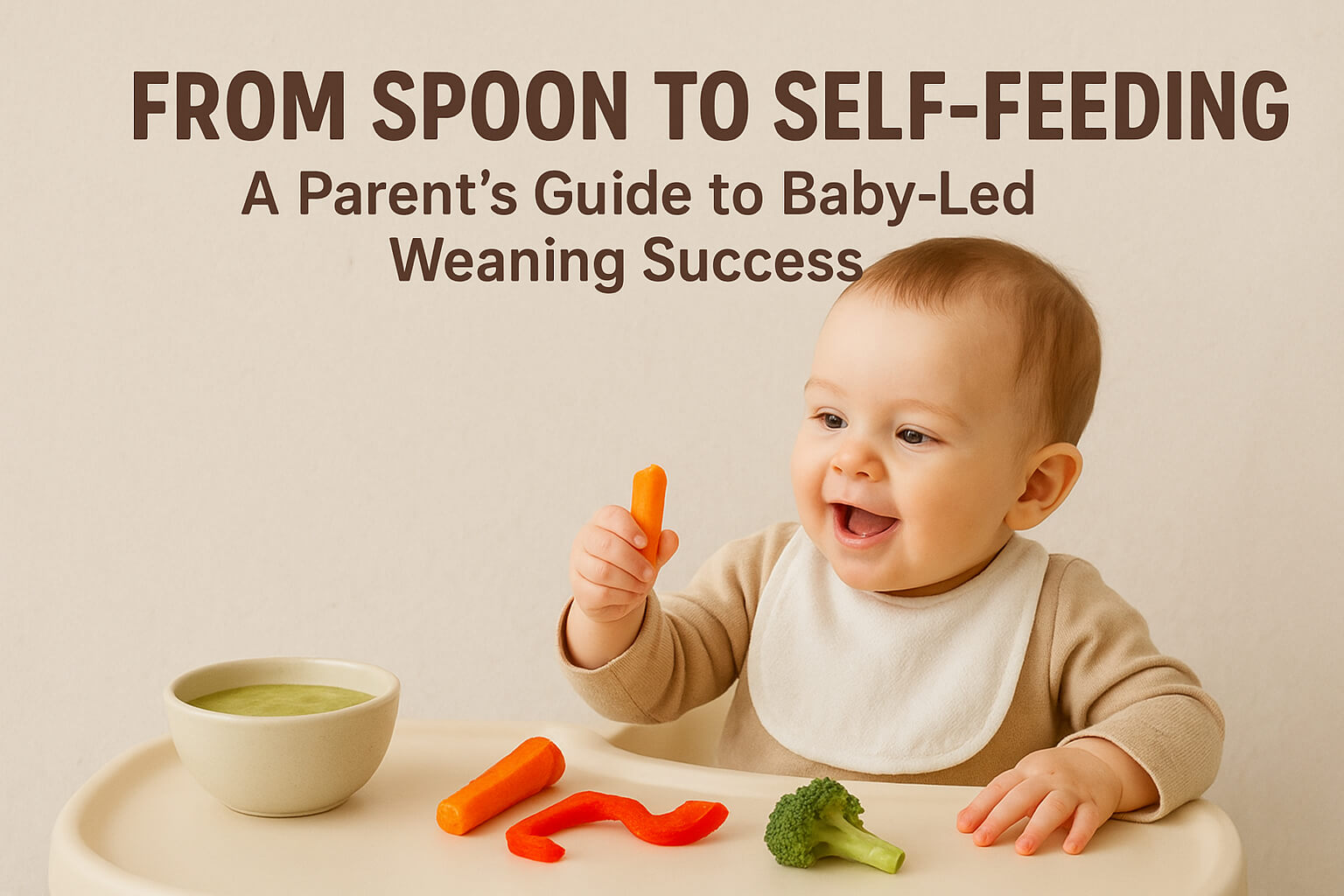
Introducing solids is one of the most exciting milestones in a baby’s first year. For generations, feeding babies meant spoon-fed purees and careful meal planning—but a growing number of parents are now choosing a more natural, independent approach: Baby-Led Weaning (BLW).
Instead of spoon-feeding, BLW encourages babies to explore foods on their own, picking up soft finger foods and feeding themselves at their own pace. This method builds confidence, motor skills, independence, and a positive relationship with food.
If you’re curious about BLW, unsure how to start, or want to make sure you’re doing it safely, this complete guide will walk you through everything you need to know—including benefits, safety tips, gagging vs. choking, best starter foods, weekly meal plans, and how to combine BLW with traditional feeding if you prefer a hybrid approach.
What Is Baby-Led Weaning?
Baby-Led Weaning is a feeding approach where your baby feeds themselves from the start of their solid-food journey. Instead of being spoon-fed purees, baby eats soft, hand-grippable pieces of real food.
BLW is based on three principles:
1. Self-feeding
Baby uses their hands to bring food to their mouth.
2. Exploration
Baby plays with, touches, squishes, tastes, and learns about food.
3. Family-style eating
Baby eats modified versions of the same food the rest of the family enjoys.
This method lets babies follow their own hunger and fullness cues—a natural way to build lifelong healthy eating habits.
When Can You Start Baby-Led Weaning?
Your baby should be around 6 months and show all the following signs:
Readiness Checklist:
✓ Able to sit upright without support
✓ Good head and neck control
✓ Opens mouth for food
✓ Shows interest in what others are eating
✓ Can grasp objects and bring them to mouth
✓ Has lost the tongue-thrust reflex
BLW should not begin before 6 months for safety reasons.
Benefits of Baby-Led Weaning
BLW isn’t just about feeding differently—it’s about learning differently. Here’s why millions of parents love it:
1. Promotes Motor Skill Development
BLW strengthens:
- Fine motor skills (finger grasp)
- Hand–eye coordination
- Chewing skills
- Tongue and jaw movement
These skills support speech development later on.
2. Encourages Food Exploration & Diverse Preferences
BLW babies are exposed to a wide variety of:
- Textures
- Flavors
- Shapes
- Temperatures
- Colors
This often means less picky eating in toddler years.
3. Supports Healthy Appetite Regulation
Because babies feed themselves, they learn:
- When they’re hungry
- When they’re full
- How to stop when satisfied
This reduces the risk of overeating in the future.
4. Easier for Parents
You don’t need to:
- Prepare separate meals
- Puree foods
- Freeze batches of baby food
- Spoon-feed every bite
Baby simply eats what you eat—safely modified.
5. Encourages Family Mealtime Connection
Babies learn by watching.
When your baby sees you eating nutritious foods, they feel excited to try them too. BLW makes mealtime a shared activity rather than a separate baby-only routine.
BLW Safety: The Most Important Part
Safety is the biggest concern for parents starting BLW—and it should be. BLW is safe when done correctly.
Here’s your complete safety checklist:
1. Always supervise during meals
Your baby should never eat alone or out of sight.
2. Baby must sit upright
No reclining chairs. A high chair with a 90-degree angle is ideal.
3. Avoid choking hazards
These foods must be avoided:
❌ Whole grapes
❌ Hot dogs or sausages
❌ Raw apples
❌ Nuts & popcorn
❌ Hard veggies (raw carrots)
❌ Whole cherry tomatoes
❌ Sticky foods like peanut butter chunks
❌ Tough meat
4. Foods must be soft enough to mash with fingers
If you can squish it between your thumb and finger, it’s safe.
5. Serve food in large, grippable shapes
Babies use a palmar grasp, so food should be shaped like:
- Long sticks
- Thick wedges
- Soft strips
Perfect size example: adult pinky-finger length and thickness.
6. Learn the difference between gagging and choking
Gagging is NORMAL.
It’s noisy, dramatic, and helps baby learn.
Choking is SILENT.
If a baby is choking, they cannot breathe.
Take an infant CPR course if possible—it boosts confidence tremendously.
Best First Foods for BLW (6–8 Months)
Here are ideal beginner foods that are soft, safe, and nutritious.
Vegetables
- Steamed sweet potato sticks
- Soft carrot sticks
- Zucchini strips
- Pumpkin cubes
- Broccoli florets
Fruits
- Ripe banana strips
- Avocado slices
- Soft pear wedges
- Baked apple slices
- Mango strips
Proteins
- Soft shredded chicken
- Flaked salmon
- Scrambled eggs
- Soft tofu sticks
- Lentil patties
Carbs
- Soft-cooked pasta
- Toast strips with thin spread
- Mashed potatoes (rolled into small balls)
- Steamed rice balls
- Quinoa patties
Healthy Fats
- Avocado
- Olive oil drizzle
- Nut butter thinned with water or yogurt
- Flaxseed mixed into foods
Healthy fats are essential for brain development.
How to Serve Foods for BLW (Size, Shape & Texture)
The rule:
Finger-length + finger-thick + soft enough to squish.
Examples:
- Carrots → cut into sticks → steam until soft
- Chicken → shred finely
- Broccoli → serve florets with the stem as a handle
- Bread → cut into strips → lightly toast to prevent gumming
- Avocado → cut into thick wedges or place on toast strips
As baby gets older, you can gradually introduce smaller pieces.
How Often Should Baby Eat?
6–7 months:
1–2 meals per day
8–9 months:
2–3 meals per day
10–12 months:
3 meals + 1–2 snacks (if needed)
Milk (breastmilk or formula) remains their main nutrition source until 12 months.
Sample 7-Day BLW Meal Plan
Here’s a parent-approved, beginner-safe BLW menu.
Day 1
Breakfast: Avocado strips + soft scrambled eggs
Lunch: Steamed carrot sticks + quinoa patties
Dinner: Shredded chicken + mashed sweet potato balls
Day 2
Breakfast: Banana strips + whole milk yogurt
Lunch: Steamed broccoli florets + pasta spirals
Dinner: Flaked baked salmon + soft zucchini strips
Day 3
Breakfast: Toast strips with thin peanut butter
Lunch: Soft pear wedges + lentil patties
Dinner: Rice balls + shredded beef
Day 4
Breakfast: Mango strips + oatmeal fingers
Lunch: Mashed potatoes + tofu sticks
Dinner: Soft cooked carrots + egg omelet strips
Day 5
Breakfast: Banana oat pancakes (3 ingredients)
Lunch: Soft peas + avocado toast strips
Dinner: Steamed pumpkin + chicken meatballs
Day 6
Breakfast: Greek yogurt + soft berries
Lunch: Sweet potato wedges + hummus dip
Dinner: Broccoli florets + couscous patties
Day 7
Breakfast: Soft French toast sticks
Lunch: Lentil soup thickened for dipping
Dinner: Quinoa, shredded chicken & avocado
Baby-Led Weaning Recipes (Simple & Safe)
1. 3-Ingredient Banana Oat Pancakes
Ingredients:
- 1 ripe banana
- 1 egg
- ¼ cup oats
Instructions:
Mash banana → mix all ingredients → cook small pancakes in a pan. Soft, nutritious, perfect for beginner BLW.
2. Sweet Potato Fries (BLW Safe)
Slice sweet potato into thick strips → steam until soft → lightly roast for grip.
3. Avocado Toast Strips
Spread mashed avocado on lightly toasted bread → cut into finger-sized strips.
4. Lentil Veggie Patties
Mix cooked lentils, mashed veggies & breadcrumbs → pan-cook small patties.
5. Soft Chicken Meatballs
Mix ground chicken, egg yolk, breadcrumbs → form soft mini balls → steam or bake.
Gagging vs. Choking: What Every Parent Must Know
Gagging (Normal)
- Noisy
- Red face
- Coughing
- Baby pushes food forward
Babies gag to protect themselves.
Choking (Emergency)
- Silent
- Blue or pale skin
- No coughing
- No breathing
Learn infant first aid—your confidence will shape your BLW journey.
Combining Purees + BLW (Hybrid Method)
Not sure you want full BLW? That’s OK!
Many parents choose a hybrid feeding style:
- Offer purees with spoon
- Offer soft finger foods at the same meal
- Let baby hold the spoon
- Gradually shift toward more self-feeding
This gives you the best of both worlds.
Common BLW Mistakes to Avoid
❌ Serving foods too hard
❌ Offering tiny pieces too early
❌ Feeding lying down
❌ Rushing meals
❌ Panicking at normal gagging
❌ Over-salting family meals
❌ Ignoring safety guidelines
BLW shouldn’t be stressful. With practice, mealtime becomes fun and relaxed.
BLW and Allergens: When to Introduce Them
New research suggests introducing allergens around 6 months may reduce the risk of allergies.
Introduce common allergens one at a time:
- Egg
- Peanut
- Dairy
- Wheat
- Soy
- Fish
Always serve in infant-safe forms (thinned nut butter, soft egg strips, yogurt, etc.).
When Should You Not Use BLW?
BLW may require modifications if baby has:
- Prematurity
- Oral motor delays
- Feeding difficulties
- Severe reflux
- History of aspiration
Talk to a pediatrician or feeding therapist for guidance.
Final Thoughts: BLW Is a Journey, Not a Test
Baby-Led Weaning is an incredible way to help your baby become:
- Confident
- Independent
- Curious
- Adventurous
- Capable
There’s no “perfect” way to do BLW. Your job is to offer safe foods, stay patient, and let your baby explore. Some days will be messy—but every bite helps your baby learn.