
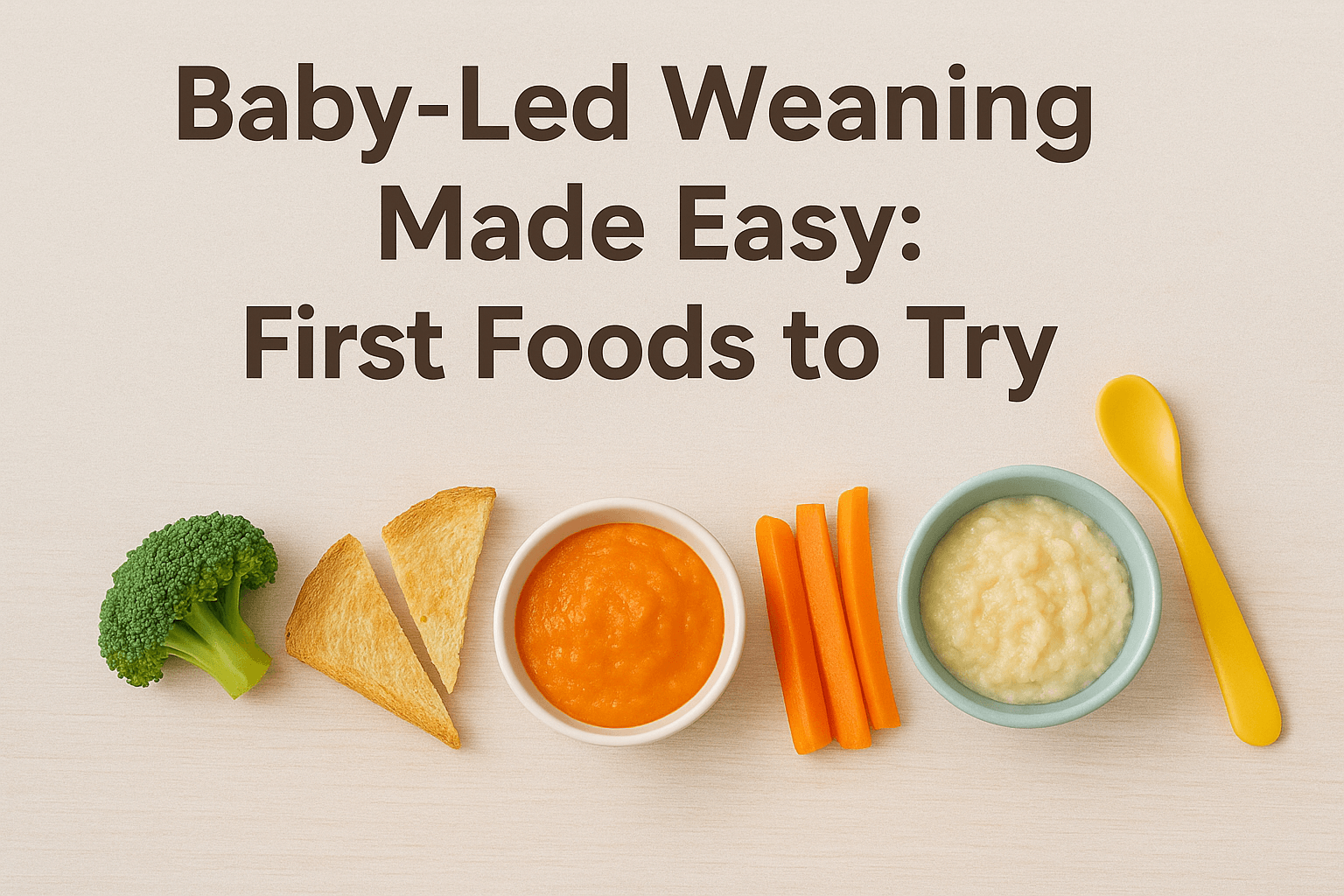
Baby-Led Weaning allows your child to eat solid foods on their own—from the very first bite. Instead of spoon-feeding purees, parents offer soft, easy-to-grab pieces of food that babies can pick up and explore independently. BLW encourages confidence, supports sensory development, and can lead to a less picky eater in the long run.
If you’re a new parent considering this method, this guide will walk you through everything you need to know: when to start, how to prepare food safely, the best first foods, what to avoid, and how to create a stress-free feeding routine.
What Is Baby-Led Weaning?
Baby-Led Weaning (BLW) is a feeding approach where babies feed themselves finger foods from the start instead of being spoon-fed purees. The term “weaning” sounds like stopping breastfeeding, but in most countries—especially the UK—it simply means “introducing solids.”
BLW encourages babies to take the lead:
- They pick up food themselves
- They choose what goes into their mouth
- They control the pace and amount of food eaten
- They explore flavors and textures naturally
This method helps babies build independence with eating and supports healthy self-regulation skills.
When Can You Start Baby-Led Weaning?
Most health organizations recommend starting solids at around 6 months, but this depends on whether your baby shows signs of readiness.
Signs your baby is ready for BLW:
- ✔ Sits upright without support (or with minimal support)
- ✔ Can hold head steady
- ✔ Shows interest in food (watches you eat, grabs your plate)
- ✔ Has lost the “tongue-thrust reflex”
- ✔ Can bring objects to their mouth
- ✔ Shows chewing or gumming motion
If your baby is not showing these signs, wait! BLW is safest when the child is developmentally ready.
Why Parents Love Baby-Led Weaning
BLW has become hugely popular for many reasons. Here are the biggest benefits:
1. Helps Baby Develop Motor Skills
Picking up food, holding it, squishing it, and bringing it to the mouth strengthens:
- Hand–eye coordination
- Fine motor skills
- Pincer grasp (thumb + finger)
2. Reduces Picky Eating
Babies exposed to real textures and flavors early tend to be more adventurous eaters later. They learn:
- Food is fun
- Food comes in many shapes and flavors
- Trying new things is normal
3. Encourages Self-Regulated Eating
Babies decide when they’re full—reducing the risk of overeating.
4. Family Meals Become Easier
No need to cook separate baby foods. Your baby eats a modified version of your meal.
5. Promotes Better Oral Development
Chewing soft solids helps strengthen:
- Jaw muscles
- Tongue movement
- Overall oral coordination
This can even benefit speech development later!
Is Baby-Led Weaning Safe?
Yes—when done correctly.
Many parents hesitate because they fear choking. However, research shows that BLW does not increase choking risk compared to spoon-feeding when foods are prepared safely.
To keep BLW safe:
- Always supervise your baby
- Offer soft foods that can be squished between your fingers
- Cut food into long strips (about two adult fingers long)
- Avoid round, hard, sticky, or small foods
- Allow baby to sit upright during meals
- Never feed food to the baby—let them do it
How to Prepare Foods for BLW (Safety First!)
General safety tips:
- Food must be soft enough to mash with your fingers
- Pieces should be long and chunky, not small
- Avoid added salt, sugar, or honey
- Avoid choking hazards (we will list them later)
The perfect BLW shape: “Finger-size pieces”
Ideal size:
👉 1–2 adult fingers long
👉 About baby’s fist thickness
Why?
Because babies use their whole fist to grab food at the start.
The Best First Foods for Baby-Led Weaning
Babies can enjoy thousands of foods—but some are especially perfect for beginners. Here’s a list of nutrient-rich, safe, easy-to-hold options.
1. Avocado
Avocado is one of the top BLW foods.
- Soft and squishy
- Naturally rich in healthy fats
- Perfect for brain development
Serve as thick slices or with a little baby-safe grip coating (like crushed oats).
2. Sweet Potato
Steam or roast until extremely soft.
Cut into long wedges.
Sweet potatoes are:
- Packed with vitamin A
- Naturally sweet
- Easy to grip when slightly cooled
3. Banana
A classic BLW starter.
- Soft and easy to chew
- Naturally sweet
- High in potassium
Serve peeled halfway (for grip) or in long halves.
4. Steamed Carrot Sticks
Steam until they bend easily.
Never serve raw carrots—they’re a choking hazard.
Carrots help with:
- Vision
- Immunity
- Early fine motor practice
5. Ripe Pear Slices
Soft pears can be steamed lightly if firm.
Benefits:
- Gentle on digestion
- Sweet flavor babies love
6. Eggs
Eggs are a power food!
Serve:
- Sliced omelet strips
- Hard-boiled egg quarters
- Scrambled eggs
Great for protein, iron, and brain development.
7. Soft-Cooked Apple Slices
Steam or sauté apples until soft.
Sprinkle a little cinnamon for flavor (optional).
8. Salmon or Soft White Fish
Flake into soft chunks.
Benefits:
- Rich in DHA (brain development)
- High in protein
- Delicious and easy to chew
9. Broccoli Florets (“Baby Trees”)
Steam until soft and bright green.
Babies love holding the stalk like a handle.
Broccoli supports iron absorption, especially when paired with vitamin C foods.
10. Toast Strips with Healthy Spreads
Toast is easier to grip than bread.
Try topping with:
- Mashed avocado
- Smooth peanut butter (thinned)
- Hummus
- Greek yogurt
Always avoid thick globs of nut butter—thin it with water or yogurt.
A Week of Simple BLW Meal Ideas
Here is a sample 7-day plan to inspire you:
Day 1:
- Avocado slices
- Steamed carrots
- Scrambled eggs
Day 2:
- Soft banana halves
- Sweet potato wedges
Day 3:
- Broccoli florets
- Omelet strips
Day 4:
- Salmon flakes
- Steamed pear slices
Day 5:
- Toast strips with thinned peanut butter
- Sauteed apples with cinnamon
Day 6:
- Mashed potato “patties”
- Blueberry pancakes made without sugar
Day 7:
- Steamed zucchini sticks
- Ripe mango slices
Foods to Avoid in Baby-Led Weaning
Certain foods are unsafe for babies under 1 year—or must be prepared differently.
Choking hazards (do NOT offer):
- Whole nuts
- Grapes (must be quartered lengthwise)
- Raw apples
- Hot dogs (must be cut lengthwise)
- Popcorn
- Hard candies
- Raw carrots
- Sticky foods like marshmallows
- Large globs of peanut butter
Foods to avoid for health reasons:
- Honey (risk of botulism)
- Added salt
- Added sugar
- Cow’s milk as a drink (can be used in cooking)
- Deep fried food
- Highly processed snacks
How to Handle Gagging vs. Choking
Many parents stop BLW immediately when they see gagging—but gagging is a completely normal safety mechanism.
Gagging:
- Loud noises
- Baby looks shocked but coughs
- Food moves forward
- Face may turn red
This is normal and expected as babies learn to move food around their mouth.
Choking:
- Silent
- No air movement
- Baby cannot cough
- Face turns blue or purple
Every parent—BLW or not—should learn basic infant CPR and choking response.
BLW and Allergens: What You Should Know
Introduce allergens early unless your doctor advises otherwise.
These include:
- Eggs
- Peanuts
- Tree nuts (thinned or powdered)
- Dairy
- Wheat
- Soy
- Fish
Introduce one allergen at a time and monitor for 2–3 days.
How Much Should Your Baby Eat During BLW?
During the early months (6–9 months), the motto is:
“Food before one is just for fun.”
This means:
- Breastmilk or formula is still the main nutrition source
- Solid food is about exploration
- Some babies eat a lot, others very little
Both are normal.
Tips for Stress-Free Baby-Led Weaning
1. Expect a mess (and embrace it!)
BLW is messy. Babies learn through touching and smashing food.
Use:
- A big bib
- A splat mat
- Easy-to-clean high chair
2. Offer variety early
Try new foods often.
Babies need multiple exposures to accept flavors.
3. Eat together at the table
Babies mimic what they see.
If you eat veggies, your baby is more likely to try them.
4. Keep meal time pressure-free
Never force your baby to eat.
Let them experiment, touch, and explore.
5. Trust your baby
Some days your baby will eat a little…
Some days a lot…
Some days nothing at all.
This is normal.
Signs of a Successful BLW Meal
You’ll know it’s working when your baby:
- Smiles and explores food
- Uses hands more confidently
- Tries to chew even before having teeth
- Shows excitement when you place food
- Builds independence
Final Thoughts: Baby-Led Weaning Can Be Beautiful
Baby-Led Weaning isn’t just a feeding method—it’s a sensory, developmental, and emotional experience. Watching your child explore food through touch, taste, and curiosity is deeply rewarding. BLW encourages babies to enjoy food naturally, build confidence, and become adventurous eaters.
Whether you do BLW fully or combine it with purees, the most important thing is keeping mealtime positive, safe, and joyful.