
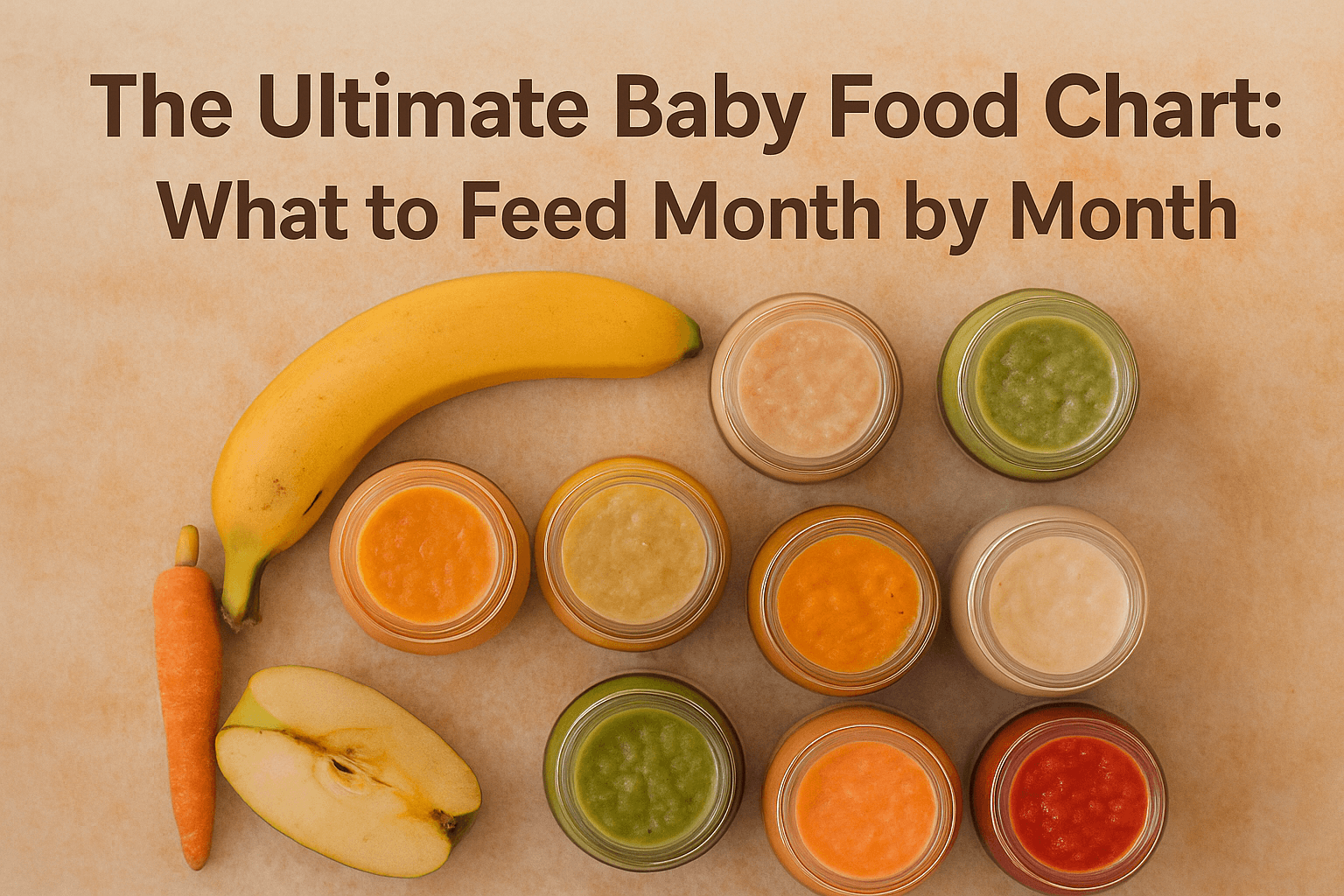
This complete month-by-month guide breaks down everything you need to know, helping you confidently feed your baby from 6 months up to 12 months. Whether you are doing purees, baby-led weaning (BLW), or a combination of both, this chart keeps things simple, clear, and safe.
When Should You Start Solid Foods?
Experts recommend beginning solids around 6 months—but only when your baby shows key readiness signs.
Signs your baby is ready for solids:
- Sits with minimal support
- Holds head up confidently
- Shows interest in food
- Opens mouth when food approaches
- Can pick up objects and bring them to the mouth
- Has lost the tongue-thrust reflex
Never start solids before 4 months, and ideally wait until 6 months for digestive readiness and oral development.
Why a Month-by-Month Chart Helps
Babies grow rapidly during their first year—and so do their nutritional needs. A clear monthly feeding plan helps you:
- Introduce foods safely
- Ensure balanced nutrition
- Prevent nutrient deficiencies (like iron)
- Track feeding skills
- Avoid unsafe textures
- Offer the right variety at the right time
This chart includes:
- Recommended textures
- Portion suggestions
- Nutrient priorities
- Sample foods
- Feeding tips for each stage
Let’s begin!
⭐ 6-Month Baby Food Guide: The Discovery Stage
Welcome to your baby’s first taste of real food! At 6 months, solids are mostly about exploring, not filling the stomach.
Goals for this month:
- Introduce a variety of flavors
- Practice swallowing
- Build oral-motor skills
- Expose allergens safely
Textures:
- Smooth purees
- Mashed foods
- Very soft BLW strips (finger-sized pieces)
Nutrient Focus:
✔ Iron
✔ Zinc
✔ Healthy fats
Breastmilk or formula still provides 90% of nutrition.
Best first foods:
- Iron-fortified baby cereal (oats preferred)
- Mashed sweet potato
- Pureed carrots
- Mashed banana
- Pureed pear
- Avocado
- Steamed and mashed apple
- Pureed lentils
- Mashed or shredded scrambled eggs (allergen introduction)
- Smooth peanut butter (thinned with water or breastmilk)
Sample Meal Plan (6 Months):
- Breakfast: Oat cereal + mashed banana
- Lunch: Sweet potato puree
- Dinner: Mashed avocado + scrambled egg strip
⭐ 7-Month Baby Food Guide: Building Confidence
Your baby is learning how to swallow better and may start showing preferences.
Goals for this month:
- Introduce mild spices
- Add more protein
- Practice chewing motion
Textures:
- Thick purees
- Mashed foods
- Soft chunks
- Finger foods (BLW style)
Nutrient Focus:
✔ Iron
✔ Protein
✔ Fiber
Great foods for 7 months:
- Steamed carrots in sticks
- Soft broccoli florets
- Thin yogurt
- Scrambled eggs
- Soft pasta pieces
- Cottage cheese
- Mashed chickpeas
- Shredded chicken (very soft)
- Mashed pumpkin
- Soft roasted zucchini
Introduce new flavors:
- Cinnamon
- Ginger
- Nutmeg
- Basil
- Turmeric (small amounts)
Sample Meal Plan (7 Months):
- Breakfast: Greek yogurt + pear puree
- Lunch: Lentil mash + carrot sticks
- Dinner: Mashed pumpkin + shredded chicken
⭐ 8-Month Baby Food Guide: Texture Adventure
At 8 months, babies develop stronger chewing skills—even without teeth.
Goals for this month:
- More complex flavors
- More textured foods
- Introduce 3-meal schedule (optional)
Textures:
- Minced foods
- Soft diced foods
- More chunky purees
Nutrient Focus:
✔ Iron
✔ Healthy fats
✔ Omega-3
Great foods for 8 months:
- Salmon flakes
- Flaky white fish
- Tofu cubes
- Soft cheese varieties
- Mini omelet strips
- Mashed beans
- Butternut squash cubes
- Quinoa + veggie mash
- Mango slices
- Pancakes (no sugar)
Sample Meal Plan (8 Months):
- Breakfast: Banana pancakes + yogurt
- Lunch: Soft tofu cubes + steamed peas
- Dinner: Salmon flakes + mashed sweet potato
⭐ 9-Month Baby Food Guide: The Finger Food Stage
At this stage, babies love picking up food themselves. This is when mealtime gets fun—and messy!
Goals for this month:
- Encourage self-feeding
- Develop pincer grasp
- Offer a balanced plate
Textures:
- Soft diced foods
- Finger foods
- Mixed textures
Nutrient Focus:
✔ Iron
✔ Vitamin C
✔ Healthy fats
✔ Complex carbs
Good foods for 9 months:
- Soft avocado cubes
- Scrambled egg pieces
- Rotini pasta pieces
- Mini turkey meatballs (soft)
- Soft peach slices
- Steamed green beans
- Hummus on toast strips
- Oatmeal with chia seeds
- Soft cooked apples
Foods baby can now try:
- Whole wheat pasta
- Very soft bread
- Small rice balls (pressed for grip)
Sample Meal Plan (9 Months):
- Breakfast: Oatmeal with mashed berries
- Lunch: Small pasta + veggies
- Dinner: Turkey meatball + avocado cubes
⭐ 10-Month Baby Food Guide: New Skills, New Flavors
Your baby is developing stronger chewing, more coordinated hand movements, and curiosity about family meals.
Goals for this month:
- Eat more table foods
- Introduce new proteins
- Explore mixed meals
Textures:
- Soft table food
- Mixed textures (rice + veggies, pasta + sauce)
Nutrient Focus:
✔ Iron
✔ Calcium
✔ Protein
Great foods for 10 months:
- Stir-fried veggies (soft)
- Shredded chicken
- Soft rice dishes
- Dahl (lentils)
- Shredded chapati soaked in soup
- Fruit pieces (banana, pear, mango)
- Whole-grain crackers (softened)
- Cottage cheese with fruit
Can start trying:
- Mild spices
- Mild curry
- Mashed family meals
Sample Meal Plan (10 Months):
- Breakfast: Banana + peanut butter oatmeal
- Lunch: Soft rice + lentils + spinach
- Dinner: Chicken strips + steamed veggies
⭐ 11-Month Baby Food Guide: Almost a Toddler!
This month is about transitioning from baby food to toddler-friendly meals.
Goals for this month:
- Introduce small portions of family meals
- Encourage chewing of varied textures
- Begin using small utensils (optional)
Textures:
- Regular soft table foods
- More chewable textures
Nutrient Focus:
✔ Iron
✔ Calcium
✔ Healthy fats
✔ Fiber
Best foods for 11 months:
- Soft rice with vegetables
- Lentil soup with bread pieces
- Soft chapati pieces
- Vegetable khichdi
- Egg curry (soft pieces)
- Small fruit pieces
- Soft pancakes (egg + oat + banana)
- Mild fish curry (deboned)
Sample Meal Plan (11 Months):
- Breakfast: Egg + banana mini pancakes
- Lunch: Khichdi with veggies
- Dinner: Soft chapati strips + vegetable curry
⭐ 12-Month Baby Food Guide: The Big Transition
Welcome to toddler territory! At 12 months, your baby can now eat almost everything the family eats—except choking hazards.
Goals for this month:
- Begin regular family meals
- Introduce whole cow’s milk (as a drink)
- Build healthy eating habits
Textures:
- Family food (cut into small safe pieces)
Nutrient Focus:
✔ Iron
✔ Protein
✔ Calcium
✔ Healthy fats
Foods your 12-month-old can enjoy:
- Rice dishes
- Eggs in any form
- Fish (boneless)
- Chicken curry (mild)
- Vegetable soups
- Yogurt
- Cheese
- Fruits
- Pasta
- Dals and beans
- Soft chapati pieces
- Oats
Foods still to avoid:
- Whole nuts
- Popcorn
- Hard raw vegetables
- Hard candy
- Big chunks of meat
- Honey for under 1 year (now allowed at 12 months)
Sample Meal Plan (12 Months):
- Breakfast: Fruit + yogurt bowl
- Lunch: Rice + chicken + veggies
- Dinner: Soft pasta with tomato sauce
Feeding Tips for Every Month
1. Follow baby’s hunger cues
Never force-feed. Babies naturally regulate intake.
2. Don’t worry if baby eats little at first
Milk is still the main nutrition source until 12 months.
3. Offer water with meals
Start around 6 months.
4. Introduce allergens early and safely
Eggs, peanuts, dairy, bananas, wheat—one at a time.
5. Avoid salt and sugar
Babies’ kidneys are still developing.
6. Keep meals relaxed
Stress-free meals create confident eaters.
7. Embrace the mess
It’s all part of learning!
Month-by-Month Baby Food Chart (Quick Reference)
6 Months:
Purees, soft mashes, avocado, banana, carrot, egg, iron-rich foods.
7 Months:
Thicker textures, soft chunks, yogurt, zucchini, lentils, pasta.
8 Months:
More variety—fish flakes, tofu, beans, quinoa, mango.
9 Months:
Finger foods, mashed meals, small pasta shapes, hummus.
10 Months:
Family-style soft meals, rice dishes, shredded chicken, mild spices.
11 Months:
Mixed textures, family meals cut small, soft chapati, soups.
12 Months:
Full family meals, cow’s milk, all foods except choking hazards.
Final Thoughts
Feeding your baby is a journey filled with joy, exploration, and learning. A month-by-month chart makes the transition smoother, safer, and more enjoyable for both parents and babies. Whether you use purees, BLW, or a mix of both, remember:
**Every baby develops at their own pace.
Trust the process and enjoy the milestones!**