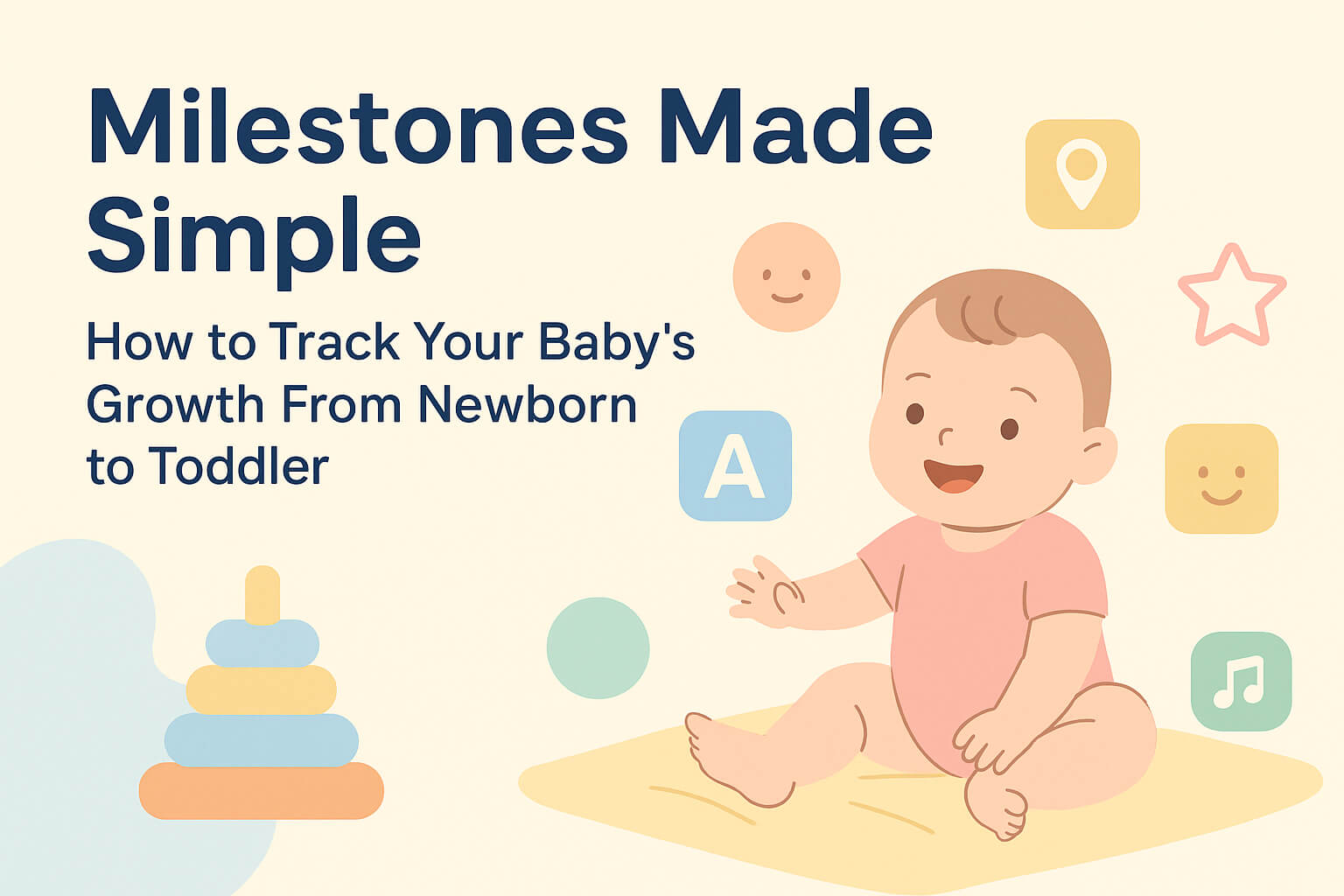
Your baby grows faster in the first two years than at any other time in life. From their first smile to their first steps, each milestone is an exciting sign of healthy development. But tracking all these changes can feel overwhelming for new parents. This simple guide breaks everything down in an easy-to-follow way so you can confidently understand and monitor your baby’s progress.
Understanding Baby Milestones
“Milestones” are important skills most babies learn within a certain age range. They fall under four major categories:
1. Physical (Gross Motor)
Rolling, sitting, crawling, standing, walking.
2. Fine Motor
Grasping toys, picking up objects, pointing, stacking blocks.
3. Cognitive
Learning, problem-solving, exploring, understanding cause and effect.
4. Social & Emotional
Smiling, recognizing faces, expressing emotions, bonding.
5. Language & Communication
Cooing → babbling → first words → simple instructions.
Every child grows at their own pace, but these milestones help you notice progress and identify any early concerns.
⭐ Milestones by Age (Newborn to Toddler)
👶 0–3 Months: Early Responses
Typical Milestones
- Lifts head during tummy time
- Tracks objects with eyes
- Smiles socially
- Makes cooing sounds
- Recognizes mother’s voice
- Moves arms & legs actively
How to Track
✔ Count tummy time minutes
✔ Note first smiles and coos
✔ Observe eye-tracking
🍼 4–6 Months: Stronger Muscle Control
Milestones
- Rolls over both ways
- Laughs and squeals
- Reaches for toys
- Brings hands to mouth
- Sits with support
Tracking Tips
✔ Record dates when baby first rolls
✔ Use simple toys for reach & grab practice
🧸 7–9 Months: Mobility Begins
Milestones
- Sits without support
- Crawls or scoots
- Pulls up to stand
- Responds to name
- Babbles (“ba-ba”, “da-da”)
Tracking Tips
✔ Keep a crawling milestone note
✔ Observe reactions to their name
✔ Track new babbling sounds
🚼 10–12 Months: First Words & Steps
Milestones
- Says “mama,” “dada,” or simple words
- Stands with or without support
- May take first steps
- Enjoys interactive games
- Understands simple instructions (“come,” “stop”)
Tracking Tips
✔ Take videos of first steps
✔ Note new words
✔ Notice response to instructions
🎉 Toddler Milestones (12–24 Months)
👣 12–18 Months
- Walks independently
- Points at objects
- Uses 5–20 words
- Stacks 2–4 blocks
- Drinks from a cup
- Follows one-step commands
🧠 18–24 Months
- Runs, climbs, and kicks a ball
- Uses 2-word phrases (“more milk”)
- Shows early problem-solving
- Plays pretend games
- Understands simple questions
- Shows stronger emotions (happy, upset, shy)
📊 Simple Ways to Track Your Baby’s Growth
1. Keep a Milestone Journal
Write down dates of first smile, roll, crawl, walk, first words, etc.
2. Use Photos & Videos
Visual progress is easier to compare over time.
3. Monthly Checklists
Create a monthly page with milestones to observe.
4. Use Mobile Apps
There are apps designed to track sleep, feeding, and milestone development.
5. Regular Pediatric Checkups
Doctors track growth through:
- Height
- Weight
- Head circumference
- Reflexes
- Motor development
⚠️ When to Seek Professional Advice
You may want to talk to a pediatrician if:
- Baby isn’t smiling by 3 months
- No babbling by 8–9 months
- Not sitting by 9 months
- Not crawling by 12 months
- Not walking by 18 months
- Doesn’t respond to sounds or name
- Has low muscle tone or stiff limbs
Early support helps your baby thrive.
Tracking your baby’s growth doesn’t have to be complicated. With simple observation, small notes, and regular checkups, you can follow every precious milestone as your little one grows from a tiny newborn into an active, curious toddler. Remember: every child develops at their own pace—and your support is the most important milestone of all.