
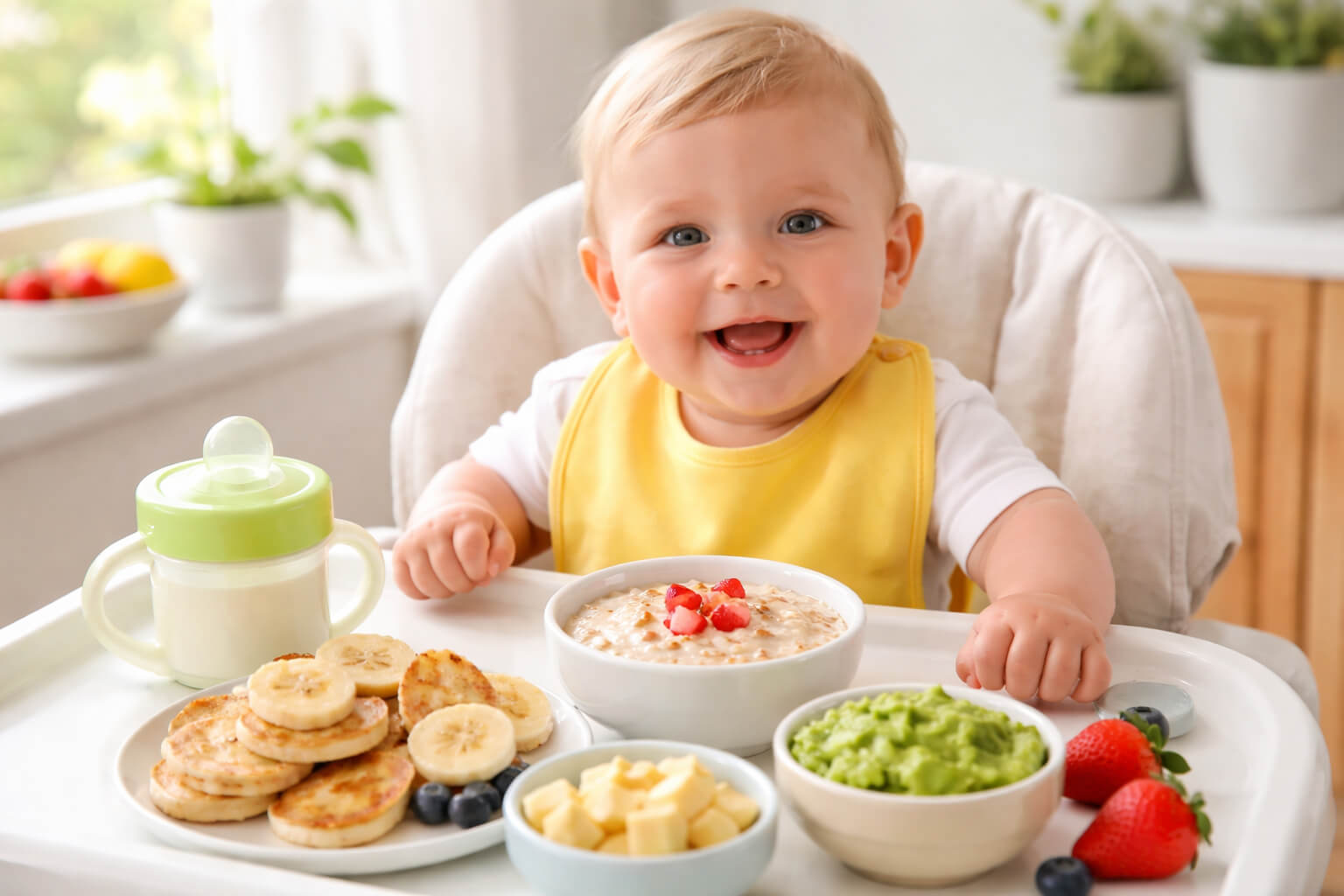
Breakfast is often called the most important meal of the day—and for babies, it’s no different. A healthy morning meal gives your baby energy, nutrients, and sets the tone for developing lifelong healthy eating habits.
If you’re a parent wondering what to feed your baby for breakfast, this guide has you covered. We’ll explore nutritious, easy-to-make breakfast ideas for babies, tips for feeding, safety considerations, and ways to make mornings stress-free and enjoyable.
Whether your baby is just starting solids or is a toddler exploring new foods, you’ll find plenty of ideas to make breakfast both healthy and delicious.
Why a Healthy Breakfast Matters for Babies
A good breakfast:
- Provides energy for growth and activity
- Supports brain development
- Encourages healthy eating habits early
- Introduces new flavors and textures
- Helps prevent mid-morning hunger and fussiness
Offering a variety of fruits, vegetables, proteins, and whole grains in the morning ensures your baby gets a balanced start to the day.
When Can Babies Start Breakfast?
Babies can start eating breakfast once they’ve begun solid foods, typically around 6 months of age.
Signs Your Baby Is Ready for Breakfast:
- Can sit upright with minimal support
- Shows interest in food
- Has lost the tongue-thrust reflex
- Can bring objects or food to their mouth
For babies under 1 year, breast milk or formula remains the main source of nutrition, and breakfast complements it.
Tips for Feeding Babies in the Morning
- Start Small – Offer a few teaspoons at first.
- Introduce One New Food at a Time – Helps identify allergies.
- Keep It Mess-Free – Use a bib and splat mat.
- Offer Variety – Mix flavors and textures to develop taste preferences.
- Follow Baby’s Hunger Cues – Stop when they push food away.
Nutrients Babies Need at Breakfast
For a balanced start, include:
- Carbohydrates: Oats, whole-grain bread, or cereals for energy
- Protein: Eggs, yogurt, cheese for growth and brain development
- Healthy Fats: Avocado, nut butter (thin), or full-fat dairy for brain and eye health
- Fruits & Vegetables: Vitamins, fiber, and antioxidants
Baby Breakfast Ideas by Age
6–8 Months
Soft, easy-to-swallow foods are best.
- Mashed Banana – Naturally sweet, potassium-rich
- Avocado Mash – Creamy, healthy fats
- Steamed Apple or Pear Puree – Gentle on digestion
- Oatmeal Cereal – Soft, iron-rich, and easy to digest
- Sweet Potato Mash – Naturally sweet and vitamin-rich
9–12 Months
Babies can handle thicker textures and small finger foods.
- Soft Scrambled Eggs – Protein-rich
- Yogurt with Mashed Fruit – Calcium and vitamins
- Mini Pancakes – Oats or whole wheat, lightly cooked
- Steamed Vegetable Sticks – Carrot, zucchini, or broccoli
- Soft Toast Fingers – Spread with avocado or thin nut butter
12+ Months / Toddlers
Toddlers can eat a variety of foods similar to the family meal.
- Fruit Smoothies – Blend fruit with yogurt or milk
- Cheese Cubes with Whole Grain Crackers
- Vegetable Muffins – Carrot, zucchini, or spinach
- Oatmeal Bars or Fingers – Soft and nutritious
- Mini Breakfast Burritos – Soft tortilla with eggs and veggies
Easy Homemade Baby Breakfast Recipes
1. Banana Oat Pancakes
Age: 9 months+
Ingredients:
- 1 ripe banana
- ½ cup oats
- 1 egg
Instructions:
- Mash the banana and mix with oats and egg.
- Cook small pancakes in a non-stick pan.
- Cool and cut into finger-friendly pieces.
2. Avocado Toast Fingers
Age: 9 months+
Ingredients:
- 1 slice whole-grain bread
- ½ ripe avocado
Instructions:
- Toast bread lightly.
- Mash avocado and spread on toast.
- Cut into strips your baby can hold.
3. Yogurt & Fruit Mash
Age: 6–12 months
Ingredients:
- Plain unsweetened yogurt
- Mashed banana, pear, or berries
Instructions:
- Mix mashed fruit with yogurt.
- Serve immediately.
4. Sweet Potato & Apple Mash
Age: 6–9 months
Ingredients:
- ½ sweet potato, peeled and chopped
- 1 small apple, peeled and chopped
Instructions:
- Steam sweet potato and apple until soft.
- Mash together until smooth.
- Serve warm.
5. Mini Veggie Omelet
Age: 9–12 months
Ingredients:
- 1 egg
- Finely chopped vegetables (spinach, carrot, zucchini)
Instructions:
- Beat egg and add vegetables.
- Cook thoroughly in a non-stick pan.
- Cut into finger-sized strips.
Quick Tips for Stress-Free Baby Breakfasts
- Prepare Ahead: Make purees or pancakes in batches.
- Use High Chairs Safely: Always supervise meals.
- Let Baby Explore: Mess is part of learning.
- Rotate Flavors: Introduce new fruits and vegetables gradually.
- Stay Calm: Babies feed at their own pace.
Common Mistakes to Avoid
- Adding sugar or honey
- Offering only one type of food
- Using processed breakfast cereals with high sugar
- Rushing the feeding process
- Expecting baby to eat a full meal immediately
Sample Baby Breakfast Schedule
6–8 Months:
- Breast milk or formula
- Mashed fruit or oatmeal
9–12 Months:
- Milk feed
- Mini pancakes or scrambled eggs
- Fruit mash
12+ Months:
- Milk or water
- Smoothie or oatmeal fingers
- Veggie omelet strips
Adjust portion sizes based on your baby’s appetite.
Conclusion
Healthy breakfast sets the tone for your baby’s day, providing energy, essential nutrients, and exposure to new flavors. By offering nutritious, easy-to-make breakfast options and following safety guidelines, you’re helping your baby develop positive eating habits from the start.
Mornings can be messy and unpredictable, but every spoonful, bite, and exploration builds a strong foundation for lifelong healthy eating.