
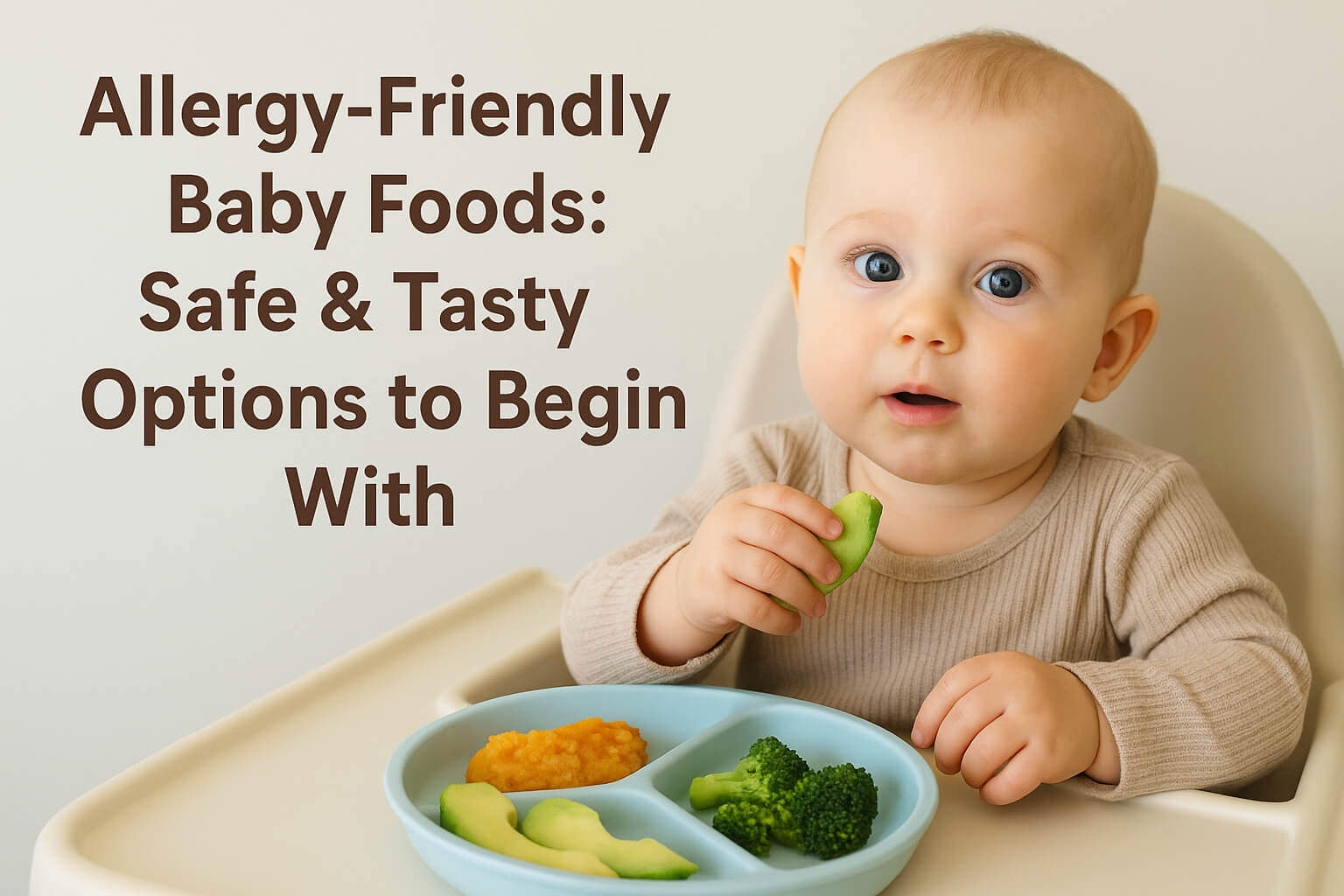
This comprehensive guide is designed to help every parent confidently introduce solid foods—whether your baby has a known allergy risk or you simply want to offer safe, nutritious meals. Inside, you’ll learn allergy-friendly first foods, how to introduce allergens, when to avoid certain foods, and strategies that build a healthy, fearless eater.
Let’s begin your journey to safe and delicious baby feeding!
Why Allergy-Friendly Feeding Matters
Babies’ immune systems are still developing, and their digestive tracts are not yet mature. When certain food proteins enter their systems, some babies’ bodies may respond incorrectly, causing an allergic reaction.
However, research now shows something important:
Early, controlled introduction of allergens may reduce the risk of future food allergies.
This means parents no longer need to avoid allergenic foods early on—in fact, avoiding them might increase allergy risk later.
But before introducing allergens, it’s important to begin with universally safe, easy-to-digest foods.
Understanding Food Allergies vs. Sensitivities
Food Allergy
A true allergy triggers the immune system. Even tiny amounts can cause symptoms like:
- Hives
- Vomiting
- Swelling
- Wheezing
- Difficulty breathing
These can appear within minutes to two hours.
Food Sensitivity (Intolerance)
This is digestive, not immune-driven:
- Gas
- Constipation
- Reflux
- Diarrhea
These are uncomfortable but not dangerous.
Knowing the difference helps you respond calmly and correctly.
Top Food Allergens to Know
Common allergens include:
- Eggs
- Milk
- Peanuts
- Tree nuts
- Fish
- Shellfish
- Soy
- Wheat
Many of these can be introduced safely from 6 months, but the focus of this article is on allergy-friendly foods—ingredients that very rarely trigger reactions.
⭐ The Best Allergy-Friendly Baby Foods (Safe for Almost Every Baby)
Here are foods that are naturally gentle, nutritious, and extremely unlikely to cause allergic reactions. These are great options for early feeding—regardless of whether you’re doing purees or baby-led weaning.
1. Sweet Potatoes
Sweet potatoes are packed with vitamins A and C and are mild on the stomach.
Why it’s allergy-friendly:
- Low allergen potential
- Soft texture when steamed
- Easy to digest
Serve as:
- Mashed puree
- Soft roasted strips
- Combined with lentils or peas
2. Avocado
One of the safest first foods in the world.
Benefits:
- Rich in healthy fats
- Supports brain development
- Almost zero allergy risk
Serve as:
- Mashed
- Sliced in strips (BLW)
- Mixed with banana or yogurt
3. Banana
Sweet, soft, and highly digestible.
Why it’s great:
- No allergenic protein
- Easy to mash
- Gentle on digestion
Serve as:
- Fork-mashed
- Halved for BLW
- Mixed with oats
4. Oats (Gluten-Free)
If your baby has a wheat sensitivity, gluten-free oats are perfect.
Benefits:
- Rich in iron
- Gentle fiber source
- Rarely allergenic
Serve as:
- Baby oatmeal
- Oat pancakes (egg-free options available)
- Thickened with breastmilk
5. Pears
Pears are easy on the stomach and ideal for digestion.
Serve as:
- Puree
- Lightly steamed slices (BLW)
- Mixed with oatmeal
6. Apples (Cooked)
Raw apples are a choking hazard—but cooked apples are safe and mild.
Serve as:
- Applesauce
- Steamed apple sticks
- Mixed with cinnamon
7. Lentils
A powerhouse food and a great source of iron.
Why allergy-friendly:
- Low allergenic risk
- Excellent plant-based protein
Serve as:
- Mashed lentil puree
- Lentil soup
- Lentil patties (very soft)
8. Quinoa
Gluten-free, high protein, and gentle on the gut.
Serve as:
- Soft cooked quinoa
- Mixed with vegetables
- Blended with apple or banana
9. Carrots
Steamed carrots are safe and sweet.
Serve as:
- Puree
- Soft sticks
- Blended with lentils
10. Pumpkin / Butternut Squash
Perfect for fall, full of nutrition.
Serve as:
- Puree
- Roasted soft cubes
- Mixed with rice or oats
⭐ How to Introduce New Foods Safely
- Introduce one new food at a time.
Wait 2–3 days before adding a new ingredient. - Offer new foods early in the day, not at night, so you can monitor for reactions.
- Start with small amounts (1–2 teaspoons).
- Watch for reactions for the next 2 hours, and mild reactions for 24 hours.
- Keep serving accepted foods regularly so your baby maintains tolerance.
⭐ Early Allergen Introduction—Made Safe for Every Parent
Even though this guide focuses on allergy-friendly foods, it’s important to understand how to introduce allergenic foods safely.
(You may also skip allergenic foods entirely at first and focus on the safe list.)
Introduce allergens only when:
- Baby is healthy
- It’s daytime
- You can observe them for two hours
- You have already introduced several allergy-friendly foods
Safe forms of allergenic foods include:
- Egg → scrambled, boiled and mashed, omelet strips
- Peanut → thinned peanut butter, peanut powder mixed in oatmeal
- Dairy → yogurt or cheese (not cow’s milk as drink)
- Wheat → soft bread, chapati pieces, wheat cereal
Never introduce allergens:
- When baby is sick
- At bedtime
- When you can’t monitor them
⭐ How to Recognize an Allergy Reaction
Mild Symptoms
- Red rash around mouth
- A few hives
- Mild vomiting
- Watery eyes
Moderate to Severe Symptoms
- Swelling of lips or eyes
- Constant vomiting
- Wheezing or coughing
- Trouble breathing
- Pale or floppy body
- Sudden drowsiness
If severe symptoms appear → Seek emergency medical care immediately.
For mild symptoms → Discontinue the food and contact your pediatrician.
⭐ Building an Allergy-Friendly Baby Menu (Month-by-Month)
Below is a simple guide for structuring meals using allergy-friendly foods throughout the first months of solids.
⭐ 6 Months
Safe foods:
- Sweet potato
- Avocado
- Pear
- Banana
- Steamed carrot
- Applesauce
- Oats
- Lentils
Meals:
- Banana + oats puree
- Sweet potato mash
- Avocado + pear mash
⭐ 7 Months
Add more texture.
Safe foods:
- Quinoa
- Pumpkin
- Butternut squash
- Zucchini
- Green peas
Meals:
- Pumpkin puree
- Mashed lentils + carrots
- Quinoa + apple blend
⭐ 8 Months
Combine foods.
Safe foods:
- Whole grain bread (small soft pieces)
- Tofu
- Chickpeas (mashed)
- Soft cooked beans
Meals:
- Lentil + veggie bowl
- Tofu cubes + peas
- Banana + oats pancakes
⭐ 9–10 Months
Finger foods become important.
Safe foods:
- Soft vegetable cubes
- Soft fruits
- Tiny rice balls
- Bean patties
Meals:
- Soft rice with lentils
- Avocado cubes
- Quinoa mixed with pumpkin
⭐ 11–12 Months
Eating like a toddler!
Safe foods:
- Mild soups
- Steamed vegetables
- Fruit chunks
- Bread pieces
- Dairy if tolerated
Meals:
- Veggie soups
- Oat and fruit bowl
- Rice + tofu + veggies
⭐ Allergy-Friendly Meal Ideas
Breakfast Ideas
- Banana oatmeal
- Pear + oat mash
- Apple cinnamon quinoa
- Avocado toast (thin strip for BLW)
Lunch Ideas
- Lentil soup + carrots
- Soft quinoa + vegetables
- Pumpkin puree with peas
Dinner Ideas
- Rice + mashed beans
- Sweet potato wedges
- Zucchini + tofu bowl
⭐ Allergy-Friendly Snacks (10+ months)
- Steamed apple slices
- Banana slices
- Avocado cubes
- Soft bread pieces
- Pear wedges
- Teething crackers (gluten-free if needed)
⭐ Foods to Avoid in the First Year (For Allergy & Safety Reasons)
Choking Hazards
- Whole nuts
- Popcorn
- Hard raw fruits
- Raw vegetables
- Grapes (unless quartered)
- Hot dog pieces
- Hard candy
- Sticky foods (marshmallow, thick peanut butter)
Allergy/Safety Concerns
- Honey (avoid until 12 months → botulism risk)
- Added salt
- Added sugar
- Cow’s milk as a drink
- Highly processed snacks
⭐ Tips for Raising a Confident, Allergy-Safe Eater
1. Offer variety early and often
The more flavors your baby tries before age 1, the less likely they’ll be picky later.
2. Introduce allergens safely—but don’t avoid them forever
Introduce early, then keep serving regularly.
3. Stay calm—babies read your emotions
If you’re nervous, they sense it. Keep feeding calm and enjoyable.
4. Make meals fun and sensory-rich
Let babies touch, squish, and explore food.
5. Track new foods in a log if allergies run in your family
Helps you observe patterns and reactions.
6. Always supervise meals
Never leave your baby alone with food.
Final Thoughts: Safe, Happy Eating Starts With You
Feeding your baby doesn’t have to be stressful. With allergy-friendly foods, safe textures, and a patient approach, your little one can explore flavors confidently and joyfully. Remember: introducing foods slowly and thoughtfully helps build a positive eating foundation that will last for years.
Trust your instincts, follow your baby’s cues, and enjoy the messy, magical adventure of feeding!