
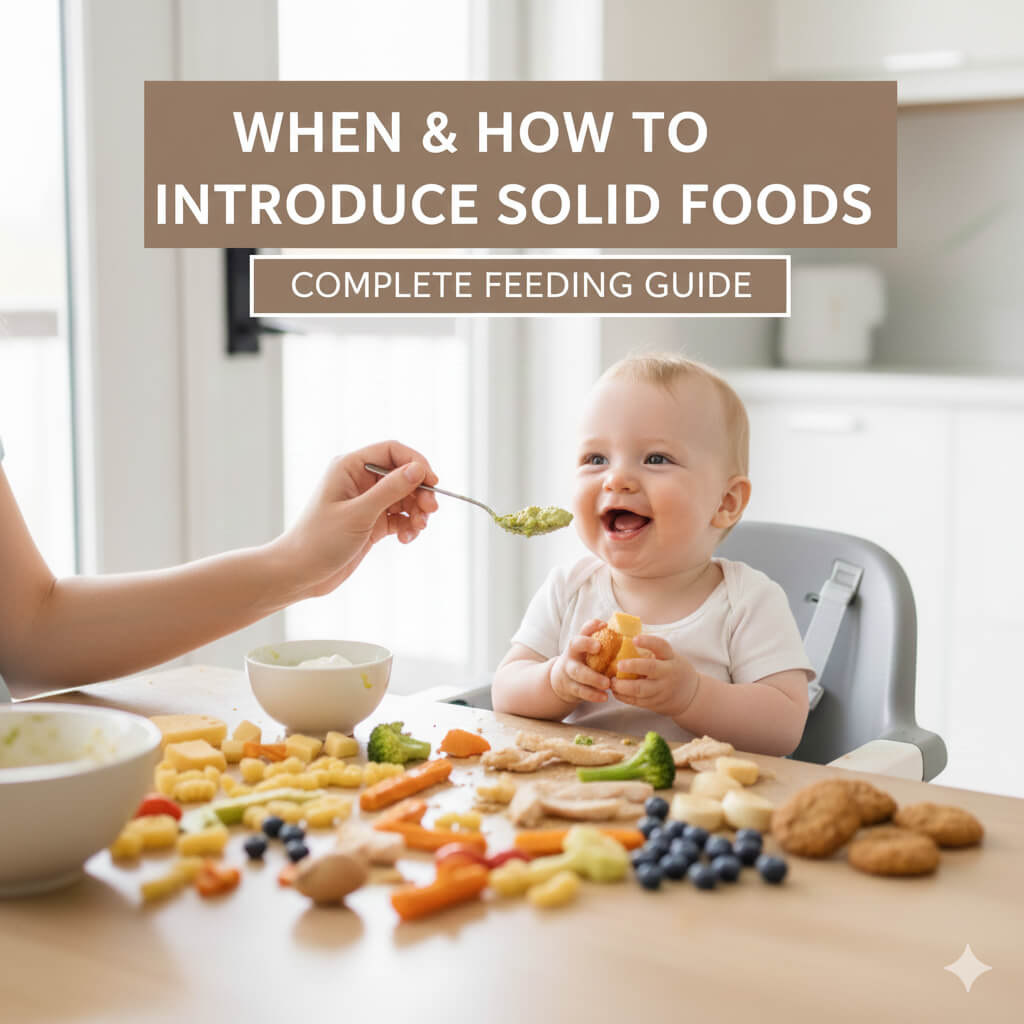
Introducing solid foods is one of the biggest milestones in your baby’s first year. For many parents, it also brings confusion and questions: When should I start solids? What foods are safe? How much should my baby eat?
This complete feeding guide will help you understand when and how to introduce solid foods, what to expect at each stage, and how to build healthy eating habits from the very beginning.
Whether you’re a first-time parent or looking for reassurance, this guide will walk you through the process step by step—safely, confidently, and stress-free.
Why Introducing Solid Foods Matters
Solid foods help your baby:
- Learn how to chew and swallow
- Develop hand-eye coordination
- Experience new tastes and textures
- Build healthy eating habits early
- Gradually meet increasing nutritional needs
Before age one, solids complement breast milk or formula—they don’t replace it.
When Should You Introduce Solid Foods?
Most babies are ready for solid foods around 6 months of age, but readiness depends on development, not just age.
Signs Your Baby Is Ready for Solids
Your baby may be ready if they:
- Can sit upright with minimal support
- Have good head and neck control
- Bring objects or food to their mouth
- Show interest in food (watching, reaching)
- Have lost the tongue-thrust reflex
If these signs are not present, it’s best to wait. Always consult your pediatrician if unsure.
Why Not Start Solids Too Early?
Starting solids before your baby is ready may:
- Increase choking risk
- Cause digestive discomfort
- Reduce milk intake too early
- Increase allergy risks in some cases
Waiting until your baby shows readiness signs is safest.
Breast Milk or Formula Still Comes First
Until your baby turns 1 year old:
- Breast milk or formula remains the main source of nutrition
- Solid foods are for learning, not full meals
- Milk feeds should continue regularly
A helpful reminder:
“Food before one is just for fun.”
How to Start Solid Foods: Step-by-Step
Step 1: Choose the Right Time of Day
Start solids when your baby:
- Is well-rested
- Is not overly hungry
- Is calm and alert
Many parents prefer mid-morning or early afternoon.
Step 2: Start With Single-Ingredient Foods
Begin with one food at a time to:
- Identify allergies
- Help baby recognize flavors
- Reduce digestive issues
Wait 2–3 days before introducing a new food.
Step 3: Pick the Right Texture
Early foods should be:
- Smooth
- Soft
- Easy to swallow
Textures gradually increase as your baby grows.
Best First Foods for Babies
These foods are gentle, nutritious, and beginner-friendly.
Popular First Foods:
- Banana
- Avocado
- Sweet potato
- Apple (cooked)
- Pear (cooked)
- Pumpkin
- Carrot (cooked)
Avoid adding salt, sugar, honey, or spices.
How to Introduce Solid Foods (Methods)
There are two main approaches, and both are safe when done correctly.
1. Spoon-Feeding (Traditional Weaning)
Parents spoon-feed smooth purees.
Pros:
- Easy to control texture
- Helpful for younger babies
- Simple to monitor intake
Tips:
- Let baby lean forward to accept food
- Don’t force the spoon
- Follow baby’s hunger cues
2. Baby-Led Weaning (BLW)
Babies feed themselves soft finger foods.
Pros:
- Encourages independence
- Improves motor skills
- Baby controls intake
Safety Rules:
- Baby must sit upright
- Foods must be soft and large enough to grasp
- Always supervise
Many families use a combined approach, which is perfectly fine.
Feeding Schedule by Age (General Guide)
6–7 Months
- 1–2 solid meals per day
- Smooth purees or soft finger foods
- Small amounts (1–2 teaspoons to start)
8–9 Months
- 2–3 meals per day
- Thicker textures
- Mashed and soft finger foods
10–12 Months
- 3 meals + 1–2 snacks
- Chopped and soft family foods
- More variety and textures
How Much Solid Food Should a Baby Eat?
There is no fixed amount.
- Some days baby eats more
- Some days baby eats less
- Appetite varies daily
Stop feeding when your baby:
- Turns head away
- Closes mouth
- Pushes food away
Never force your baby to eat.
Introducing Common Allergens Safely
Early introduction of allergens may reduce allergy risk.
Common Allergens:
- Egg
- Peanut
- Dairy
- Wheat
- Fish
How to Introduce:
- One allergen at a time
- Small amounts
- During the day
- At home, not before bedtime
Avoid whole nuts or thick nut butter—use thin spreads or mixed forms.
Foods to Avoid in the First Year
For safety and health reasons, avoid:
- Honey (risk of botulism)
- Added salt or sugar
- Whole nuts and popcorn
- Hard raw vegetables
- Whole grapes or cherry tomatoes
- Sugary drinks and juices
Choking vs Gagging: Know the Difference
Gagging (Normal):
- Loud noises
- Coughing
- Red face
- Baby recovers quickly
Choking (Emergency):
- Silent
- Difficulty breathing
- Blue lips or skin
Gagging helps babies learn to manage food—it’s normal and expected.
Creating a Safe Feeding Environment
- Seat baby upright
- Remove distractions
- Stay with your baby during meals
- Keep mealtimes calm and relaxed
Mealtimes should feel positive, not stressful.
Common Feeding Mistakes to Avoid
- Starting solids too early
- Adding salt or sugar
- Offering too many foods at once
- Forcing baby to eat
- Comparing your baby to others
Every baby develops at their own pace.
Signs Your Baby Is Progressing Well
Your baby may:
- Show excitement at mealtime
- Improve chewing and swallowing
- Reach for food
- Enjoy a variety of tastes
- Gradually eat larger amounts
Messy eating is a sign of learning—not failure.
How to Build Healthy Eating Habits Early
- Offer a variety of foods
- Repeat foods even if baby refuses
- Eat together as a family
- Avoid pressure or rewards
- Let baby explore food
It can take 10–15 exposures before a baby accepts a new food.
Sample Daily Feeding Routine (8–9 Months)
Morning:
Milk feed
Breakfast:
Mashed fruit or oatmeal
Midday:
Milk feed
Lunch:
Vegetable puree or soft finger foods
Afternoon:
Milk feed
Dinner:
Mashed protein + vegetable
Adjust based on your baby’s needs.
When to Transition to Family Foods
Around 9–12 months, babies can start eating modified family meals:
- Soft
- Unsalted
- Cut into safe sizes
This helps babies feel included and encourages healthy habits.
Final Thoughts
Introducing solid foods is an exciting journey—not a race. By watching your baby’s readiness cues, offering safe and nutritious foods, and keeping mealtimes relaxed, you’re building a strong foundation for lifelong healthy eating.
Some days will feel successful, others messy—and both are completely normal. Trust your baby, trust yourself, and enjoy the process.
Every spoonful, touch, and taste is a step forward.