Reading to a baby who can’t yet talk—or even sit up—might feel a bit like performing a one-person show to a very tiny, slightly distracted critic. However, pediatricians and developmental psychologists agree: the first 12 months are the most critical period for language acquisition.
When you read to a baby under one, you aren’t just telling a story. You are “pruning” their brain, helping them distinguish sounds, recognize patterns, and begin the lifelong journey of emotional intelligence. But not all books are created equal for this stage. A baby’s “reading” experience is as much about their hands and mouth as it is about their eyes.
In this guide, we’ve curated the absolute best baby books for early learning, categorized by the specific developmental milestones they support.
1. High-Contrast Books: Birth to 3 Months
Newborns have a limited visual range, seeing primarily in black, white, and gray. High-contrast books with bold, geometric patterns help stimulate the development of the optic nerve.
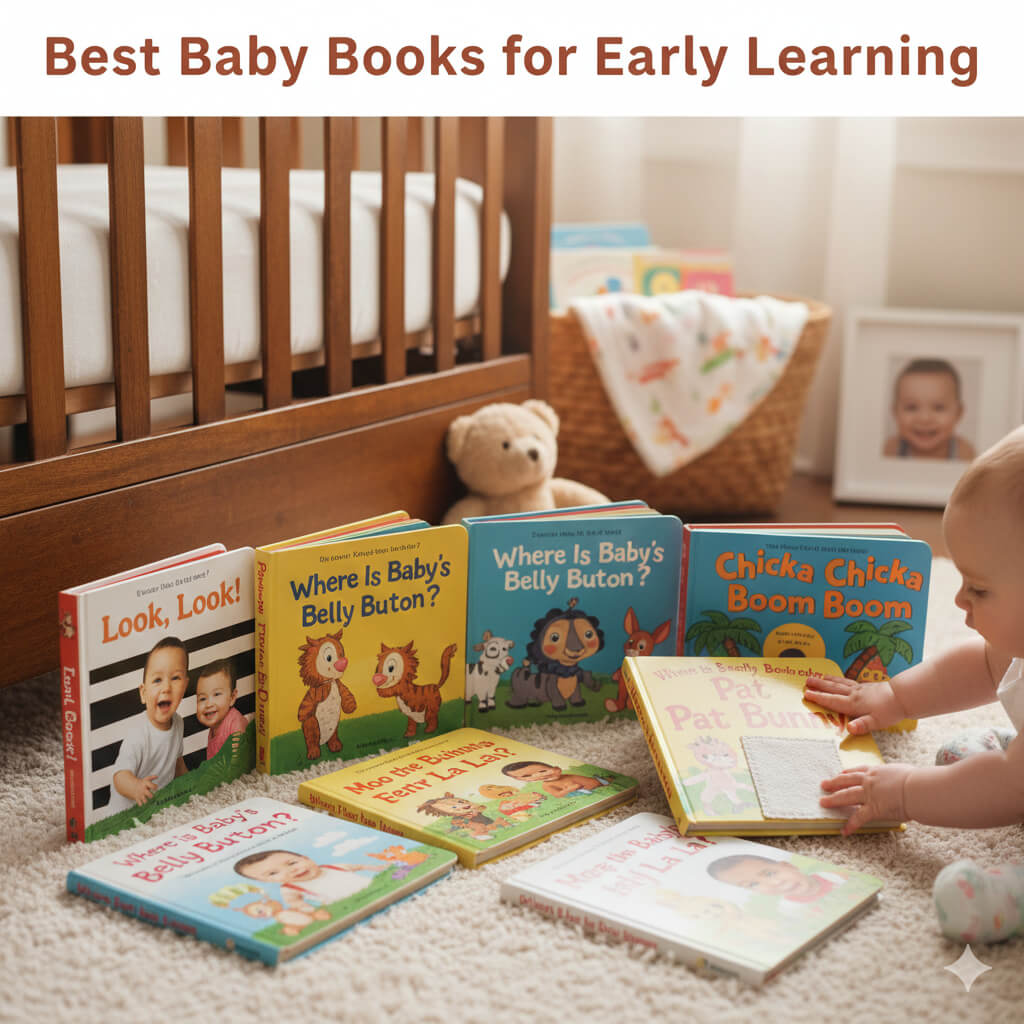
- “Look, Look!” by Peter Linenthal: This is a gold standard for newborns. It features high-contrast black-and-white art with splashes of red, following a simple “Look, look! A star!” rhythm.
- “Hello Baby” by Mem Fox: A sweet introduction to various animal faces in a high-contrast style.
- “Baby Touch: My First Book” (Ladybird): A soft cloth book that combines monochrome patterns with different textures, making it safe for the “mouth-everything” phase.
2. Sensory & Touch-and-Feel: 3 to 6 Months
Around four months, babies begin to reach and grab. Books become tactile objects. At this stage, you want “indestructible” books and those that offer varying textures.
- “Pat the Bunny” by Dorothy Kunhardt: The original sensory book. It’s simple, classic, and introduces concepts like “soft” and “scratchy.”
- “See, Touch, Feel” by Roger Priddy: A modern favorite that uses raised textures, finger trails, and mirrors to keep a baby engaged during tummy time.
- “That’s Not My…” Series by Fiona Watt: From “That’s Not My Dinosaur” to “That’s Not My Puppy,” these books are perfect for teaching descriptive language through repetitive, tactile exploration.
3. Language & Rhythm: 6 to 9 Months
As babies start to babble, they become attuned to the “music” of language. Rhyming and repetitive books help them predict what comes next, which is a massive win for cognitive logic.
- “Moo, Baa, La La La!” by Sandra Boynton: Boynton is the queen of baby rhythm. The silly animal sounds and predictable meter make this a staple for early language mimicry.
- “The Very Hungry Caterpillar” by Eric Carle: Beyond the beautiful art, this book teaches the days of the week, counting, and the concept of growth—all in a rhythmic, easy-to-digest format.
- “Brown Bear, Brown Bear, What Do You See?” by Bill Martin Jr.: The call-and-response nature of this book is perfect for building anticipation and color recognition.
4. Interactive & Social: 9 to 12 Months
As your baby approaches their first birthday, they are learning “object permanence” (the idea that things still exist when hidden) and social cues like waving.
- “Where Is Baby’s Belly Button?” by Karen Katz: A lift-the-flap classic. It teaches body parts while playing a game of peek-a-boo—essential for developing object permanence.
- “Dear Zoo” by Rod Campbell: Another lift-the-flap masterpiece. It introduces a variety of animals and adjectives (too big, too grumpy, too jumpy).
- “Global Babies” by Global Fund for Children: Babies are biologically programmed to look at faces. This book features beautiful photography of babies from around the world, fostering early social-emotional awareness and empathy.
The Ultimate “First Library” Table
If you are building a registry or looking for the perfect gift, these are the “Heavy Hitters” of the under-1 category:
| Book Title | Primary Learning Goal | Feature |
| Goodnight Moon | Bedtime Routine | Calming, repetitive prose |
| 100 First Words | Vocabulary Building | Real-life photography |
| Chicka Chicka Boom Boom | Alphabet Recognition | Catchy, percussive rhythm |
| Ten Little Fingers… | Diversity & Anatomy | Celebration of different babies |
| Little Blue Truck | Social Skills/Animal Sounds | Rhyming and kindness themes |
Why Board Books Matter
You may notice most of these are Board Books. For babies under one, paper pages are a hazard—they are easily ripped and, more importantly, easily eaten. Board books are made of thick, laminated paperboard designed to withstand:
- Drool: Lots of it.
- Chewing: It’s how they learn!
- Aggressive Page Turning: Which builds fine motor skills.
Conclusion: It’s Never Too Early
The “best” book is the one you enjoy reading, because your baby is mostly listening to the tone of your voice and the warmth of your presence. Whether it’s a classic like Goodnight Moon or a modern sensory book, the act of sitting together and looking at a page creates a positive association with learning that lasts a lifetime.