
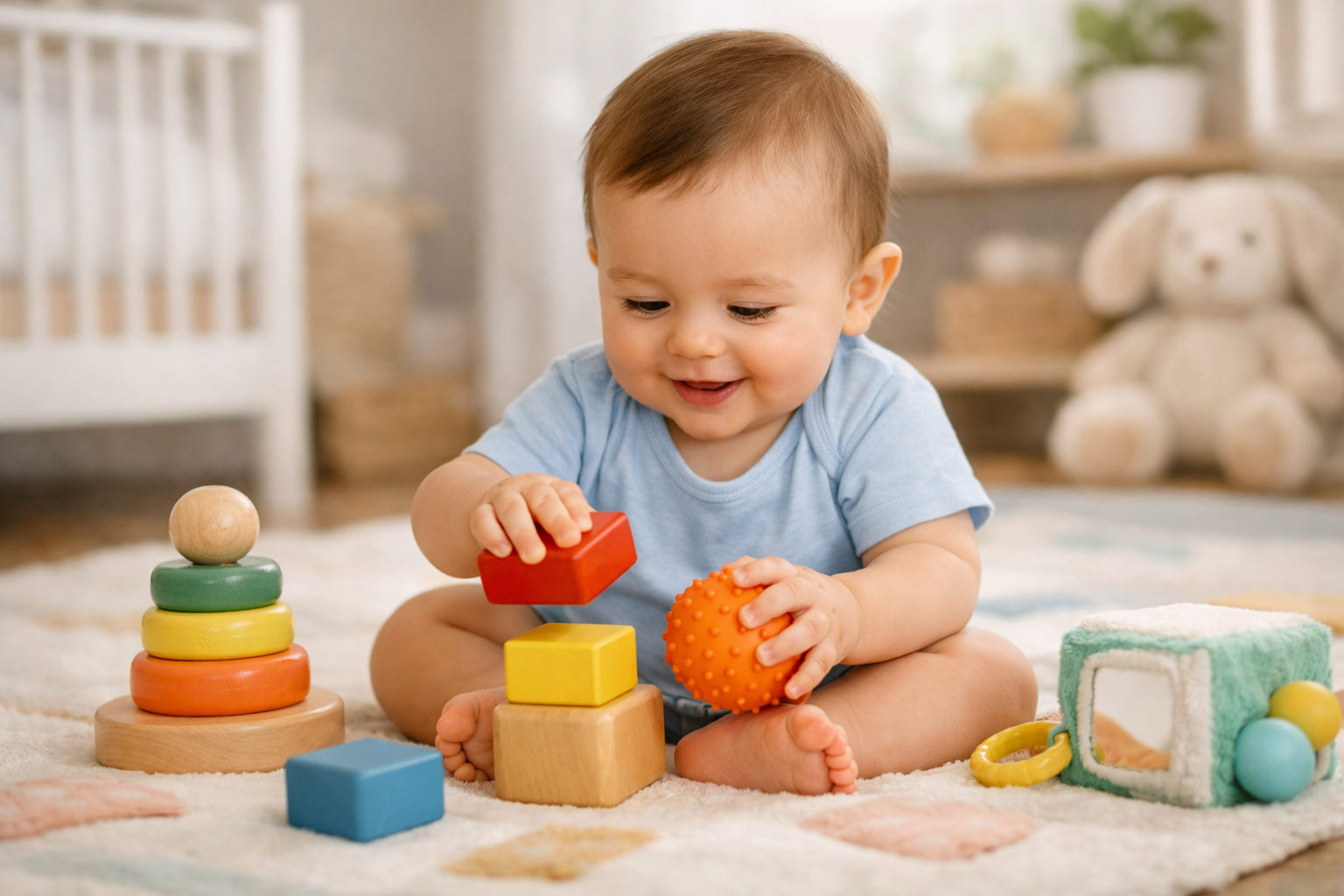
Fine motor skill development is one of the most important foundations of your baby’s early growth. During the first year of life, babies rapidly learn how to control their hands, fingers, wrists, and eyes together. These small movements may seem simple, but they play a critical role in feeding, dressing, writing, problem-solving, and overall independence later in life.
From grasping your finger as a newborn to picking up tiny objects by their first birthday, fine motor skills develop step by step. The good news is that parents and caregivers can actively support this development through simple, safe, and fun activities at home—no expensive toys required.
In this comprehensive guide, we’ll explore:
- What fine motor skills are
- Why they matter in the first year
- Age-appropriate milestones (0–12 months)
- The best fine motor activities for babies under 1 year
- Safety tips and common mistakes to avoid
Let’s dive in.
What Are Fine Motor Skills?
Fine motor skills involve the coordination of small muscles, particularly in the hands and fingers, along with the eyes. These skills allow babies to:
- Grasp and release objects
- Transfer items from one hand to another
- Use fingers individually
- Develop hand-eye coordination
Fine motor skills are different from gross motor skills, which involve larger muscle movements like rolling, crawling, and walking. Both develop together, but fine motor skills require more precise control and practice.
Why Fine Motor Skill Development Is Important for Babies
Strong fine motor skills support many areas of development, including:
1. Brain Development
Each time your baby reaches, grasps, or manipulates an object, neural connections form in the brain. Repeated fine motor activities strengthen these connections, supporting cognitive growth.
2. Independence
Fine motor control helps babies learn to feed themselves, hold cups, and explore objects independently.
3. Hand-Eye Coordination
Activities that involve looking and reaching help babies coordinate visual input with physical movement—an essential skill for later learning.
4. Future Academic Skills
Early fine motor development lays the groundwork for writing, drawing, cutting, and other school-related tasks later on.
Fine Motor Skill Milestones (0–12 Months)
Every baby develops at their own pace, but here’s a general guideline of what to expect:
0–3 Months
- Reflexive grasp (automatic gripping)
- Hands mostly clenched
- Briefly holds objects placed in hand
- Brings hands to mouth
4–6 Months
- Reaches for toys intentionally
- Grasps objects with whole hand (palmar grasp)
- Transfers toys from one hand to the other
- Explores objects by shaking and mouthing
7–9 Months
- Uses fingers more precisely
- Begins raking grasp (scooping objects with fingers)
- Bangs toys together
- Explores textures with hands
10–12 Months
- Develops pincer grasp (thumb and index finger)
- Picks up small objects
- Releases objects intentionally
- Turns pages of board books
Best Fine Motor Skill Activities for Babies Under 1 Year
Below are age-specific, safe, and effective activities to support fine motor development throughout the first year.
Fine Motor Activities for 0–3 Month Old Babies
At this stage, babies are just beginning to discover their hands.
1. Finger Holding
Let your baby wrap their fingers around yours. This strengthens grip reflexes and builds early hand awareness.
2. Soft Rattles
Offer lightweight rattles that are easy to hold. Even brief gripping supports muscle development.
3. Tummy Time Reaching
Place soft toys within reach during tummy time to encourage reaching and hand movement.
4. Gentle Hand Massage
Lightly massaging your baby’s hands and fingers improves circulation and sensory awareness.
Fine Motor Activities for 4–6 Month Old Babies
Babies become more intentional with their hands during this phase.
5. Grasping Toys
Provide toys with different shapes, sizes, and textures to encourage grasping and exploration.
6. Transfer Game
Offer a toy and gently encourage your baby to move it from one hand to the other.
7. Crinkle Toys
Crinkle books or fabric toys encourage squeezing and finger movement.
8. Mirror Play
Let your baby touch a baby-safe mirror to explore hand movement and cause-and-effect.
Fine Motor Activities for 7–9 Month Old Babies
Babies now enjoy manipulating objects and experimenting with their hands.
9. Stacking Cups
Large stacking cups help babies practice grasping, releasing, and hand coordination.
10. Texture Exploration
Offer fabric squares, silicone toys, or textured balls for sensory and finger exploration.
11. Container Play
Let your baby place toys into a container and take them out again—great for grasp and release skills.
12. Toy Banging
Encourage banging toys together, which improves bilateral hand coordination.
Fine Motor Activities for 10–12 Month Old Babies
This is a critical stage for precision and finger control.
13. Pincer Grasp Practice
Offer safe finger foods (like soft fruit pieces) to encourage thumb-and-finger picking.
14. Board Books
Turning thick pages strengthens finger control and hand-eye coordination.
15. Push-Button Toys
Simple toys with buttons, levers, or flaps promote finger isolation.
16. Shape Sorters
Large shape sorters help develop problem-solving and fine motor precision.
Everyday Activities That Build Fine Motor Skills
You don’t need special toys—daily routines offer excellent learning opportunities.
Feeding Time
- Holding a spoon
- Picking up finger foods
- Holding a cup with assistance
Bath Time
- Squeezing bath toys
- Splashing water
- Grasping washcloths
Dressing Time
- Pulling socks
- Holding clothing
- Touching zippers or buttons
Safe Toys That Support Fine Motor Development
When choosing toys, look for:
- Lightweight and easy-to-grasp designs
- Different textures and shapes
- Non-toxic, BPA-free materials
- No small parts or choking hazards
Examples include:
- Soft blocks
- Silicone teething toys
- Activity cubes
- Stacking rings
Safety Tips for Fine Motor Activities
- Always supervise playtime
- Avoid small objects that can be swallowed
- Choose age-appropriate toys
- Keep play areas clean
- Stop activities if your baby seems tired or frustrated
Safety should always come first.
Common Mistakes Parents Should Avoid
1. Pushing Too Fast
Every baby develops at their own pace. Avoid comparing your baby to others.
2. Overusing Screens
Screen time does not support fine motor development in infants.
3. Limiting Exploration
Allow babies to explore objects safely—even if it gets messy.
4. Doing Everything for Them
Let your baby try, struggle, and succeed—it’s part of learning.
When to Talk to a Pediatrician
Consider consulting a pediatrician if your baby:
- Rarely uses their hands
- Avoids grasping objects
- Shows stiffness or extreme floppiness
- Misses multiple developmental milestones
Early support can make a big difference.
How Parents Can Support Fine Motor Growth Daily
- Talk to your baby during play
- Repeat activities often
- Celebrate small achievements
- Provide encouragement, not pressure
Consistency and love are the most powerful tools.
Final Thoughts
Fine motor skill development during the first year of life is a beautiful and important journey. From tiny reflexive grasps to confident pincer movements, each stage builds the foundation for future independence, learning, and creativity.
By offering age-appropriate activities, safe toys, and plenty of opportunities to explore, parents can confidently support their baby’s growth—right from home. Remember, development isn’t about perfection; it’s about progress.
With patience, play, and everyday moments, you’re helping your baby build skills that will last a lifetime.