
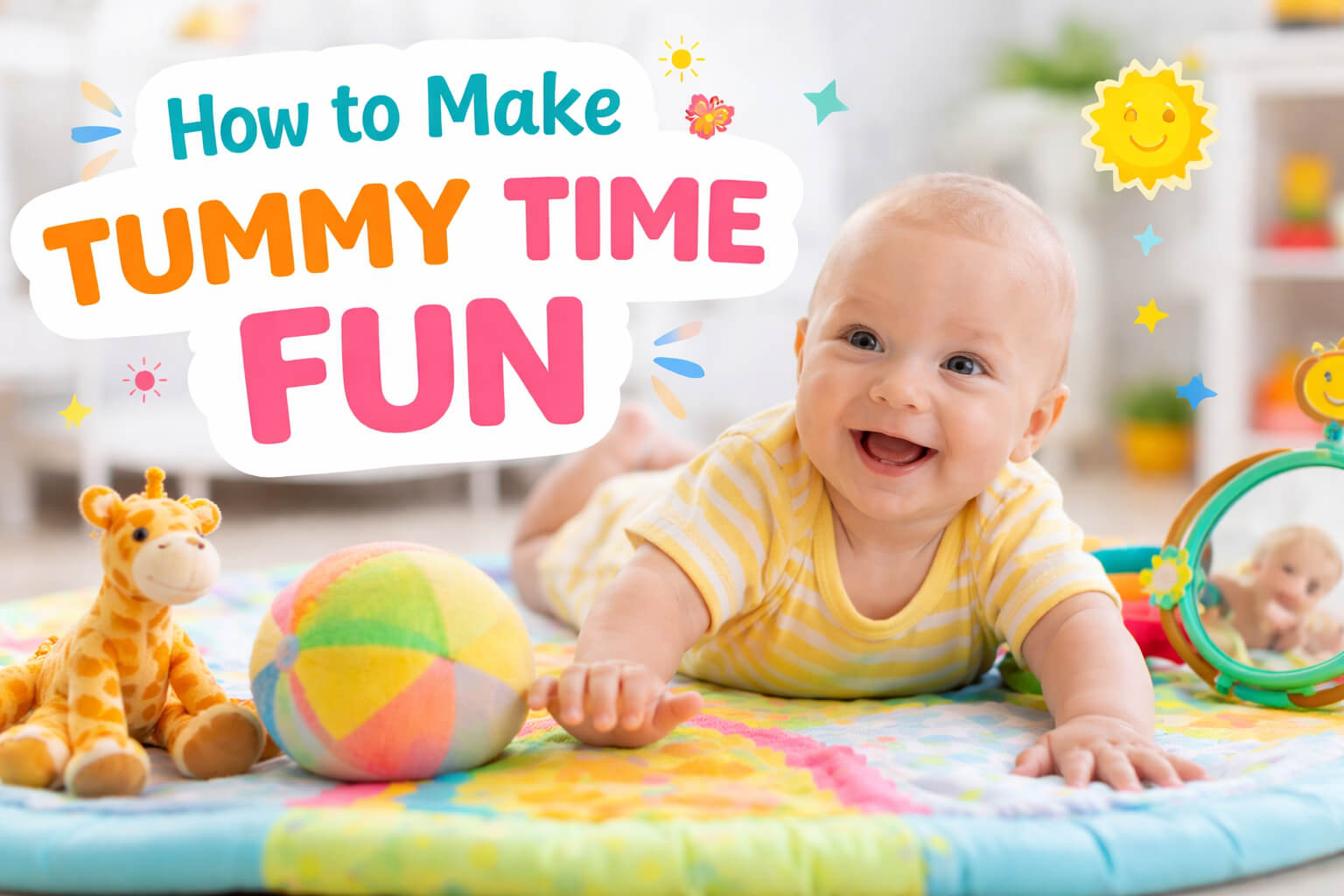
Tummy time is one of the most important daily activities for babies—but let’s be honest, many babies don’t love it at first. Crying, fussing, and rolling out of position can make parents feel frustrated or worried that they’re doing something wrong. The good news is that tummy time doesn’t have to be a struggle. With the right approach, it can become a fun, bonding experience your baby actually looks forward to.
In this complete guide, we’ll explore why tummy time matters, when to start, how long to do it, and most importantly, creative, age-appropriate ways to make tummy time enjoyable for your baby. Whether you have a newborn or an active older baby, these ideas will help turn tummy time into playtime.
What Is Tummy Time?
Tummy time is the practice of placing your baby on their stomach while they are awake and supervised. This position encourages babies to lift their head, push up on their arms, and eventually roll, sit, crawl, and walk.
Unlike sleep, where babies should always be placed on their backs for safety, tummy time is strictly an awake-time activity. It helps counterbalance the many hours babies spend on their backs in cribs, car seats, strollers, and swings.
Why Tummy Time Is So Important
Tummy time plays a key role in your baby’s physical, sensory, and cognitive development.
1. Builds Strong Muscles
Tummy time strengthens the neck, shoulders, arms, back, and core muscles. These muscles are essential for rolling, crawling, sitting, and eventually walking.
2. Prevents Flat Head Syndrome
Spending too much time on the back can cause positional plagiocephaly (flat spots on the head). Tummy time helps relieve pressure and promotes a rounder head shape.
3. Supports Motor Skill Development
Lifting the head, pushing up, and shifting weight are early motor skills that lead to crawling and standing.
4. Encourages Sensory Exploration
Babies experience new textures, sights, and movements during tummy time, helping develop sensory awareness and coordination.
5. Boosts Confidence and Independence
As babies gain strength and control, they feel more confident exploring their environment.
When Should You Start Tummy Time?
You can start tummy time as early as the first day home from the hospital.
For newborns:
- Begin with short sessions (1–2 minutes)
- Repeat several times a day
- Gradually increase duration as your baby grows stronger
It’s normal if newborns don’t lift their heads much at first. Even small efforts help build strength.
How Much Tummy Time Does My Baby Need?
Here’s a general guideline (every baby is different):
- Newborn (0–1 month): 5–10 minutes total per day
- 1–3 months: 20–30 minutes total per day
- 3–6 months: 60 minutes total per day (spread out)
- 6+ months: As much as baby enjoys while awake
Remember: tummy time doesn’t have to happen all at once. Short, frequent sessions are more effective and enjoyable.
Why Some Babies Dislike Tummy Time
If your baby cries during tummy time, you’re not alone. Common reasons include:
- Weak neck and core muscles
- Feeling frustrated or tired
- Hunger or discomfort
- Wanting interaction and reassurance
- Being placed on the tummy for too long
The key is to start small, stay consistent, and make it fun.
How to Make Tummy Time Fun: Creative & Proven Ideas
1. Get Down on the Floor With Your Baby
Your baby’s favorite toy is you.
- Lie down face-to-face
- Smile, talk, and sing
- Make gentle facial expressions
- Maintain eye contact
This reassures your baby and turns tummy time into a social experience rather than a chore.
2. Use Chest-to-Chest Tummy Time
Perfect for newborns who dislike the floor.
- Lie back slightly
- Place your baby on your chest
- Let them lift their head to look at you
This position feels safe and comforting while still strengthening neck muscles.
3. Try the Tummy Time Roll
Place a rolled towel or small pillow under your baby’s chest with arms forward.
Benefits:
- Makes lifting the head easier
- Reduces frustration
- Helps babies who struggle at first
Always supervise closely and ensure your baby’s airway is clear.
4. Introduce Mirrors
Babies love faces—especially their own.
- Use a baby-safe mirror
- Place it at eye level during tummy time
- Encourage your baby to look, smile, and babble
Mirrors promote visual tracking and longer engagement.
5. Rotate Toys Regularly
Instead of overwhelming your baby, use 2–3 toys at a time.
Good tummy time toys include:
- Soft rattles
- High-contrast cards
- Textured toys
- Light-up or sound toys (used sparingly)
Rotate toys every few days to keep things fresh and exciting.
6. Sing, Talk, and Narrate
Your voice is incredibly powerful.
- Sing nursery rhymes
- Describe what your baby is doing
- Name objects and colors
- Use gentle, expressive tones
This builds language skills while keeping tummy time enjoyable.
7. Make Tummy Time Part of Daily Routines
Consistency helps babies adjust.
Try tummy time:
- After diaper changes
- After naps (when baby is rested)
- After a bath
- Before feeding (not right after)
Short sessions throughout the day add up quickly.
8. Use Music for Motivation
Soft background music can make tummy time more engaging.
Choose:
- Gentle instrumental music
- Baby songs
- Calm rhythms
Avoid loud or overstimulating sounds.
9. Use a Tummy Time Mat or Play Gym
A colorful mat with hanging toys encourages reaching, kicking, and lifting.
Look for:
- High-contrast designs
- Washable materials
- Different textures
- Removable toys
These mats grow with your baby and support multiple stages of development.
10. Get Siblings Involved
If you have older children:
- Let them lie on the floor
- Talk or sing to the baby
- Gently show toys
This encourages bonding and keeps the baby entertained.
Age-Specific Tummy Time Ideas
Newborn (0–2 Months)
- Chest-to-chest tummy time
- Face-to-face interaction
- Rolled towel support
- 1–3 minutes at a time
3–4 Months
- Mirrors and rattles
- Short music sessions
- Encourage reaching
- Multiple daily sessions
5–6 Months
- Toy placement slightly out of reach
- Rolling practice
- Textured mats
- Longer play sessions
6+ Months
- Crawling games
- Obstacle play (soft pillows)
- Interactive toys
- Free floor exploration
Common Tummy Time Mistakes to Avoid
- ❌ Waiting too long to start
- ❌ Forcing tummy time when baby is overtired
- ❌ Only doing tummy time once a day
- ❌ Using unsafe or unsupervised surfaces
- ❌ Giving up too soon
Progress happens gradually. Every small effort counts.
Signs Your Baby Is Making Progress
- Lifts head higher
- Turns head side to side
- Pushes up on arms
- Reaches for toys
- Rolls from tummy to back
Celebrate these milestones—they’re big achievements!
When to Talk to a Pediatrician
Consult your pediatrician if:
- Your baby strongly resists tummy time after several months
- Head lifting doesn’t improve by 3–4 months
- You notice stiffness or uneven movement
Early guidance can make a big difference.
Final Thoughts: Turning Tummy Time Into Playtime
Tummy time is not about perfection—it’s about progress, connection, and consistency. By following your baby’s cues and adding creativity, tummy time can become a joyful daily routine rather than a stressful task.
Remember:
- Start early
- Keep sessions short and fun
- Be patient
- Celebrate every effort
With love, play, and encouragement, your baby will gain the strength and confidence they need to reach important developmental milestones—one tummy time session at a time.