
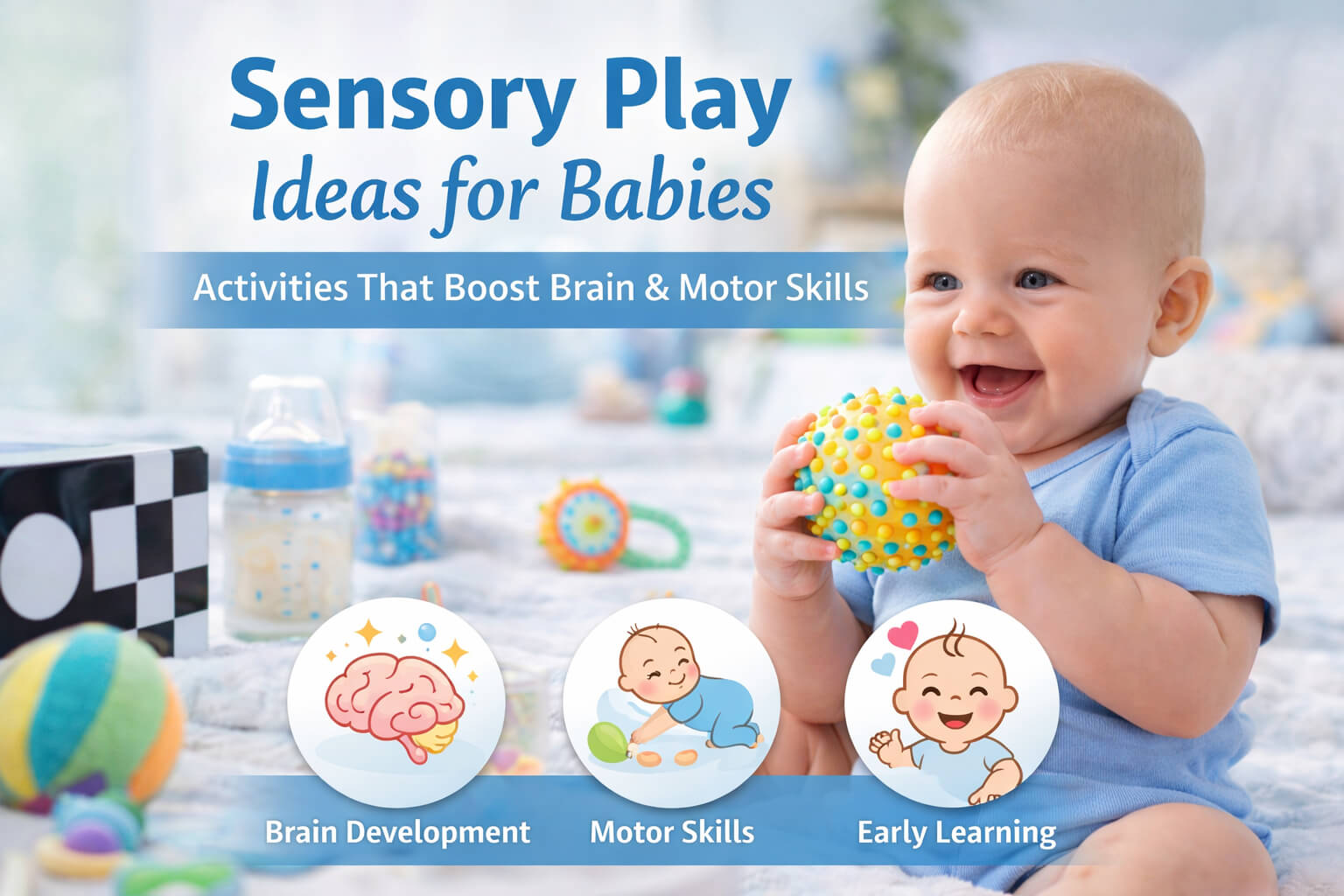
Babies learn about the world long before they can talk or walk. From the moment they are born, their brains are rapidly developing through everyday experiences—touching, seeing, hearing, tasting, and moving. One of the most powerful ways to support this early development is through sensory play.
Sensory play isn’t about fancy toys or complicated setups. It’s about giving babies safe, engaging experiences that stimulate their senses and help build brain connections, motor skills, emotional regulation, and curiosity. In this complete guide, we’ll explore the best sensory play ideas for babies, explain why they matter, and show you how to adapt activities for different ages.
Whether you’re a new parent or caregiver, these activities can easily fit into daily routines and make learning fun.
What Is Sensory Play?
Sensory play refers to activities that engage one or more of a baby’s senses:
- Touch
- Sight
- Hearing
- Smell
- Taste
- Movement and balance (vestibular sense)
For babies, sensory play helps them understand how their bodies interact with the world. Every texture, sound, and movement sends signals to the brain, helping it grow and organize information.
Why Sensory Play Is So Important for Babies
1. Supports Brain Development
During the first year of life, a baby’s brain forms millions of neural connections every second. Sensory experiences strengthen these connections, especially those related to learning and memory.
2. Improves Motor Skills
Sensory play encourages babies to:
- Reach and grasp
- Roll, crawl, and sit
- Develop hand-eye coordination
- Strengthen muscles
Both fine motor skills (using fingers and hands) and gross motor skills (using arms, legs, and core muscles) improve through sensory activities.
3. Enhances Language Development
When parents talk about what babies are seeing or touching—“soft,” “cold,” “rough,” “splash”—it builds early language skills and vocabulary.
4. Builds Emotional Regulation
Sensory play can be calming and comforting. It helps babies learn how to self-soothe, manage new experiences, and feel secure in their environment.
5. Encourages Curiosity and Confidence
Exploring through play helps babies feel confident trying new things and builds a natural love for learning.
Sensory Play by Age Group
Babies develop quickly, so sensory play should be age-appropriate.
Newborns (0–3 Months)
- Focus on gentle sensory input
- Short activities (5–10 minutes)
- High-contrast visuals and soft sounds
Young Babies (3–6 Months)
- Increased movement and grasping
- Textures and sounds become exciting
- Longer attention spans
Older Babies (6–12 Months)
- Sitting, crawling, and exploring
- Cause-and-effect play
- Messy sensory experiences (with supervision)
Best Sensory Play Ideas for Babies
1. Tummy Time with Texture Mats
Place your baby on their tummy over:
- Soft blankets
- Crinkly fabric
- Foam play mats
Benefits:
- Strengthens neck, shoulders, and core
- Enhances tactile awareness
- Supports crawling readiness
Tip: Talk to your baby and describe what they’re touching.
2. High-Contrast Visual Play
Newborns see best in black, white, and bold patterns.
Ideas:
- Black-and-white cards
- Patterned cloth books
- Wall posters near changing areas
Benefits:
- Boosts visual tracking
- Supports early brain development
- Improves focus
3. Sensory Bottles (Calm & Focus)
Create sealed bottles filled with:
- Water and glitter
- Colored beads
- Floating toys
Benefits:
- Encourages visual focus
- Introduces cause and effect
- Calming for fussy moments
Always ensure bottles are tightly sealed and age-safe.
4. Soft Music and Sound Exploration
Expose babies to:
- Lullabies
- Gentle instrumental music
- Household sounds (with supervision)
You can also use:
- Soft rattles
- Fabric sound books
Benefits:
- Enhances auditory processing
- Supports language development
- Improves rhythm and listening skills
5. Touch-and-Feel Fabric Play
Offer different textures:
- Cotton
- Fleece
- Silk
- Terry cloth
Let babies explore by touching and squeezing.
Benefits:
- Develops tactile awareness
- Improves fine motor control
- Encourages sensory curiosity
6. Baby Massage (Powerful Sensory Input)
Gentle massage using baby-safe oil provides deep sensory input.
Benefits:
- Improves body awareness
- Supports bonding
- Helps relaxation and sleep
Massage also supports digestion and circulation.
7. Water Play (Supervised)
Water is one of the most effective sensory tools.
Ideas:
- Splashing during bath time
- Pouring water from cups
- Floating toys
Benefits:
- Stimulates touch and movement senses
- Improves hand coordination
- Encourages exploration
Never leave babies unattended near water.
8. Mirror Play
Place an unbreakable mirror at baby’s eye level.
Benefits:
- Promotes self-recognition
- Encourages facial expressions
- Supports emotional development
Babies love looking at faces—even their own.
9. Reaching and Grasping Toys
Offer toys that are:
- Easy to hold
- Lightweight
- Textured
Examples:
- Teething rings
- Soft balls
- Fabric blocks
Benefits:
- Builds hand strength
- Improves hand-eye coordination
- Prepares for self-feeding
10. Mess-Free Sensory Bags
Fill zip-lock bags with:
- Gel and food coloring
- Rice or lentils
- Foam shapes
Tape them securely to the floor or table.
Benefits:
- Safe sensory exploration
- Encourages pressing and poking
- No cleanup mess
11. Nature Sensory Play (Outdoor)
Let babies experience:
- Grass under feet
- Gentle breeze
- Sunlight and shade
- Leaves and flowers (supervised)
Benefits:
- Connects baby to nature
- Stimulates multiple senses
- Supports emotional well-being
12. Smell Exploration (Gentle Only)
Use mild, natural scents like:
- Fresh fruit
- Clean herbs
- Baby-safe lotions
Benefits:
- Enhances sensory awareness
- Strengthens memory associations
Avoid strong or artificial scents.
13. Taste Exploration (When Age-Appropriate)
For babies starting solids:
- Different textures (smooth, mashed, soft)
- Mild flavors
Benefits:
- Develops oral motor skills
- Reduces picky eating later
- Supports sensory integration
Always follow pediatric feeding guidelines.
14. Rolling and Movement Play
Encourage gentle movement:
- Rolling a soft ball
- Assisted sitting
- Crawling tunnels
Benefits:
- Strengthens muscles
- Improves balance and coordination
- Develops spatial awareness
15. Everyday Sensory Play (No Toys Needed)
Daily routines are full of sensory opportunities:
- Feeling water during hand washing
- Listening to your voice
- Touching clothes during dressing
Simple moments matter the most.
How Sensory Play Boosts Brain Development
Sensory play activates multiple brain regions at once. When babies touch, see, hear, and move simultaneously, the brain forms stronger connections between neurons. This supports:
- Problem-solving
- Memory
- Attention span
- Learning readiness
Early sensory experiences lay the foundation for future skills like reading, writing, and social interaction.
Safety Tips for Sensory Play
- Always supervise babies
- Avoid choking hazards
- Use non-toxic, baby-safe materials
- Keep play areas clean
- Watch for overstimulation
If a baby turns away, cries, or stiffens, it’s time to take a break.
Signs Your Baby Is Benefiting from Sensory Play
You may notice:
- Improved focus
- Better movement control
- Longer play engagement
- Increased curiosity
- Happier mood after play
Every baby develops at their own pace—consistency matters more than perfection.
How Often Should Babies Do Sensory Play?
Sensory play doesn’t need a schedule. Short, frequent experiences throughout the day are best:
- 5–10 minutes for newborns
- 10–20 minutes for older babies
Even daily routines count as sensory learning.
Common Myths About Sensory Play
“Sensory play is messy”
It can be simple and mess-free.
“Babies are too young to learn”
Babies learn from birth through sensory input.
“You need expensive toys”
Household items work just as well.
Final Thoughts: Sensory Play Builds Strong Foundations
Sensory play is one of the most natural and effective ways to support your baby’s brain growth, motor skills, emotional health, and confidence. You don’t need complex activities—just time, attention, and safe exploration.
By offering rich sensory experiences every day, you’re giving your baby the tools they need to grow, learn, and thrive.
Remember: play is a baby’s first language, and sensory play is how they understand the world.