
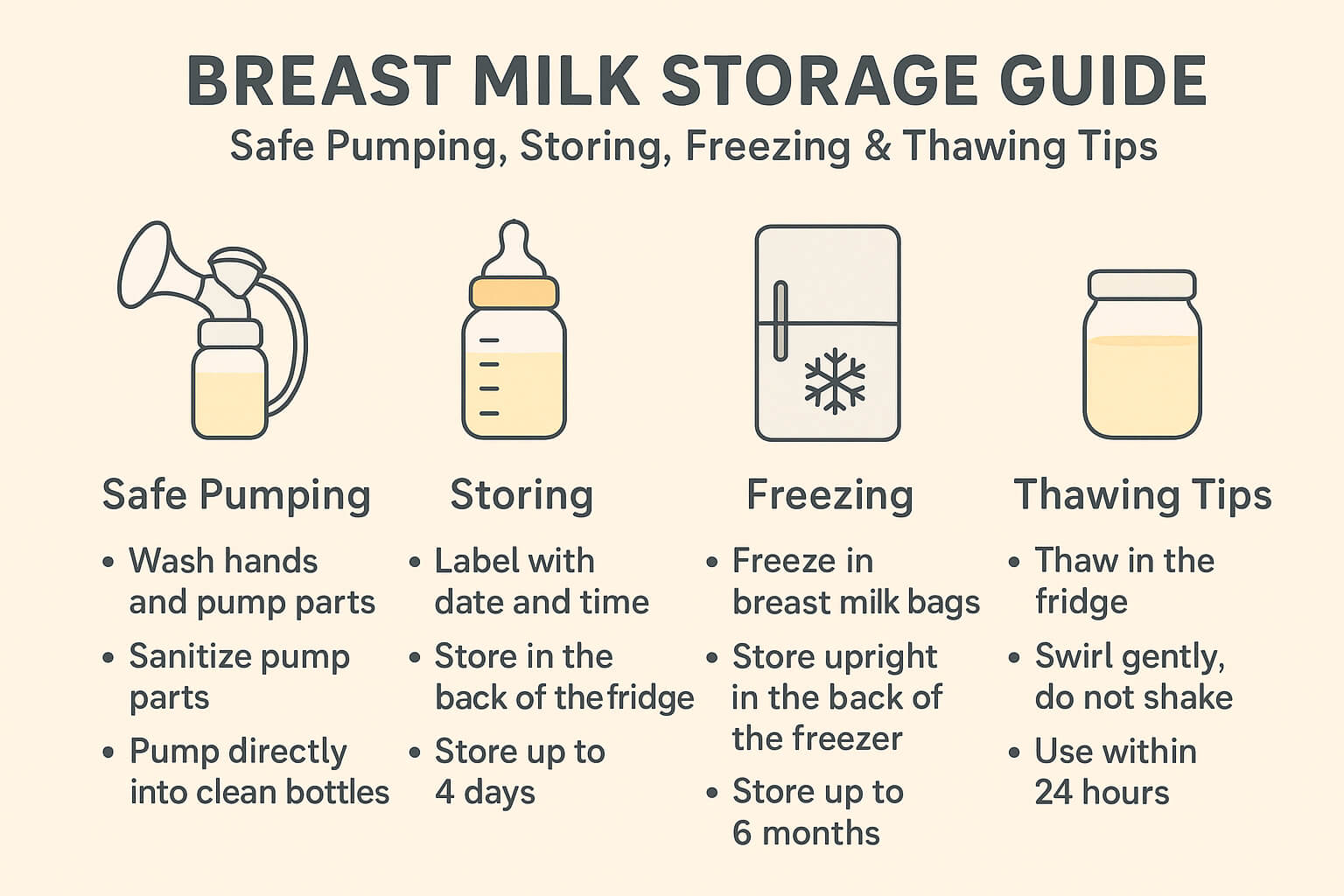
Breastfeeding mothers work hard to pump milk, and ensuring that milk stays fresh, safe, and nutritious is essential for your baby’s health. Whether you’re preparing for work, pumping occasionally, or building a freezer stash, proper breast milk storage prevents contamination, nutrient loss, and waste.
This complete guide covers everything you need to know about pumping, storing, freezing, thawing, and serving breast milk safely—based on pediatric and lactation expert guidelines.
Why Proper Breast Milk Storage Matters
Breast milk changes based on:
- Your baby’s age
- Time of day
- Your diet
- Baby’s health
But once pumped, breast milk begins to lose some of its natural antibacterial protection. Correct handling ensures the milk remains safe, clean, and nutritional.
Improper storage can lead to:
- Bacterial growth
- Spoiled milk
- Nutrient loss
- Baby’s stomach issues
- Waste of valuable milk
Learning proper techniques helps you store milk confidently.
1. Safe Pumping Tips to Keep Breast Milk Clean
Before even storing milk, you must ensure the pumping process is hygienic.
✔ Wash hands thoroughly
Use soap and warm water for at least 20 seconds.
✔ Clean pumping surfaces
Wipe down:
- Table
- Pump parts
- Bottles
- Storage area
✔ Use sterilized pump parts
Make sure these items are clean and dry:
- Breast shields
- Valves
- Connectors
- Milk bottles or bags
✔ Avoid touching inside of bottles or bags
Keep everything sterile to avoid contamination.
✔ Use high-quality storage containers
Choose:
- BPA-free bottles
- Breast milk storage bags
- Food-grade containers
Never use:
- Plastic grocery bags
- Sandwich bags
- Containers not meant for liquids
2. How to Store Breast Milk Safely (Room Temp, Fridge, Freezer)
Here are the official storage guidelines agreed by lactation experts.
A. Storing Breast Milk at Room Temperature
Room temperature: up to 25°C (77°F)
- Freshly pumped milk: Up to 4 hours
- In cooler environments: Up to 6 hours (not recommended if humid/hot)
When to use:
- For immediate feeding
- Short trips
- Night pump sessions
B. Storing Breast Milk in the Refrigerator
Refrigerator temperature: 4°C (39°F) or colder
- Fresh breast milk: Up to 4 days
- Best quality within 3 days
Tips:
- Store milk at the back, not in the door (temperature fluctuation)
- Keep milk in sealed containers
- Do not mix freshly pumped warm milk with cold milk—cool first
C. Storing Breast Milk in the Freezer
The freezer is perfect for building your stash.
Freezer types & storage times:
| Freezer Type | Temperature | Storage Time |
|---|---|---|
| Freezer inside fridge (small) | Variable | 2 weeks |
| Separate freezer compartment | 0°F (-18°C) | 3–6 months |
| Deep freezer | -20°C (-4°F) or colder | 6–12 months |
Tips:
- Freeze in small batches (2–4 oz)
- Leave space in bags for expansion
- Place bags flat to save space
- Label: date + time + amount
3. Can You Mix Fresh and Previously Stored Breast Milk?
Yes, but with rules.
✔ Make fresh milk cold first
Do not add warm milk to cold or frozen milk—it promotes bacterial growth.
Safe method:
- Chill freshly pumped milk in fridge for 20–30 mins
- Add to existing refrigerated or frozen milk
- Combine only same-day milk if possible
4. How to Freeze Breast Milk the Right Way
Freezing keeps milk safe longer but must be done properly.
✔ Steps:
- Use breast milk storage bags or freezer-safe bottles
- Fill each bag only ¾ full
- Squeeze out excess air
- Lay bags flat until frozen
- Move them upright for long-term storage
✔ Best freezing tips:
- Freeze milk in 2–4 oz portions
- Keep older milk in the front (first in, first out)
- Never refreeze thawed milk
5. Breast Milk Thawing Guide: Safe Methods
How you thaw milk matters—using heat incorrectly destroys nutrients.
✔ Best (slow) method: Refrigerator thawing
- Place frozen milk in fridge overnight
- Thaws in 8–12 hours
- Use within 24 hours of thawing
✔ Quick (safe) method: Warm water bowl
- Place milk bag/bottle in a bowl of warm water
- Gently rotate bottle to mix fat
- Do NOT shake vigorously
✔ Warm under tap method
- Use warm (not hot) running water
- Rotate to warm evenly
❌ Never thaw breast milk like this:
- No microwave (hot spots burn baby + destroys nutrients)
- No direct stove heating
- No boiling water
6. Reheating Breast Milk Safely
Reheat only what your baby needs.
✔ How to reheat:
- Place milk container in warm water
- Keep temperature below 40°C (104°F)
- Swirl gently (fat separates naturally)
✔ Do not:
- Reheat milk more than once
- Overheat
- Leave out too long
7. How Long Is Thawed Breast Milk Good For?
Once thawed, breast milk is more delicate.
Timeline after thawing:
- In fridge: 24 hours
- At room temperature: 1–2 hours
- After warming: Use within 1 hour
- Leftover from feeding: Discard after 1 hour
8. Smart Labeling & Storage Techniques
Keeping track of your freezer stash helps prevent waste.
✔ Label every bag/bottle with:
- Date pumped
- Time pumped
- Volume
- Baby’s name (if going to daycare)
✔ Organize with:
- Storage bins
- First in, first out method
- Freezer organizers
9. Travel & On-the-Go Milk Storage Tips
When out with your baby, keeping milk safe is essential.
✔ For short trips (1–6 hours):
- Insulated cooler bag
- Frozen gel ice packs
- Keep cooler closed
✔ For long travel:
- Use dry ice for frozen storage
- Ask airline for refrigeration help
- Bring portable bottle warmer
10. How to Tell If Breast Milk Has Gone Bad
Spoiled milk can make your baby fussy or sick.
Signs milk is spoiled:
- Sour smell
- Soap-like or rancid odor
- Clumps that do not mix
- Baby refuses milk
- Foamy texture
- Color separation that doesn’t blend
If it smells or looks wrong—throw it away.
11. Common Breast Milk Storage Mistakes to Avoid
Avoid these common errors:
❌ Leaving milk too long at room temp
❌ Re-freezing thawed milk
❌ Mixing warm milk with frozen milk
❌ Using non–food-grade containers
❌ Storing milk in the fridge door
❌ Overfilling bags
❌ Shaking milk aggressively
Small mistakes can damage nutrients or cause bacterial growth.
12. BONUS: Pumping Routine Tips for Busy Moms
✔ Pump at the same time daily
Consistency maintains supply.
✔ Store milk immediately
Don’t leave pumped milk sitting out.
✔ Keep a pumping bag stocked
Include:
- Storage bags
- Extra pump parts
- Cleaning wipes
Final Thoughts
Breast milk is precious, and learning how to properly store, freeze, and thaw it ensures your baby gets safe and nutritious milk every time. With the right techniques, your milk can stay fresh for days—or even months—without losing quality.
Whether you’re building a stash for work, pumping occasionally, or exclusively pumping, this breast milk storage guide helps you:
- Protect milk quality
- Prevent waste
- Save time and energy
- Keep your baby healthy and happy
You’re doing an amazing job—every drop counts!