
Choosing the right baby formula can feel overwhelming with so many options available. Whether you’re supplementing breastfeeding or formula-feeding exclusively, understanding the types, ingredients, and safety guidelines is crucial for your baby’s health and development. This guide will help you make an informed choice.
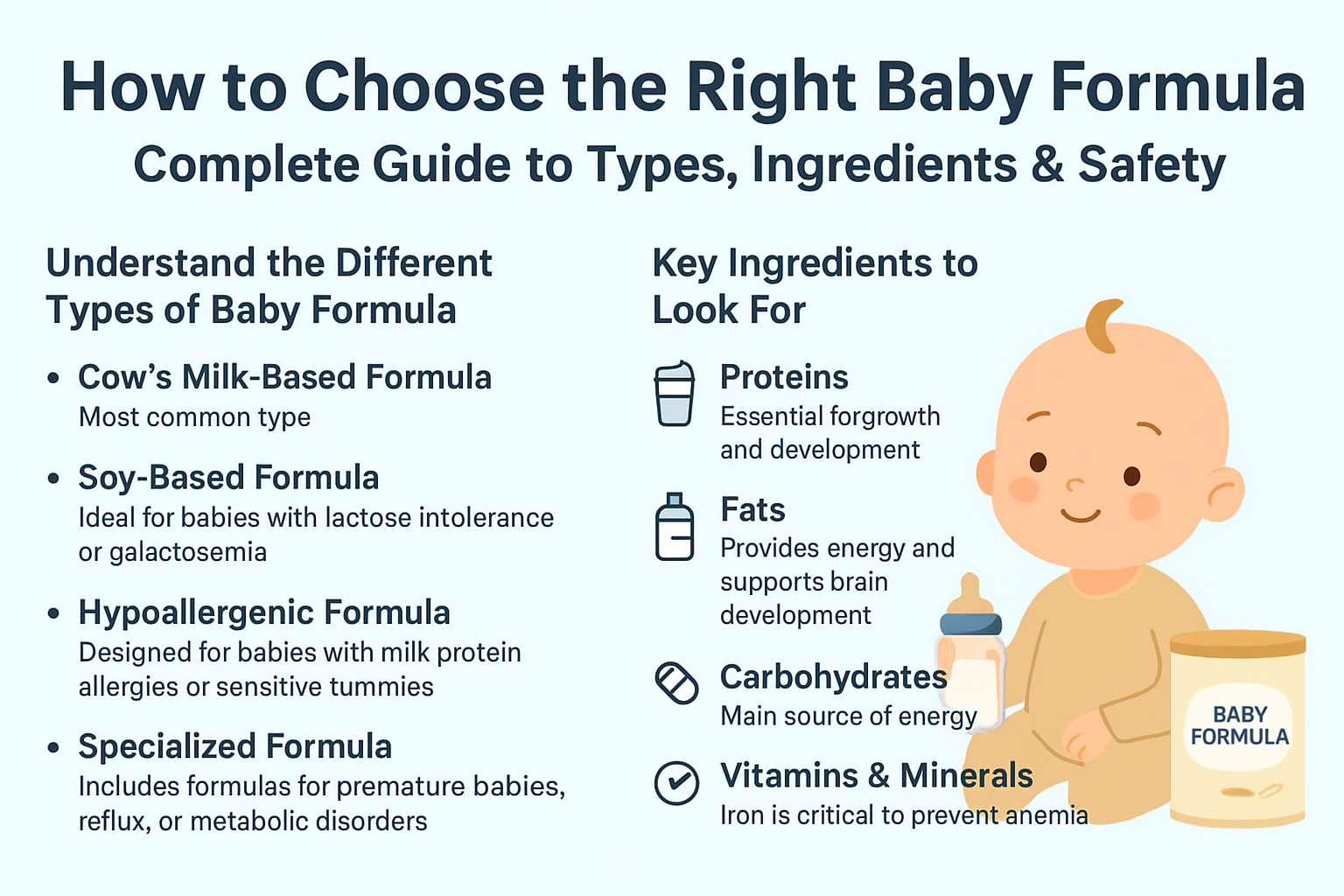
1. Understand the Different Types of Baby Formula
Baby formulas are designed to meet infants’ nutritional needs. The main types include:
a. Cow’s Milk-Based Formula
- Most common type.
- Modified to mimic breast milk with added vitamins, minerals, and iron.
- Suitable for most babies unless they have lactose intolerance or cow’s milk protein allergy.
b. Soy-Based Formula
- Made from soy protein.
- Ideal for babies with lactose intolerance or galactosemia.
- Some parents choose soy-based formulas for vegetarian or cultural reasons.
c. Hypoallergenic Formula
- Partially or extensively hydrolyzed proteins.
- Designed for babies with milk protein allergies or sensitive tummies.
- Extensively hydrolyzed formulas are often recommended for severe allergies.
d. Specialized Formula
- Includes formulas for premature babies, reflux, or metabolic disorders.
- Prescribed under medical supervision.
2. Key Ingredients to Look For
a. Proteins
- Proteins are essential for growth and development.
- Cow’s milk protein is common; hydrolyzed protein may be easier for sensitive babies.
b. Fats
- Provides energy and supports brain development.
- Look for formulas with DHA and ARA, essential fatty acids for vision and cognitive development.
c. Carbohydrates
- Main source of energy. Lactose is common, but some formulas use glucose or corn syrup solids for babies with lactose intolerance.
d. Vitamins & Minerals
- Iron is critical to prevent anemia.
- Calcium and Vitamin D support bone growth.
- Other vitamins ensure overall health and immune function.
e. Prebiotics & Probiotics
- Support healthy gut bacteria and improve digestion.
- Some formulas include these for added digestive support.
3. Factors to Consider When Choosing a Formula
a. Baby’s Age
- Infant formula (0-12 months) vs. follow-on formula (6+ months).
- Choose age-appropriate formulas for optimal nutrition.
b. Baby’s Health Needs
- Allergies, reflux, lactose intolerance, or prematurity may require specialized formulas.
- Consult your pediatrician for specific health concerns.
c. Convenience & Preparation
- Powdered, liquid concentrate, or ready-to-feed formulas.
- Consider storage, preparation time, and cost.
d. Brand Reputation
- Choose formulas from reputable brands that follow strict safety and quality standards.
4. Safety Tips
- Follow Preparation Instructions – Incorrect dilution can harm your baby.
- Check Expiration Dates – Never use expired formula.
- Store Properly – Keep powder in a cool, dry place; ready-to-feed bottles refrigerated.
- Watch for Reactions – Rash, diarrhea, or vomiting may indicate intolerance or allergy. Consult your pediatrician immediately.
- Do Not Add Honey – Honey can cause infant botulism in babies under 1 year.
5. Tips for Transitioning or Switching Formula
- Gradually mix the new formula with the old over 3–5 days.
- Monitor your baby’s digestion and behavior during the transition.
- Always discuss any major formula changes with your pediatrician.
6. When to Consult a Doctor
- Persistent vomiting or diarrhea.
- Signs of allergy (rash, wheezing, swelling).
- Poor weight gain or feeding difficulties.
- Special health conditions requiring a prescription formula.
Final Thoughts
Choosing the right baby formula involves understanding your baby’s nutritional needs, considering health factors, and ensuring safety. While there is no one-size-fits-all solution, careful selection and consultation with your pediatrician will help ensure your baby gets the nutrition they need to thrive.