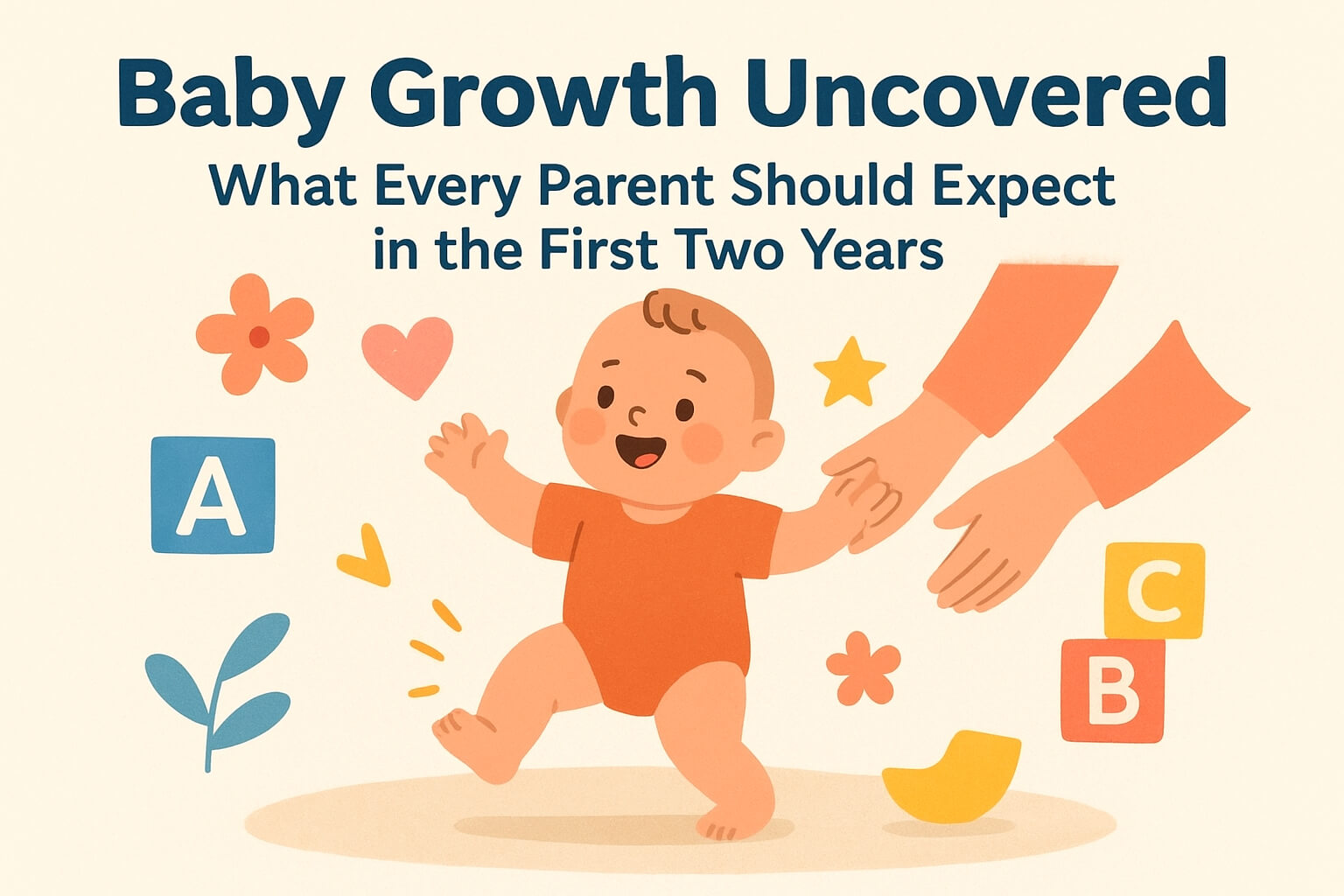
Your baby’s first two years are filled with incredible transformations—tiny fingers that once curled instinctively will soon point, grasp, explore, and communicate. From their first smile to their first words and wobbly steps, each milestone reflects healthy development. But what exactly should parents expect over these two years? In this guide, we’ll walk through every major growth stage, offering tips to support your baby’s physical, emotional, and cognitive development from newborn to toddlerhood.
🌟 Year 1: Month-by-Month Baby Growth Milestones
🔵 Newborn to 1 Month: Adjusting to the World
What to Expect:
- Reacts to sound and light
- Can briefly lift head during tummy time
- Recognizes parents’ voices
- Sleeps 14–17 hours a day
How to Support Growth:
Provide skin-to-skin contact, gentle talking, soft lights, and short tummy time sessions.
🔵 2 Months: Early Social Connection Begins
Milestones:
- First real smiles
- Starts cooing
- Follows objects with eyes
- Stronger neck muscles
Support Tips:
Smile back, talk often, use colorful toys to encourage eye-tracking.
🔵 3 Months: Growing Awareness
Milestones:
- Lifts head and chest
- Opens and closes hands
- Responds to voices
- Begins to recognize routine
Support Tips:
Use rattles, soft play mats, and allow supervised exploration.
🔵 4 Months: Movement and Expressions
Milestones:
- Laughs
- Rolls from tummy to back
- Better head control
- Reaches for objects
Support Tips:
Introduce tummy time toys and encourage playful interaction.
🔵 5 Months: Curiosity Expands
Milestones:
- Tries to sit with support
- Grabs objects and brings them to mouth
- Responds to name
Support Tips:
Offer sensory toys, safe household objects, and play peek-a-boo.
🔵 6 Months: Halfway to One Year
Milestones:
- Sits without help
- Begins babbling (ba-ba, da-da)
- Starts solid foods
- Shows stranger anxiety
Support Tips:
Offer soft foods, encourage babbling, maintain a calm, predictable environment.
🔵 7–8 Months: Stronger Body, Bigger Social Skills
Milestones:
- Crawling or scooting
- Transfers toys hand-to-hand
- Understands “no”
- Enjoys clapping, laughing, games
Support Tips:
Create a safe crawling zone and encourage interactive play.
🔵 9–10 Months: The Explorer Phase
Milestones:
- Pulls to stand
- Waves goodbye
- Understands simple instructions
- Eats finger foods
Support Tips:
Provide stable furniture for standing practice and offer new textures in meals.
🔵 11–12 Months: Approaching Toddlerhood
Milestones:
- First steps
- Says simple words (“mama,” “dada”)
- Imitates actions
- Displays preferences
Support Tips:
Allow walking practice, read picture books, and encourage imitation games.
🌟 Year 2: Toddler Development Milestones (12–24 Months)
🟢 12–15 Months: Confidence Grows
Milestones:
- Walks independently
- Uses 3–5 words
- Stacks small objects
- Points to show interest
Support Tips:
Use building blocks, name objects around the home, and explore outdoors.
🟢 16–18 Months: Understanding the World
Milestones:
- Follows simple instructions
- Scribbles
- Recognizes body parts
- Imitates household chores
Support Tips:
Use safe crayons, picture books, and encourage pretend play.
🟢 19–21 Months: More Words, More Movement
Milestones:
- Vocabulary grows to 20–50 words
- Runs and climbs
- Plays beside other children (parallel play)
- Shows affection
Support Tips:
Encourage conversation, safe physical activities, and simple puzzles.
🟢 22–24 Months: The Independent Toddler
Milestones:
- Uses two-word phrases
- Identifies shapes and colors
- Begins imaginative play
- Shows big emotions
Support Tips:
Use flashcards, storytelling, building toys, and provide emotional guidance.
🧠 Cognitive Development: What Parents Should Expect
From birth to age two, your baby’s brain develops rapidly. They learn through curiosity, cause-and-effect experimentation, and repetition.
Key Signs of Healthy Cognitive Growth:
- Recognizing familiar people
- Solving simple problems
- Understanding routines
- Copying actions and sounds
- Increased attention span
❤️ Emotional & Social Development Milestones
In two years, your baby will move from needing constant reassurance to showing independence.
Emotional Progress Includes:
- Forming strong bonds with caregivers
- Experiencing fear, joy, excitement
- Expressing affection
- Testing boundaries (normal toddler behavior!)
💪 Physical Development Milestones
Physical achievements are some of the most exciting—from rolling to running.
Typical Sequence:
- Roll → Sit → Crawl → Stand → Walk → Run
- Hand coordination improves steadily
- Fine motor skills develop (picking objects, feeding self)
🍽 Feeding & Nutrition Milestones
- 6 months: Begin solids
- 9–12 months: Finger foods
- 12–24 months: Balanced diet with family meals
- Encourage self-feeding for better motor skills
⏰ When to Talk to a Doctor
Every child develops at their own pace. However, consult a pediatrician if your baby:
- Doesn’t smile by 3 months
- Doesn’t sit by 9 months
- Doesn’t walk by 18 months
- Doesn’t use words by 20–24 months
- Has sudden skill regression
Conclusion
The first two years are a journey full of wonder, learning, and rapid growth. By understanding key developmental milestones, you can support your baby with confidence and create an environment that nurtures both their body and mind. Every baby grows at their own pace—what matters most is love, connection, and gentle guidance.