
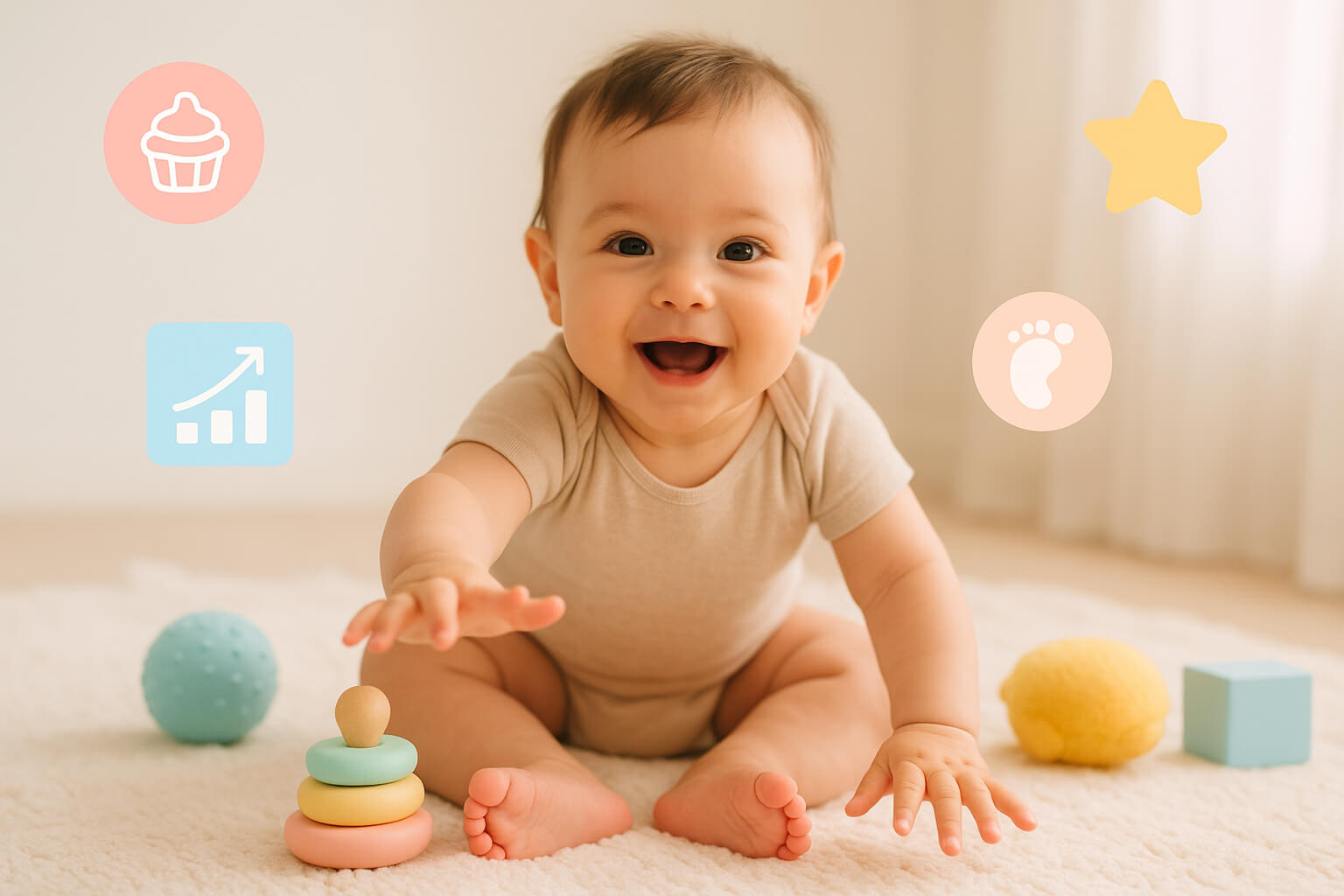
Your baby’s first year is an amazing journey filled with rapid growth, adorable changes, and exciting “firsts.” From lifting their head to taking their first steps, each milestone shows how your little one is developing physically, socially, and emotionally. Understanding these stages helps parents feel confident, prepared, and connected to their baby’s needs.
This guide breaks down month-by-month development, key milestones, and simple tips to support your baby’s growth—all based on pediatric development standards.
Month-by-Month Baby Development Milestones
🍼 Month 1: Adjusting to the World
What to expect:
- Reacts to sounds and familiar voices
- Focuses on faces, especially at close range
- Begins simple reflex movements (grasping, sucking)
How to support:
- Provide skin-to-skin contact
- Talk gently and frequently
- Use black-and-white or high-contrast images
👶 Month 2: Early Smiles & Awareness
Milestones:
- Starts smiling socially
- Follows objects with eyes
- Begins cooing
- Holds head up for a few seconds
Tips:
- Encourage tummy time
- Smile and talk back to build bonding
🌟 Month 3: Improved Control & Interaction
Milestones:
- Better head control
- Opens and closes hands
- Starts recognizing parents
- Enjoys playtime and music
Tips:
- Offer soft toys
- Play gentle music
- Use colorful objects
🧸 Month 4: Rolling Begins
Milestones:
- Rolls from tummy to back
- Laughs and squeals
- Grasps toys intentionally
- Follows moving objects smoothly
Tips:
- Increase tummy time
- Provide safe floor play area
👋 Month 5: Exploring Touch
Milestones:
- Shows curiosity - Reaches for objects
- Responds to their name
- Uses hands and mouth to explore
Tips:
- Offer teething toys
- Encourage safe sensory play
🎶 Month 6: Sitting & Babbling
Milestones:
- Sits with support
- Makes sounds like “ba,” “da,” “ma”
- Transfers objects between hands
- Recognizes emotions (happy, angry)
Tips:
- Play peekaboo
- Introduce soft solid foods (per pediatric advice)
🧠 Month 7: Stronger Coordination
Milestones:
- Sits independently
- Starts army crawling
- Responds to familiar people
- Shows stranger anxiety
Tips:
- Provide crawling space
- Use baby-safe toys to encourage movement
🚼 Month 8: More Mobility
Milestones:
- Crawls confidently
- Pulls up to stand
- Understands simple words (“no,” “bye-bye”)
Tips:
- Baby-proof the house
- Introduce stacking toys and shape sorters
🙂 Month 9: Communication Growth
Milestones:
- Makes gestures (pointing, waving)
- Imitates sounds
- Shows favorite toys
- Stands with support
Tips:
- Read picture books
- Encourage gestures and mimic play
👣 Month 10: Standing Tall
Milestones:
- Cruises along furniture
- Copies actions (clapping, banging toys)
- Likes interactive games
Tips:
- Offer push toys
- Encourage safe standing practice
👟 Month 11: Confident Exploration
Milestones:
- Takes assisted steps
- Understands simple instructions
- Shows strong curiosity
Tips:
- Keep encouraging floor play
- Use simple verbal cues consistently
🎉 Month 12: First Steps & First Words
Milestones:
- Might start walking independently
- Says simple words like “mama,” “dada,” or “ball”
- Demonstrates problem-solving (drop toy, pick up)
Tips:
- Celebrate achievements
- Provide safe space for walking
- Encourage talking through daily activities
Key Development Areas to Watch
1. Physical Development
Growth in muscles, coordination, crawling, standing, walking.
2. Cognitive Development
Learning, problem-solving, understanding cause and effect.
3. Language Development
Cooing → babbling → first words → simple communication.
4. Social & Emotional Growth
Bonding, recognizing caregivers, expressing emotions.
How Parents Can Support Baby Development
- Provide tummy time daily
- Respond to sounds and cues
- Use age-appropriate toys
- Talk, read, and sing often
- Maintain a proper sleep schedule
- Keep pediatric checkups consistent
- Create a safe and stimulating environment
When to Consult a Pediatrician
You may seek medical advice if:
- Baby has weak muscle tone
- No social smile by 3 months
- Not sitting by 9 months
- No babbling by 8–9 months
- Not attempting to stand by 12 months
Early guidance helps ensure healthy growth.
Your baby’s first year is filled with incredible progress—from tiny movements to big celebrations like first steps. Understanding these milestones not only helps you track development but also strengthens your bond with your little one. Remember: every baby grows at their own pace, and your love and support are the most important tools for their growth.