
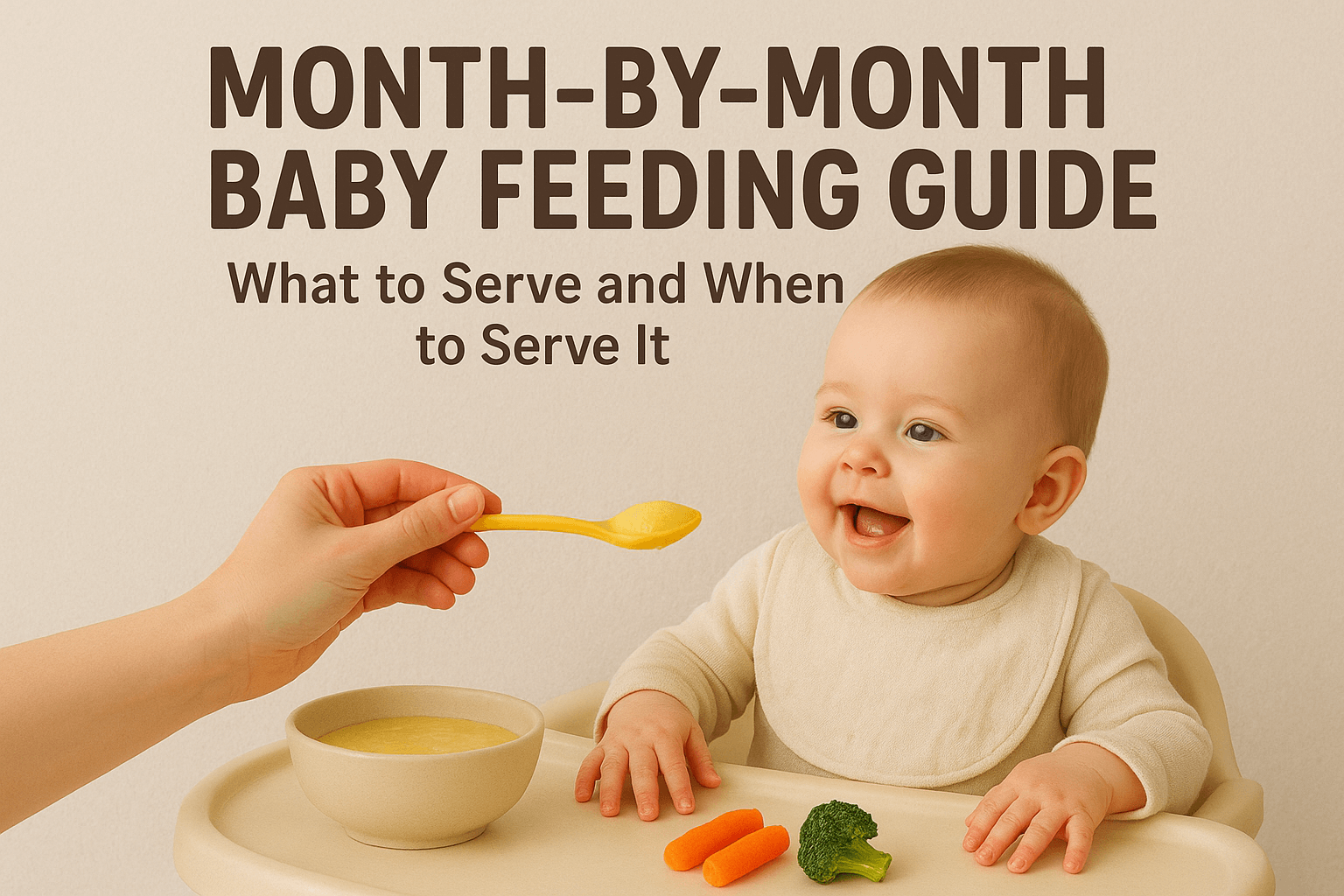
A Complete Parent Handbook from 0–12 Months
Feeding your baby is one of the most joyful—and sometimes confusing—parts of parenting. Every month brings new abilities, new hunger cues, and new developmental needs. Knowing what to feed, when to feed, and how much to feed can remove anxiety and help you make confident meal decisions.
This comprehensive month-by-month guide breaks down everything:
✔ What foods to introduce
✔ Textures appropriate for each age
✔ Safe serving sizes
✔ Nutrients to focus on
✔ Easy meal ideas
✔ Feeding precautions
By the end, you’ll have a clear roadmap that makes baby feeding simple, safe, and enjoyable.
Chapter 1: Birth to 4 Months — The Foundation Months
Key Food: Only Breast Milk or Formula
For the first four months, your baby’s digestive system is still developing. The only foods they need are:
- Breast milk
- Infant formula
How Much to Feed
- Newborns: 1.5–3 oz every 2–3 hours
- 2 months: 4–5 oz every 3–4 hours
- 3–4 months: 5–6 oz every 4 hours
Developmental Milestones
- Strong sucking reflex
- Improved digestion
- Growing appetite
Do NOT start solids yet
Early solids increase choking risk and digestive discomfort.
Chapter 2: Month 4–6 — The Solids Readiness Window
Many babies begin showing readiness between 4–6 months, but some will wait until closer to 6 months.
Signs Your Baby Is Ready for Solids
✔ Sits with support
✔ Good head control
✔ Shows interest in your food
✔ Opens mouth when food approaches
✔ No tongue-thrust reflex
First Foods to Introduce
- Iron-fortified baby cereals
- Pureed fruits
- Pureed vegetables
- Pureed meats
Suggested Starter Foods
- Mashed sweet potato
- Apple puree
- Pear puree
- Butternut squash
- Banana
- Avocado
- Carrot
- Lentil puree
- Chicken puree
Texture: Smooth, thin puree
Mix with breast milk or formula.
How Often to Feed
1 meal per day → 1–2 tablespoons
Chapter 3: Month 6 — A Major Milestone for Feeding
At 6 months, solids should become a steady part of your baby’s diet.
Nutrient Needs Increase
Especially:
- Iron
- Zinc
- Protein
Iron-Rich Starter Foods
- Lentils
- Beans
- Chicken
- Egg yolk
- Iron-fortified oatmeal
- Spinach puree
New Foods to Add
- Soft fruits (banana, peach)
- Steamed veggies (carrot, zucchini)
- Plain yogurt
- Whole-grain cereals
- Tofu
- Mashed potatoes
Texture: Smooth puree or lightly mashed
How Often to Feed
- 1–2 meals per day
- 2–4 tablespoons per meal
Chapter 4: Month 7 — Exploring More Flavor & Texture
Your baby can now handle slightly thicker foods.
New Textures
- Thick purees
- Mashed foods
- Tiny soft lumps
New Foods to Introduce
- Salmon (well-cooked)
- Cheese (small amounts)
- Quinoa
- Millet
- Mango
- Blueberries (mashed)
- Pumpkin
- Green peas
- Egg (if no allergy)
Healthy Fats Are Crucial
- Avocado
- Olive oil
- Coconut milk
- Seed butters (thinly spread, not chunky)
How Often to Feed
- 2 meals per day
- 2–4 ounces per meal
Chapter 5: Month 8 — Time for Finger Foods
Babies become more curious about feeding themselves.
Finger Foods to Try
Make sure they pass the squish test (squishes easily between fingers).
- Steamed carrot sticks
- Soft potato cubes
- Small strips of banana
- Soft pear wedges
- Scrambled eggs
- Soft-cooked noodles
- Rice balls
- Toast strips
- Soft-cooked broccoli florets
Proteins to Add
- Kidney beans (mashed)
- Chicken shreds
- Turkey
- Fish (boneless)
- Tofu cubes
Texture: Soft, lumpy, mashed
How Often to Feed
- 2–3 meals per day
Chapter 6: Month 9 — Mixing Flavors & Offering More Variety
At 9 months, babies love to explore combinations.
Combination Meals
- Banana + yogurt
- Lentils + sweet potato
- Chicken + carrot + rice
- Oatmeal + pear
- Tofu + avocado
Foods to Add
- Whole grain breads
- Small pasta shapes
- Cottage cheese
- Chickpeas
- Soft cucumbers
- Tomatoes (peeled and chopped)
Developing Pincer Grip
Offer:
- Pea-sized soft foods
- Small diced fruits
How Often to Feed
- 3 small meals + snacks (if needed)
Chapter 7: Month 10 — Family Table Foods Begin
Your baby can now eat many of the same foods you are eating—modified for safety.
Family Foods to Share
- Soft cooked vegetables
- Minced meats
- Well-cooked rice
- Stir-fried veggies (no salt)
- Homemade soups
- Dal and rice
- Pasta with mild sauce
Foods to Avoid
- Salt
- Sugar
- Honey
- Spices that irritate
Texture: Soft, minced, chopped
Encourage Self-Feeding
More independence supports motor skill development.
Chapter 8: Month 11 — Building a Balanced Meal Pattern
Now your baby needs more variety and nutrient balance.
Daily Food Groups
Aim for:
- 2 fruits
- 2 vegetables
- 2 grains
- 2 proteins
- 1–2 dairy servings
Great Meal Ideas
- Soft rice + dal + spinach
- Scrambled eggs + toast strips
- Oats + mashed blueberries
- Fish + mashed potato + peas
- Yogurt + banana
Offer Water Regularly
Small sips from a sippy cup or open cup.
Chapter 9: Month 12 — Transition to Toddler Meals
Your baby is now a toddler!
Major Changes at 12 Months
✔ Whole cow’s milk can be introduced
✔ Three balanced meals + 2 snacks
✔ More textures
✔ More independence
Foods They Can Eat Now
Almost everything except:
- Honey
- Whole nuts
- Hard candy
- Popcorn
- Grapes (must cut longwise)
Encourage Family Meals
Babies learn by imitation.
Chapter 10: Foods to Avoid in the First Year
❌ Honey (risk of botulism)
❌ Cow’s milk as a drink before 1 year
❌ Whole grapes
❌ Whole nuts
❌ Popcorn
❌ Added sugar
❌ Salt
❌ Undercooked eggs
❌ Juice (very limited)
❌ Hard vegetable chunks
Keeping meals simple and safe protects digestion and reduces choking risk.
Chapter 11: How Much Should Baby Eat Each Month?
General guidelines:
6–7 Months
2–4 tablespoons per meal
1–2 meals/day
8–9 Months
2–4 oz per meal
2–3 meals/day
10–12 Months
¼–½ cup per meal
3 meals/day + snacks
Babies regulate their appetite naturally—follow their cues.
Chapter 12: Signs Baby Is Hungry or Full
Hunger Cues
- Opening mouth
- Reaching for food
- Excited movement
- Leaning forward
Fullness Cues
- Turning head away
- Playing with food
- Pushing spoon away
- Sealing lips
Respecting cues supports healthy long-term eating habits.
Chapter 13: Sample Weekly Meal Plan (6–12 Months)
Breakfast Ideas
- Oats + apple puree
- Banana pancakes (egg-free option available)
- Yogurt + blueberry mash
- Avocado toast (cut into strips)
Lunch Ideas
- Lentils + sweet potato
- Chicken + rice + carrot
- Tofu + peas + quinoa
- Fish + mashed potato
Dinner Ideas
- Vegetable khichdi
- Pasta + spinach sauce
- Mashed pumpkin + yogurt
- Rice + veggie soup
Chapter 14: Tips for Stress-Free Feeding
✔ Allow messy eating
It improves sensory skills.
✔ Don’t force-feed
Trust your baby’s appetite.
✔ Introduce allergens early but safely
Helps reduce future risk.
✔ Offer variety early
Builds adventurous eaters.
✔ Be patient
Babies need 8–10 exposures to accept new foods.
Conclusion: Feeding Your Baby Month by Month Builds Their Lifelong Relationship With Food
The journey from first purees to toddler table foods is exciting and meaningful. With each month, your baby becomes more independent, more curious, and more capable of exploring flavor, texture, and nutrition.
This month-by-month guide gives you a reliable structure—but remember, every baby develops differently. Follow your baby’s cues, keep meals safe, and enjoy the beautiful bonding moments that feeding brings.