
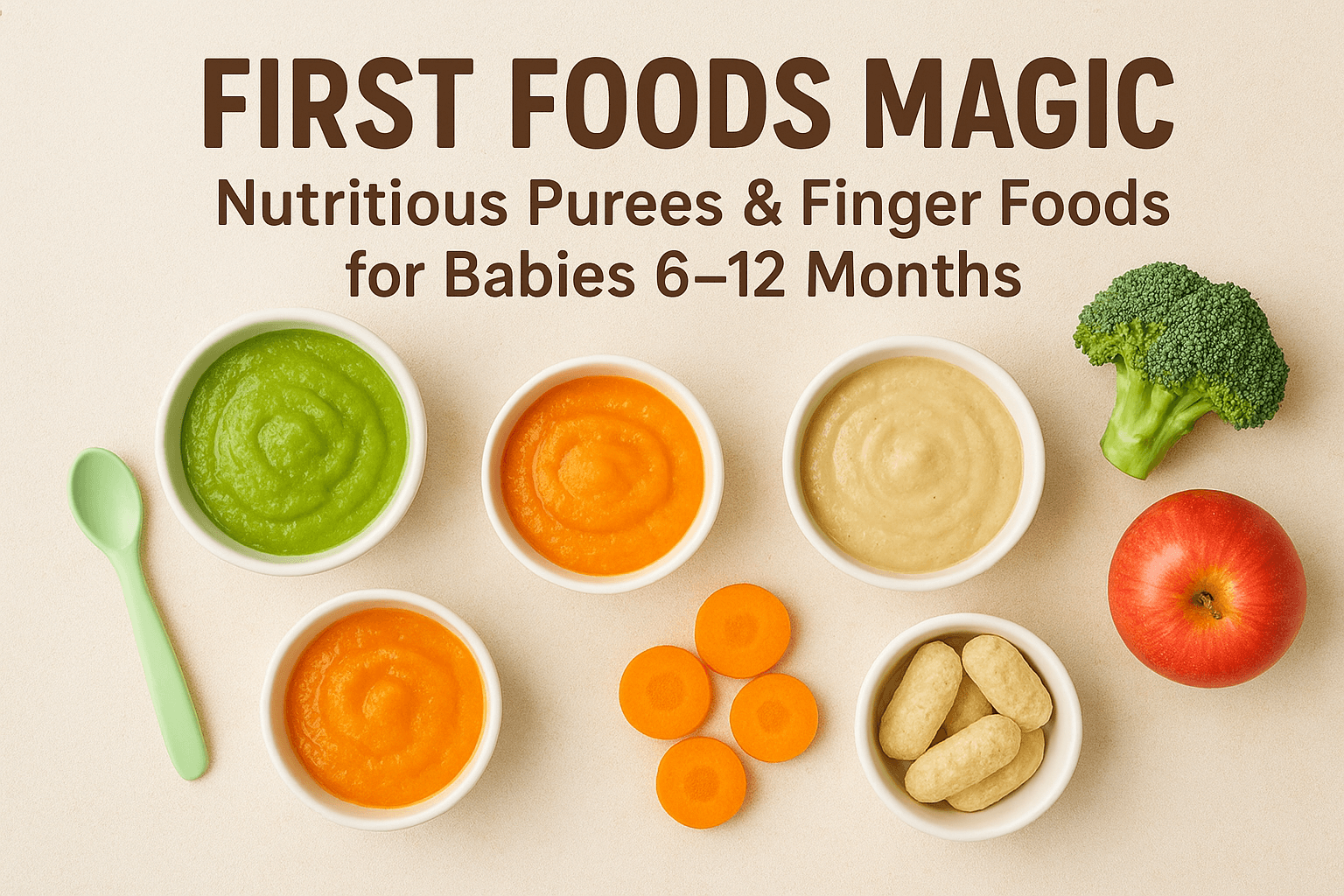
Your baby’s first bite of solid food is more than just a milestone—it’s a magical moment filled with curiosity, funny faces, and tiny tastes that shape future eating habits. As a parent, this stage can feel both exciting and overwhelming. What should you offer first? Purees or finger foods? How do you meet nutritional needs? What textures are best at each age?
This complete guide simplifies everything. Whether you prefer traditional spoon-feeding, baby-led weaning (BLW), or a mix of both, you’ll find practical steps, recipes, and feeding strategies to help your baby enjoy nutritious meals from 6–12 months.
Let’s dive into the magic of first foods!
Why First Foods Matter So Much
Your baby’s first year is a period of rapid growth—physically, mentally, and emotionally. Nutrient-rich foods provide the building blocks for healthy development.
Key nutrients needed at this stage:
- Iron → Supports brain development and prevents anemia
- Healthy fats → Essential for brain growth and hormones
- Protein → Builds muscles, tissues, and enzymes
- Vitamins A, C, D, K → Immunity, vision, and bone health
- Fiber → Supports digestion
- Zinc → Helps growth and immune function
Offering a variety of foods ensures your baby gets balanced nutrition and develops a positive relationship with eating.
Is Your Baby Ready for Solid Foods?
Most babies show readiness signs between 5½ to 6½ months.
Look for these cues:
✔ Sits upright with little or no support
✔ Good head control
✔ Reaches for food
✔ Watches others eat
✔ Opens mouth when food approaches
✔ Reduces tongue-thrust reflex
Never rush solids—milk (breast or formula) remains the primary source of nutrition until 12 months.
Purees vs. BLW: Which Should You Choose?
There’s no single “right” method. Both work beautifully!
Traditional Purees
- Great for gradual texture progression
- Easy to digest
- Good for cautious parents
- Simple and quick
Baby-Led Weaning (BLW)
- Encourages self-feeding
- Improves hand-eye coordination
- Promotes independence
- Helps babies regulate hunger
Combination Feeding (Best for Most Families)
Start with purees → add soft finger foods → gradually transition to table foods.
This blog post includes recipes for both purees and finger foods.
Stage 1 Purees (6–7 months)
Smooth, single-ingredient purees are best at this stage.
Here are the top 10 gentle, nutrient-rich first purees.
1. Single-Ingredient Avocado Puree
Ingredients:
½ ripe avocado + a splash of breast milk/formula.
Benefits:
Healthy fats for brain development.
2. Sweet Potato Puree
Steam, blend, and serve. Naturally sweet and high in beta-carotene.
3. Butternut Squash Puree
Creamy, smooth, and rich in vitamin A.
4. Banana Mash
No cooking needed! Easy for travel and teething days.
5. Apple Puree
Steam until soft and blend. Gentle on tiny tummies.
6. Pear Puree
Helps with digestion and constipation.
7. Carrot Puree
Bright flavor and vitamin-packed.
8. Pea Puree
Great plant-based iron source.
9. Oatmeal Baby Cereal
Mix oat flour with warm water or breast milk.
10. Pumpkin Puree
Smooth, mild, and full of nutrients.
Stage 2 Purees (7–9 months)
Textures become thicker and flavors more complex.
These are perfect combination purees:
1. Apple + Carrot + Ginger
Just a tiny pinch of ginger adds warmth.
Benefits: Supports digestion and immunity.
2. Spinach + Potato
Iron-rich and creamy.
3. Mango + Yogurt Swirl
Vitamin C with gentle probiotics.
4. Sweet Potato + Lentil
High in protein and iron.
5. Banana + Avocado
Healthy fats + energy boost.
6. Blueberry + Pear
Antioxidant powerhouse.
7. Chicken + Pumpkin + Rice
A hearty, nutrient-packed meal.
8. Broccoli + Peas
Pure green goodness.
9. Carrot + Oats
Smooth, filling, and great for breakfast.
10. Peach + Cottage Cheese
Sweet, creamy, and protein-rich.
Stage 3 Textured Purees & Mashed Meals (9–12 months)
Babies are ready for thicker textures, soft chunks, and more variety.
Ideas:
- Mashed lentils with vegetables
- Fork-mashed sweet potato with spinach
- Scrambled eggs with tiny veggie pieces
- Mashed chickpeas with olive oil
- Minced chicken mixed with mashed potatoes
These textures help prevent picky eating later.
Finger Foods for Babies (6–12 months)
If you’re introducing baby-led weaning or want to mix in finger foods, here are age-appropriate options.
Important Safety Tip:
All finger foods must be soft, easily squished between fingers, and cut into safe shapes.
BLW Finger Foods for 6–7 Months
Cut foods into long strips, about the size of an adult finger:
- Steamed carrot sticks
- Avocado slices
- Soft-cooked pumpkin wedges
- Banana strips
- Steamed apple wedges
- Pear slices (soft)
- Zucchini sticks
- Sweet potato fries (soft, not crispy)
BLW Finger Foods for 8–10 Months
Babies now use pincer grip (thumb + forefinger). Offer small soft pieces:
- Soft-cooked broccoli florets
- Shredded chicken
- Small omelette strips
- Cooked pasta shapes
- Soft fruits cut into small cubes
- Mini pancakes (no sugar)
- Soft toast strips with mashed banana
Finger Foods for 10–12 Months
Baby can eat most well-cooked family foods:
- Rice
- Chapati/tortilla pieces
- Small meatballs (soft)
- Steamed beans and peas
- Cottage cheese pieces
- Soft-cooked fish flakes
- Quinoa with vegetables
Avoid choking hazards like whole grapes, nuts, hard raw veggies.
Iron-Rich First Foods (Must-Have!)
Iron stores begin dropping around 6 months. Add iron sources early.
Best baby-friendly iron foods:
- Lentils
- Beans
- Chicken
- Egg yolk
- Peas
- Spinach
- Iron-fortified oats
- Soft-cooked beef
- Tofu
Tip: Pair iron-rich foods with vitamin C (fruits, tomatoes) for better absorption.
How to Introduce New Foods Safely
Follow the 3-day rule: Introduce one new food at a time.
Watch for allergy signs:
- Rash
- Vomiting
- Diarrhea
- Swelling
- Hives
Common allergens:
Eggs, peanuts, wheat, dairy, fish.
Introduce allergens early (6–8 months) in tiny amounts.
6–12 Month Feeding Schedule Guide
Here’s a simple sample plan:
6–7 Months
Milk + 1–2 small meals daily
Examples:
- Breakfast: Oatmeal puree
- Lunch: Avocado puree
8–9 Months
Milk + 2–3 meals
Examples:
- Breakfast: Banana oatmeal
- Lunch: Lentil puree
- Dinner: Chicken + pumpkin mash
10–12 Months
Milk + 3 meals + snacks
Examples:
- Breakfast: Scrambled eggs
- Lunch: Rice + veggie mash
- Snack: Soft fruit pieces
- Dinner: Fish + sweet potato
This schedule keeps nutrition balanced while baby explores flavors.
How to Store, Freeze & Reheat Baby Food
Refrigerator:
Store purees for 48 hours.
Freezer:
Freeze small portions in ice trays for up to 3 months.
Reheating:
Warm gently, stir well, and test temperature.
Never re-freeze thawed purees.
Feeding Tips for Happy Mealtimes
✔ Offer colorful plates
✔ Let baby touch, squish, and explore
✔ Avoid distractions (no screens)
✔ Eat together as a family
✔ Offer variety, not perfection
✔ Let baby signal hunger and fullness
✔ Be patient—repeated exposure works
Common Problems & Solutions
Problem 1: Baby refuses food
Solution: Keep offering. Try different textures, temperatures, or combinations.
Problem 2: Baby gags
Normal! Gagging protects from choking.
Problem 3: Constipation
Add pears, prunes, peas, more water.
Problem 4: Food allergies
Introduce one allergen at a time and observe.
Problem 5: Picky eating
Offer 1 familiar + 1 new food each meal.
Sample 7-Day Baby Meal Plan
Here’s a simple meal plan parents love:
Day 1
- Breakfast: Banana oatmeal
- Lunch: Avocado puree
- Dinner: Sweet potato + lentil puree
Day 2
- Breakfast: Pear puree
- Lunch: Soft broccoli florets
- Dinner: Chicken + rice mash
Day 3
- Breakfast: Apple + pumpkin puree
- Lunch: Mango yogurt swirl
- Dinner: Mashed peas + potatoes
Day 4
- Breakfast: Scrambled eggs (9+ months)
- Lunch: Soft pasta spirals
- Dinner: Spinach + sweet potato
Day 5
- Breakfast: Peach yogurt
- Lunch: Carrot sticks (BLW)
- Dinner: Fish + rice
Day 6
- Breakfast: Blueberry oatmeal
- Lunch: Avocado chunks
- Dinner: Tofu + veggie mash
Day 7
- Breakfast: Mixed fruit puree
- Lunch: Lentil stew
- Dinner: Chicken + veggie mash
Final Thoughts: First Foods Are a Journey, Not a Race
The goal is not to finish the bowl—it’s to help your baby embrace the world of flavors. Whether your little one loves purees, finger foods, or both, the key is to stay patient, consistent, and joyful.
Every messy moment, every new taste, every silly expression tells a story: your baby is learning.
Enjoy the magic of first foods!