
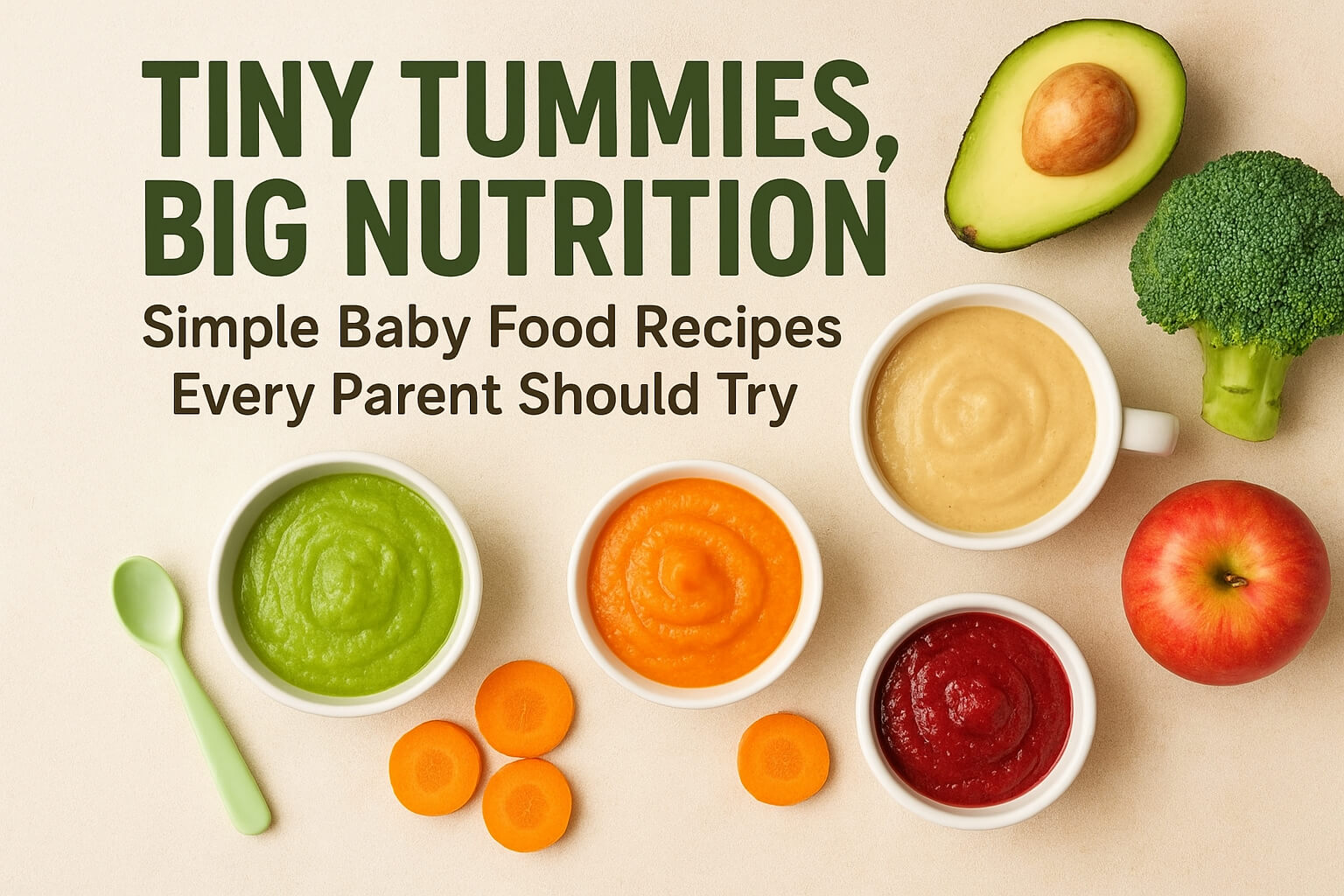
Becoming a parent turns you into a chef, a nutritionist, and sometimes even a comedian—especially when your baby decides to turn every spoonful of puree into a mini performance! But behind those adorable food-splattered moments lies an important mission: providing the right nutrition for your baby during the first year of life.
This stage is crucial. The foods your baby eats now lay the foundation for lifelong eating habits, growth, immunity, and cognitive development. The good news? Baby food doesn’t have to be complicated. With simple, wholesome ingredients, you can offer balanced nutrition and introduce your child to a world of flavors.
In this guide, you’ll learn:
- The basic principles of nutritious baby feeding
- When and how to introduce solid foods
- Easy homemade recipes
- How to safely store and serve baby food
- Tips to raise a curious, confident eater
Let’s dive in!
Why Nutritious Baby Food Matters
A baby’s nutritional needs during the first year are unique. From birth to 12 months, infants triple their birth weight, develop vital organs, form brain connections, and learn critical motor skills. Nutrition fuels all of this.
Key Benefits of offering nutritious baby foods:
- Supports brain development through healthy fats, iron, and antioxidants
- Strengthens immunity with vitamins & minerals
- Encourages healthy eating habits from an early age
- Reduces picky eating later in childhood
- Supports healthy weight gain
Nutritious baby food doesn’t mean fancy. It means fresh, simple, and minimally processed.
When Should Babies Start Eating Solid Foods?
Most babies are ready for solids around 6 months, but readiness matters more than age.
Signs your baby is ready:
✔ Can sit with support
✔ Has good head and neck control
✔ Shows interest in your food
✔ Opens mouth when offered a spoon
✔ Has lost the tongue-thrust reflex
Start slow—just 1–2 teaspoons—and grow gradually as your baby learns to swallow and enjoy new textures.
Best First Foods for Babies
Choose foods that are gentle, nutrient-rich, and easy to digest.
Top nutritious first foods:
- Avocado – Loaded with healthy fats for brain growth
- Sweet potatoes – Rich in beta-carotene & fiber
- Banana – Natural sweetness, easy to mash
- Carrots – Mild flavor and high in vitamin A
- Peas – Excellent iron and protein source
- Apples & pears – Gentle on the stomach
- Oats – High in fiber and iron
You don’t need many fancy ingredients. Start with these basics and build from there.
Homemade Baby Food vs Store-Bought — Which Is Better?
Both are safe options, but homemade baby food has advantages:
Homemade Baby Food Benefits:
- Fresher ingredients
- Zero preservatives
- Adjustable texture
- More variety of flavors
- Cost-effective
- Helps build family food culture
Store-bought purees are convenient, but homemade allows you to control quality and reduce salt/sugar.
How to Make Baby Food at Home (Easy Method)
Making baby food is surprisingly simple!
You only need:
- A steamer or small pot
- A blender or fork
- Clean storage containers
Basic steps:
- Wash ingredients
- Steam or boil until soft
- Blend or mash to desired texture
- Cool and store properly
That’s it!
⭐ 10 Simple, Nutritious Baby Food Recipes (For 6–12 Months)
These recipes are gentle, wholesome, and baby-approved!
1. Creamy Avocado Mash (No Cooking Needed)
Ingredients:
- ½ ripe avocado
- A splash of breast milk or formula (optional)
How to Make:
Mash the avocado until smooth. Add milk for thinner consistency.
Benefits:
High in healthy fats—perfect for brain development.
2. Sweet Potato Puree
Ingredients:
- 1 medium sweet potato
Instructions:
- Wash & peel
- Steam for 10–12 minutes
- Blend with water
Benefits:
Rich in vitamin A and fiber. Naturally sweet!
3. Banana Oatmeal for Babies
Ingredients:
- 2 tablespoons oat flour or powdered oats
- ½ banana
Steps:
Cook oats in water, then mix in mashed banana.
Benefits:
Energy-boosting and digestion-friendly.
4. Apple-Pear Cinnamon Puree (For 7+ months)
Ingredients:
- 1 apple
- 1 pear
- A tiny pinch of cinnamon
Instructions:
Steam fruits, blend, then sprinkle cinnamon.
Benefits:
Gentle flavors introduce babies to warm spices.
5. Carrot & Lentil Puree (Iron-Rich)
Ingredients:
- 1 small carrot
- 2 tablespoons red lentils
Instructions:
Boil both until soft; blend until creamy.
Benefits:
Great for boosting iron intake.
6. Peas & Mint Puree (Fresh & green!)
Ingredients:
- 1 cup peas
- 1 mint leaf
Steam peas, blend with mint.
Benefits: Fiber-rich and refreshing.
7. Pumpkin Coconut Puree (For 8+ months)
Ingredients:
- Pumpkin cubes
- A splash of coconut milk
Steam pumpkin, blend with coconut milk.
Benefits: Healthy fats + vitamins.
8. Spinach & Potato Mash (Iron booster)
Ingredients:
- Handful of spinach
- 1 small potato
Steam together and mix.
Benefits: Great source of iron for babies transitioning from milk.
9. Mango Yogurt Swirl
Ingredients:
- Mango
- Plain unsweetened yogurt
Blend together or swirl gently.
Benefits: Probiotics + vitamins.
10. Brown Rice & Chicken Puree (For 9–12 months)
Ingredients:
- Cooked chicken
- Cooked brown rice
- Water or broth
Blend to a smooth or textured puree depending on age.
Benefits: Protein-packed meal for active babies.
How Much Should Your Baby Eat?
Feeding amounts gradually increase as your baby grows.
General guideline:
6–7 months:
- 2–3 tablespoons per meal
- 1–2 meals/day
8–9 months:
- ¼–½ cup per meal
- 2–3 meals/day
10–12 months:
- ½–1 cup per meal
- 3 meals + snacks
Always follow your baby’s cues—babies are great at showing hunger and fullness.
Introducing New Foods Safely
The 3-Day Rule
Introduce one food, then wait 3 days before trying another. This helps detect allergies.
Avoid these before age 1:
- Honey
- Cow’s milk as a drink
- Excessive salt or sugar
- Whole nuts
- Popcorn
- Added sweeteners
Choking hazards:
Grapes, hotdogs, hard raw vegetables—serve only in safe sizes.
Texture Progression by Age
6–7 months:
Smooth purees
8–9 months:
Thicker mashed textures, soft chunks
10–12 months:
Finger foods, family meals (modified)
Texture progression is essential for oral motor development and preventing picky eating.
Baby-Led Weaning (BLW) Option
If you want your baby to self-feed:
Great first BLW foods:
- Soft-cooked carrots
- Avocado slices
- Banana strips
- Steamed broccoli
- Scrambled eggs
Ensure all foods are soft and easy to squish.
How to Store Baby Food (Complete Guide)
Refrigerator (48 hours)
Fresh fruit/vegetable purees
Freezer (1–3 months)
Store in ice cube trays for easy portions.
Safe reheating:
Warm gently
Never microwave directly—heat unevenly
Stir well before serving
Tips to Raise an Adventurous Eater
✔ Offer variety from the start
✔ Repeat foods even if rejected
✔ Avoid forcing or bribing
✔ Let babies play with texture
✔ Eat together as a family
✔ Introduce herbs & spices gently
✔ Make meals calm and fun
The goal isn’t perfection—it’s exposure and enjoyment.
Common Baby Feeding Questions (FAQ)
1. Can my baby eat eggs at 6 months?
Yes! Eggs are safe after 6 months and help reduce allergy risk.
2. What if my baby refuses food?
Normal! Keep offering. Babies need repeated exposure.
3. Should babies drink water?
Small sips after 6 months are safe.
4. Is salt allowed?
No. Babies’ kidneys cannot handle extra salt.
5. Can I freeze purees?
Absolutely. Use airtight containers.
Final Thoughts: Tiny Tummies Deserve Big Nutrition
Feeding your baby is more than nutrition—it’s a bonding experience. Every spoonful teaches your child new flavors, textures, and lifelong healthy eating habits.
Start simple, stay consistent, and trust your baby’s cues.
If you follow these easy recipes and tips, you’ll nourish your little one with love and confidence.